Anúncios
Potty training can feel overwhelming at first—especially when accidents happen more often than expected. The goal isn’t perfection, but steady progress with fewer accidents, clearer signals, and a routine that fits your daily life.
Dr. Jerry Klein of the American Kennel Club notes that if work begins early, many young dogs will go outside “most of the time” by about six months. If things stall, a visit to the vet can rule out issues like a urinary tract infection.
Why simple beats sporadic: frequent, short outings and a consistent schedule help small bladders learn faster than random trips outside. The aim is a repeatable, low-stress approach you can keep every day.
You’ll go through a step-by-step routine that covers setup, timing, crate support, and how to handle accidents calmly.
No punishment. Stress and scolding slow progress. Consistency beats intensity: small steps, repeated often, build lasting habits.
Anúncios
Set Up for Success Before You Start Potty Training
A simple setup cuts confusion and speeds success. Choose one outdoor spot and always exit through the same door. This predictable path helps your dog link the location with the action and reduces repeat accidents around the house.
Pick a consistent spot and door
Use one area only. Treat that spot as the designated bathroom so scents and memory guide behavior. Always leave through the same door so the exit becomes a cue.
Gather essentials
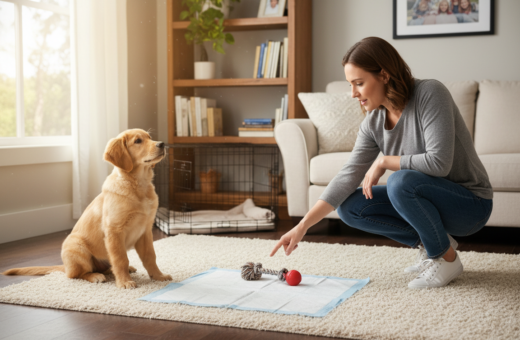
Have these ready before day one: a leash for control, a crate for safe confinement, enzymatic cleaner to remove odors, and high-value treats for immediate praise.
Anúncios
Leash, bell, and indoor options
Keep the leash on even in a fenced yard to keep focus and reward the moment the job is done.
An optional bell can become a clear signal: ring it when you leave, praise when the dog rings it alone. For long workdays, pads help, but they can create mixed messages if not phased out.
- Align the setup with household layout and natural behavior to waste fewer potty breaks.
- These small steps reduce accidents and cement success faster.
Potty Training Basics That Make the Routine Work
Clear basic steps make learning where to go faster and less stressful for both of you. Consistency is the backbone: same timing, same cue, same location. That pattern helps a dog form a simple habit instead of guessing what you expect.
Use a repeatable cue: wait quietly as the dog begins to eliminate, then say a short phrase like “go potty.” Praise immediately as the action ends, then give a high-value treat to lock the connection.
When you can’t watch closely, use confinement. A properly sized crate or a puppy-proofed pen prevents rehearsal of accidents and supports bladder control. Supervision is the step that keeps learning on track.
Watch for clear signs—sniffing, circling, whining, door-dashing, or sudden zoomies. Move fast when you see these signals; prompt response prevents indoor mistakes and teaches communication.
Finally, practice patience. Puppies learn body control and cues over weeks. Avoid punishment: it raises stress, makes hiding likely, and slows the whole process. Each accident-free day is the result of consistent steps, not luck.
Build Your Daily Puppy Potty Training Schedule Around Trigger Times
Use clear trigger times across the day to cut guesswork and reduce accidents. This framework ties trips outside to predictable moments so you can reuse the same plan every day.
Morning rule: straight from the crate to outside. Do not delay with coffee or email—after sleep the bladder is full and the first trip sets the tone.
“Go outdoors immediately after waking—timing matters more than extra praise.”
Meal and water windows
Take your dog out within 5–30 minutes after meals. Younger pups need the earlier minutes of that window.
Treat drinks like meals: a big drink usually means a quick trip out within minutes.
Naps, play, and daytime cadence
Naps are mini mornings—step outside right after waking. Play and excitement can trigger elimination, so pause for a short break after active sessions.
During the day, plan breaks every hour or two for very young dogs and widen the hours as they mature.
Night strategy
Schedule a last-call break right before bed. Avoid feeding within about two hours of night sleep while keeping water available earlier in the evening.
| Trigger | Timing | Purpose |
|---|---|---|
| First thing | Immediately after wake | Empty overnight bladder |
| After meals | 5–30 minutes | Matches digestion-induced need |
| After drinking | Minutes after | Prevent quick indoor accidents |
| Night | Before bed | Reduce midnight trips |
Use Crate Training to Support Bladder Control and Prevent Accidents
A well-sized crate becomes a safe hub that helps develop control and reduce indoor accidents.
Choosing the right size
Pick a crate big enough to stand, turn, and lie down. Do not leave extra space that allows a separate bathroom corner.
Adjustable dividers let the crate grow with your dog and prevent soiling in a far corner.
Introduce the crate gently
Start with short, positive sessions. Use treats and calm praise. Never use the crate as punishment—make it a safe, quiet spot.
How long is reasonable?
Follow the month-plus-one guideline: maximum hours between breaks = age in months + 1. For example, a 3-month-old can hold about 4 hours.
This is a planning ceiling, not a challenge—many young dogs need more frequent trips when active.
- Why it helps: the crate limits wandering, supports bladder learning, and encourages a clean sleeping area.
- Red flags: repeated soiling often means too much time confined, stress, illness, or wrong crate size.
What to Do During Potty Breaks So Your Puppy Learns Faster
Make every outside visit count by following the same short script each time. Repetition builds clear associations and speeds learning.
Leash up and use a single spot
Leash the dog even in a fenced yard. A leash keeps them near the chosen spot, limits distractions, and lets you mark success the moment it happens.
Stand quietly, then add a cue
Wait calmly at the spot. Too much walking or chatter turns the break into play and delays elimination.
Add a short cue like “go potty” as the action begins so the word gains meaning over repeated times.
Reward sequence and next steps
- Praise immediately the moment they finish.
- Give a treat right after praise.
- Allow a few minutes of play before going inside.
If nothing happens
Go back indoors briefly, supervised, and try again in a few minutes. Short, frequent trips beat one long wait.
Tip: track which times and triggers work best and refine the schedule. For more details on how to take puppy outside effectively, see how to take puppy outside.
Accidents Happen: How to Respond Without Derailing Training
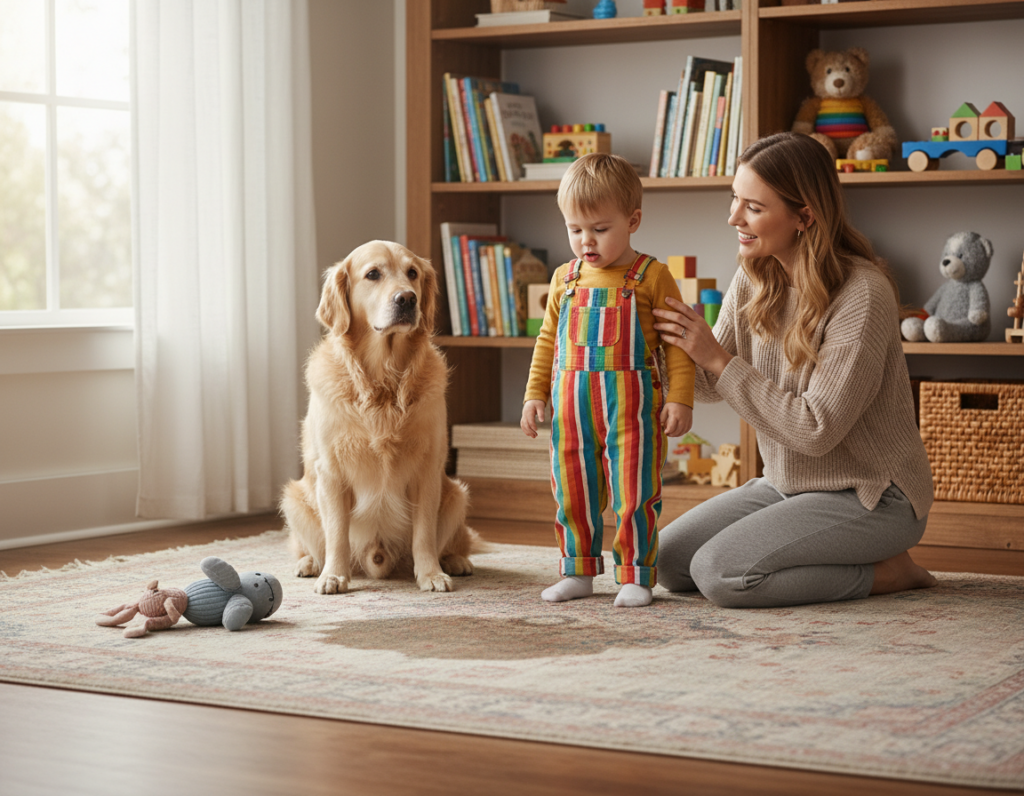
When an accident happens, treat it as information, not failure. Stay calm and use the moment to reinforce the right behavior.
If you catch the act
Interrupt gently with a quiet sound like “uh-oh.” Do not shout or scare the dog.
Move them immediately outside to the chosen spot. If they finish there, praise and give a quick reward.
Cleaning to remove odor markers
Use an enzymatic cleaner. These break down urine molecules and stop the scent that draws repeat accidents.
Blot first, then apply the enzyme product per label directions. Avoid cleaners that only mask smells.
Why repeat accidents happen and how to stop them
Leftover scent tells a dog an area is a bathroom, even if you cannot smell it. That is why the same spot often gets soiled again.
- Block access to the area until it is fully cleaned.
- Increase supervision and shorten time between breaks.
- Treat each accident as a data point: what trigger was missed and how to adjust the schedule.
| Issue | Immediate Action | Follow-up |
|---|---|---|
| Mid-accident | Interrupt gently, move outside | Praise if finished outdoors |
| Repeat in same area | Clean with enzymatic product | Block access; increase supervision |
| Owner frustration | Normalize accidents as part of the process | Track triggers and tweak schedule |
Common Potty Training Challenges and How to Fix Them
Common setbacks in housebreaking often point to timing, stress, or mixed signals rather than stubbornness.
Regression after changes or stress
When a puppy or adult dog regresses, tighten the schedule and increase supervision for a few days. Return to leash-led trips and reward successful breaks immediately.
Soiling in the crate
Check crate size first. Too much space lets a dog make a corner. Reduce confinement time and add shorter, more frequent breaks if needed.
Small dogs and frequent piddling
Small breeds may need indoor options on long workdays. Use a designated pad or box as a bridge, then phase it out while keeping outdoor goals clear.
When “stubbornness” is unclear communication
Inconsistent doors, spot changes, or delayed rewards cause confusion. Standardize cues and timing to remove mixed messages.
- Reset plan: tighten schedule, leash trips, more treats, and closer supervision.
- Workday help: plan midday breaks or a walker when hours are long.
“If progress stalls or accidents rise suddenly, consult your veterinarian to rule out medical causes.”
| Issue | Likely Cause | Quick Fix |
|---|---|---|
| Regression | Stress or schedule change | Tighten schedule; short leash trips |
| Crate soiling | Too-large crate or long hours | Resize crate; add breaks |
| Frequent small leaks | Small-bladder breed; long gaps | Indoor option; gradual phase-out |
Managing Nights and Time Away From Home
A calm night setup and simple daytime options keep accidents low when you’re asleep or away.
Nighttime setup: keep the crate near your bed so you can hear whining and respond quickly. Place shoes, a leash, and a light by the door to cut the time it takes to get outside.
Middle-of-the-night breaks
Very young dogs may need one or two middle-of-the-night breaks. If you go out, keep it boring: low light, no play, and a quick return indoors after the job is done.
Last call before bed
Always make a final trip right before lights out. This “last call” helps empty the bladder and reduces nighttime accidents.
Time away during the day
For absences longer than the month-plus-one guideline, arrange help. Options include dog walkers, trusted neighbors, or scheduled drop-ins timed to your dog’s age and needs.
Feeding and water timing
Avoid meals within about two hours of bed while not restricting hydration. Water late in the evening is fine, but watch that big gulps often trigger quick breaks.
- Reassess every few weeks: as your dog grows, hours between breaks will lengthen.
- If nights worsen: consider stress, illness, or too-long gaps; consult your vet if needed.
Conclusion
Finish by focusing on repeatable actions that fit daily life and scale as your dog grows. In short: pick one outdoor area and exit door, follow trigger times, supervise or confine when needed, reward immediately, and clean accidents with an enzymatic cleaner.
Strong, consistent signals and instant rewards are the most powerful how-to here. Your puppy learns fastest when cues and treats happen right after the job in the right spot.
This is a process measured in weeks and months, not days. Expect steady repetition to be the shortcut. Adjust the potty training schedule as bladder control lengthens and fewer breaks are needed.
If accidents continue despite a consistent plan, consult your veterinarian to rule out medical causes and consider a qualified dog training pro for extra help. The plan works on weekdays, weekends, and during change because it uses predictable triggers and clear communication.