Bringing a new puppy home is exciting and a little overwhelming. Establishing a clear plan in the first weeks helps the dog feel safe and learn expected behavior fast.
What a practical routine looks like is simple: repeating cycles of potty, meals, play/training, and sleep with small adjustments as the pet grows. You do not need to schedule every minute.
Consistency in a few high‑impact areas matters most. Start the framework the moment the pup arrives at home because habits form quickly in early weeks.
Later sections will walk through feeding times, potty timing, play and training blocks, naps, bedtime, and setting up alone time. You’ll also get copy/paste sample schedules for morning, afternoon, and evening.
The goal: a plan that works for both the animal and your household, fits real time constraints, and evolves while keeping a steady framework.
Why a Routine Matters for a New Puppy
A simple schedule gives a new puppy clear signals about what happens next. Predictable blocks for meals, potty, play, and sleep reduce anxiety while the animal adapts to new sounds, smells, people, and boundaries in your house.
How structure reduces stress and helps your puppy settle in
When the same cues repeat in order, the pup begins to anticipate events and relaxes sooner. This lowers stress hormones and speeds emotional adjustment.
How a schedule supports house training and prevents bad habits
Planned outings cut down on random accidents because you’re outside at likely potty times. Limiting unsupervised free time stops rehearsal of “cute now, not cute later” behaviors such as jumping, sock grabbing, begging at the table, and nipping for attention.
Why routines make life easier for the whole household
Everyone in the home knows when to handle potty breaks, naps, and supervised play. That predictability creates safe blocks for work, school runs, or rest and reduces daily decision fatigue.
| Benefit | What it helps | Quick action | Result |
|---|---|---|---|
| Predictability | Stress reduction | Keep consistent wake/eat/play times | Calmer, faster settling |
| Scheduled potty | House training | Take outside after meals and naps | Fewer accidents |
| Planned downtime | Household flow | Use crate or pen for naps | Safer breaks and focused work time |
Start With Your Puppy’s Age, Energy Level, and Home Setup
Start by matching your plan to the pup’s age, energy, and the space you have at home. Many young dogs arrive between 8 and 16 weeks, which means more frequent potty trips and naps while they grow.
Map your day around real time constraints: list commute hours, meetings, and school runs. Then note how many hours of supervision you can provide and where gaps exist.
How age and energy affect scheduling
At 8–16 weeks, expect short wake windows and lots of sleep. Energy varies by breed, so keep the plan flexible but consistent.
Deciding when you can supervise
- If you can be present: play, training, and close potty monitoring.
- If you cannot be present: use a pen with a potty area or a pet sitter for breaks.
Home base: crate or playpen guidance
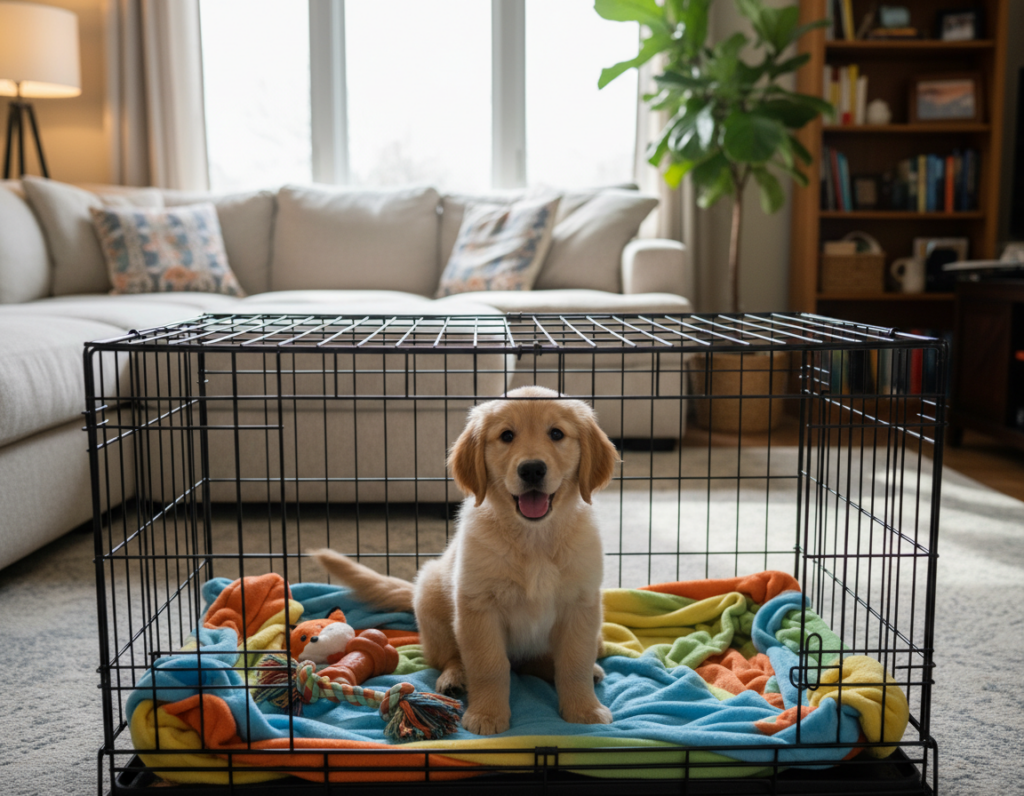
Use a crate or playpen as a calm, predictable spot for naps and brief separations. Place it in a quiet area that still feels part of the house so the animal isn’t isolated.
Crate training should be a comfort tool, not punishment. For more on setting schedules, see setting schedules.
Set a Consistent Feeding Schedule With Puppy Food
Feeding at set times helps digestion, potty timing, and predictable behavior. A clear plan makes training easier and reduces mealtime stress for you and your young dog.
Young versus older pups
Most small dogs start on puppy food three times per day. Younger animals may need more frequent, smaller portions. As they grow, shift to fewer meals and larger portions to match changing needs.
Anchor meals to your day
Plan meals around your breakfast, lunch, and dinner. Tying feeding to human mealtimes makes puppy feeding sustainable and helps predict potty windows.
Bowl windows, treats, and water
Offer food for about 15 minutes, then remove the bowl. This “bowl window” promotes appetite and prevents free-feeding. Keep treats small and purposeful; use most as training rewards rather than random snacking.
Water habits: keep fresh water in a consistent spot and refill daily. Steady access supports health and avoids confusion.
- Why this works: set meal times support digestion and more reliable potty cues.
- Prevent picky eating: stick to the schedule instead of leaving food out all day.
Plan Potty Breaks to Speed Up House Training
Timely toilet breaks are the foundation of fast house training and fewer accidents. Start with a clear baseline and add trips after any big change in activity.
Baseline and the non‑negotiables
Take the pup out every two to four hours as a starting point. Add a break after play, naps, or training sessions.
Must-do trips: immediately after waking, within minutes after eating, and right before bed.
Night strategy and boring trips
Set an alarm before whining begins so you don’t teach vocalizing = instant attention. Keep night outings quiet and short—leash on, no play, straight back to sleep.
When alone time is longer than they can hold
If you must be away longer than a few hours, use a pen with a small potty area or schedule a sitter/walker to provide breaks. This protects progress and limits accidents.
| Situation | When to go out | Purpose |
|---|---|---|
| After waking | Within 5 minutes | Prevent immediate accidents |
| After eating | 10–20 minutes | Use digestion cue to time success |
| Before bed / night | Right before lights out; alarm mid‑night if needed | Avoid whining-triggered trips |
| Long alone stretch | Midday sitter or pen potty | Maintain training and comfort |
Build Play, Training, and Mental Stimulation Into the Day
Short, focused bursts of play and training keep a young dog engaged without tipping into overwhelm. Several brief sessions manage arousal, stop melt‑downs, and make learning faster.
Why multiple short sessions work
Breaking play into small chunks prevents overstimulation and keeps attention high. It also gives clear start/stop cues, so the pup learns when play ends.
Age‑appropriate exercise
Avoid sustained, high-impact activity while joints grow. Follow the simple rule: about five minutes of intense exercise per month of age. Intense means energetic fetch, sprinting, or flirt‑pole work.
Best times and flow
Use higher‑energy outlets in the morning and early evening to match natural peaks.
- Potty → play/exercise → training → calming enrichment → nap
Training and enrichment
After activity, run short training blocks: sit, recall, wait, leave it, place. These build impulse control and safety.
Use tiny, high‑value treats and count them toward daily intake.
Calming enrichment examples: chews, frozen stuffed Kongs, lick mats, and snuffle mats. These items give mental stimulation and help the pup settle before the next nap.
Create a Sleep-Friendly Routine for Naps and Nighttime
A calm sleep plan helps young dogs grow, learn, and stay out of trouble. Puppies often need between 12 and 18+ hours of sleep across the day and night. Protecting those hours supports physical growth and overall health.

How much sleep and why overtired looks wired
Most young animals nap frequently. Missing sleep can make them mouthy, zoom around the house, and struggle to settle. These behaviors often mean the animal is overtired, not simply energetic.
Setting up a dark, cool, quiet sleep space
Ideal bed setup: darkened area, cooler temperature, and low noise. Use consistent cues—a blanket, low light, or a short pre‑sleep cue—to signal that it’s time to rest.
For naps, pick a quieter spot away from high traffic so the animal can actually recharge during short sleep blocks.
Crate placement tips and crate training notes
Place the crate close enough at night so the young dog feels secure, but choose a calmer room for daytime naps. This helps separate night comfort from daytime stimulation.
Crate training should focus on safety and trust. Keep sessions positive and brief so the crate becomes a restful bed rather than a punishment.
Handling crying at night: comfort, safety, and trust
If crying occurs, start with a quick potty check and calm reassurance. Keep interactions low‑key and return the animal to bed promptly.
Trust-first approach: brief comfort in the first weeks builds security and helps the night settle faster than strict ignoring. Over time, keep night responses minimal to preserve the sleep cue.
- Set expectations: 12–18+ hours total sleep supports health and behavior.
- Protect naps from children and household interruptions.
- Keep night checks quiet, quick, and boring to avoid extra stimulation.
Sample Puppy Daily Routine for Mornings
Start mornings with a clear, short sequence so your household and the new puppy know what to expect. A compact flow reduces accidents and gives you a predictable block of time to work and care for the animal.
Wake-up trip and calm connection
First thing: take the pup outside to relieve themselves. Bringing them out right away builds the habit of “outside first” and lowers early accidents.
Connection time follows the first trip. Use a few minutes of gentle handling, petting, or quiet play to bond without overexciting the animal.
Breakfast, short bowl window, then another trip
Offer a measured meal of puppy food and allow about a 15-minute bowl window. Remove the bowl after that short break to prevent grazing.
Most young dogs need to go out again within minutes after eating, so plan an immediate trip to capture that reliable timing.
Quick training/play, then rest in the crate or pen
Run a focused 5–10 minute training or play session targeting one simple skill. Use tiny treats and clear cues so the pup succeeds fast.
Finish the morning with a planned nap in the crate or pen. This teaches independence and links activity with rest, which helps your household keep a workable schedule for the rest of the day.
Sample Puppy Daily Routine for Afternoons
Afternoon blocks give you a predictable flow to manage energy and finish the workday without chaos. A short, repeatable loop after a nap helps prevent accidents and keeps learning steady.
Post-nap potty, then short play or a walk
Right after waking, take the pup outside within minutes. This cut reduces afternoon accidents when supervision can slip.
If vaccinations and age allow, a brief neighborhood walk provides leash exposure and calm socialization. If not, use backyard play or indoor games to burn energy safely.
Midday meal and the follow-up break
Offer the midday meal on your regular schedule and allow a 15-minute bowl window. After eating, plan a potty trip about 10–20 minutes later to use digestion as a cue for success.
Balancing social time, supervised freedom, and rest
Use short training bursts (sit, wait, leave it) after play to channel focus. Keep sessions under five minutes so attention stays high.
Give supervised free time with gates or a leash to prevent rehearsing bad habits. End the block with one more potty trip and a calm rest so the pup doesn’t become overtired.
| Step | When | Purpose |
|---|---|---|
| Post-nap potty | Within 5 minutes | Reduce accidents |
| Short play or walk | 10–20 minutes after waking | Burn energy, social exposure |
| Midday meal | Set mealtime | Digestive predictability |
| Post-meal potty | 10–20 minutes after meal | House training support |
| Training + calm | Several 3–5 min blocks | Skill building and impulse control |
| Rest | After last potty | Prevent overtired behavior |
Sample Puppy Daily Routine for Evenings and Bedtime
Early evenings often bring a surge of frantic energy—plan ahead so you stay in control. A predictable finish to the day helps the whole household settle into a calm night.
Handle the “witching hour” before it starts
What it looks like: sudden zoomies, biting at hands, and frantic pawing. These bursts happen when rest is overdue or stimulation builds.
Strategy: schedule one proactive, structured play session in the early evening to use up excess energy before it becomes chaotic.
Dinner timing and crate chew while the family eats
Align the pup’s dinner with your family meal when possible. After food, plan an immediate short trip outside to reinforce house training.
Place a safe chew in the crate during your meal. This prevents begging, keeps the animal out of traffic, and builds a calm crate habit tied to mealtimes.
Final potty, wind-down cues, and consistent bedtime
End the night with a short sniffy walk or quick yard visit right before lights‑out. Use gentle cues: dim lights, quieter voices, and a soft toy or blanked in the crate.
Consistency matters: the exact clock time is less important than repeating the same steps each evening. A steady plan makes life easier for both dogs and people.
Adjust Your Routine as Your Puppy Grows (Weeks to Months)
As weeks turn into months, the care you give should stretch out and become more predictable. The same basic structure stays useful, but intervals change as the animal gains control and stamina.
How feeding and toilet frequency change with age
Early weeks: more frequent meals and shorter awake windows are normal.
After several months: meal count often drops and night stretches lengthen to more hours.
When to broaden walks, social exposure, and training
Increase walk length and gentle social time gradually once vaccinations allow. Focus on calm, positive exposures rather than long, intense sessions.
Training sessions can get longer and include more complex skills—reliable recall, longer “wait,” and place training—once attention span grows.
Signs your schedule needs tweaking
Watch for accidents, biting, loud zoomies, or skipped naps. These are clues that timings or supervision need adjustment.
For example, frequent accidents often mean the animal needs more frequent trips or closer monitoring. Biting and zoomies usually point to missed rest or excess stimulation.
Quick checklist:
- Document three days of the current plan to spot patterns (when issues happen and what came before).
- Lengthen intervals in small steps—add 15–30 minutes at a time and watch for setbacks.
- Add structure: quiet pre‑nap cues, shorter focused training, and calm social exposures.
| Stage | Weeks / Months | Meals per day | Sleep & rest |
|---|---|---|---|
| New arrival | 0–8 weeks | 3–4 small meals | Frequent naps; short wake windows |
| Growing phase | 8–16 weeks | 3 meals, then 2–3 | Longer night sleep; still multiple naps |
| Older puppy | 4–6+ months | 2 meals common | Long night stretches; predictable naps |
When you’re ready to adapt the plan, use a simple log and make small changes. For a more detailed template and sample schedules that scale with age, see this master plan for schedules to support your progress.
Conclusion
A simple framework you can actually follow beats an elaborate schedule you abandon.
Keep the core: set meals, frequent potty chances, short play and training bursts, calming enrichment, and protected naps. This mix protects behavior, digestion, and health.
Sticking with the plan helps house training and prevents unwanted habits from taking hold. Good sleep and downtime are essential care, not optional extras; overtired animals act out more.
Make small changes based on signals, but keep the overall structure steady. Choose one sample plan, tailor it to your household time blocks, and run it consistently for 1–2 weeks before major changes.