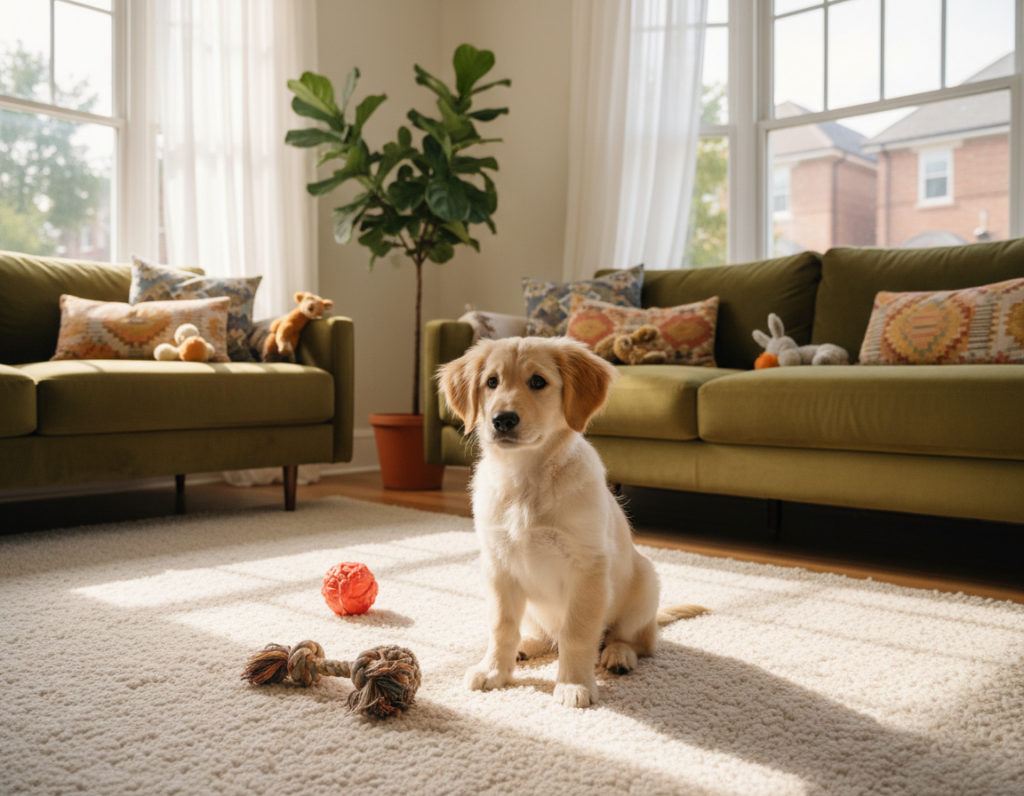
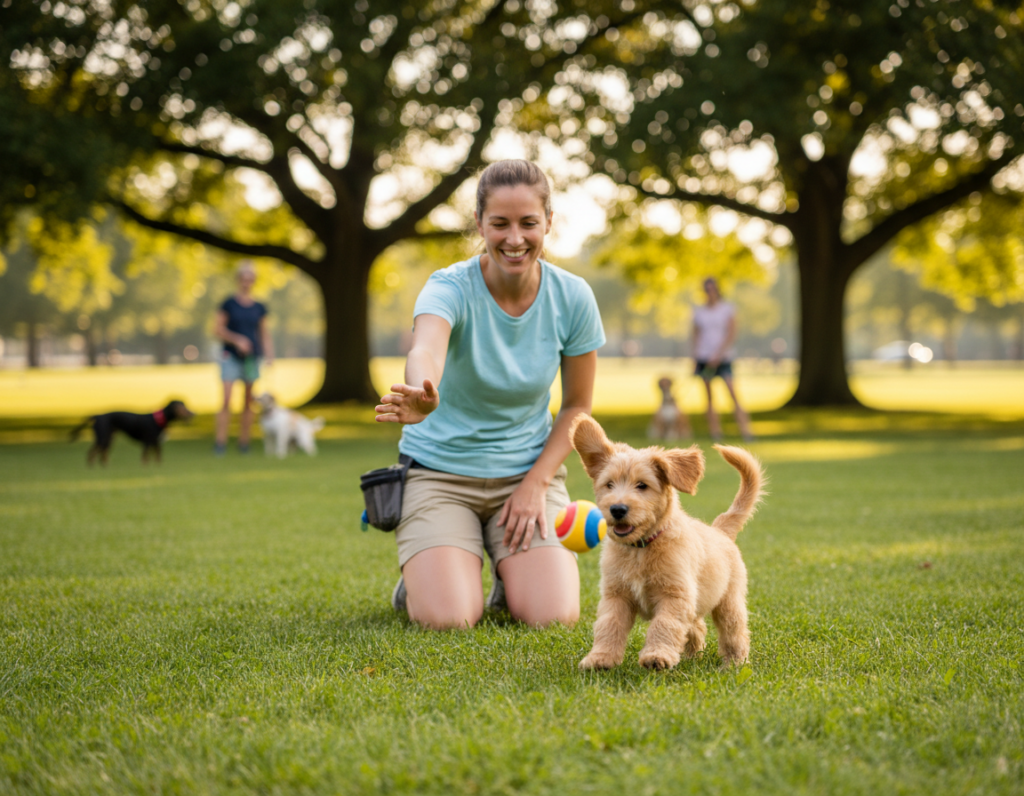
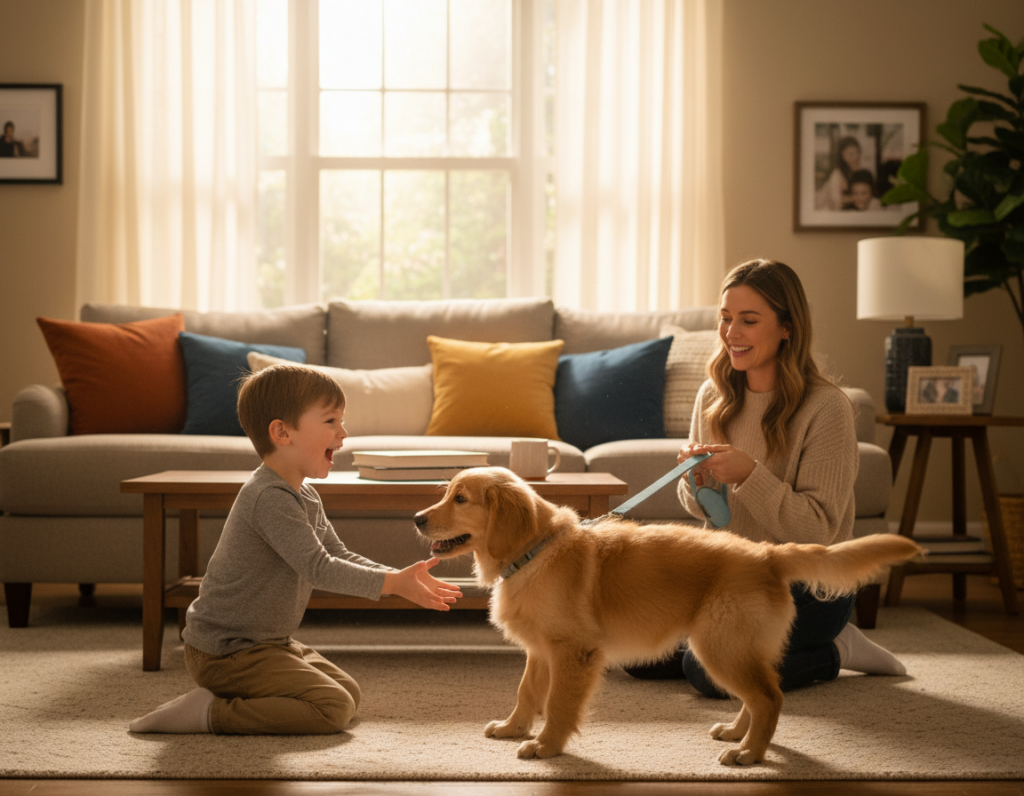
Rewarding the actions you want helps a young dog learn faster than shouting or corrections. Give treats, toys, games, or attention when the animal chooses calm, polite behavior. This makes good habits pay off and builds trust with the whole family.
Puppies learn during every moment, so feeding, play, potty breaks, greetings, and quiet time all become opportunities to shape behavior. Start at home from day one and keep sessions short and consistent to protect focus and progress.
This guide previews why reward-based methods work, the science behind them, how to arrange your space, and simple fixes for common issues using reward-based strategies. You will learn to reinforce desired choices, manage the environment to avoid bad habits, and use the right reward for the moment.
For a practical primer on reward methods and ideas for treats and play, see this helpful resource on positive reinforcement basics.
Why Positive Reinforcement Works for Puppy Behavior
Reinforcing good choices helps a young dog learn which actions get rewards and which do not. This idea lies at the heart of effective positive puppy training and shifts the focus from punishment to clear outcomes.
Rewards aren’t bribes: how dogs learn what “works”
Rewards are feedback. When a dog repeats a move that leads to treats, attention, or play, the animal learns that the action works. That is reinforcement, not a trick.
If jumping gets people to touch, talk, or shove the dog down, the dog learns jumping works because it gets attention. Most so-called bad behavior is just behavior that earned results.
How focusing on desired actions builds trust instead of fear
Reward-based methods teach what to do next. A calm, reinforced choice builds a bond and keeps a dog willing to try new things.
Harsh corrections can stop behavior without showing an alternative. That creates worry and avoidance instead of cooperation.
| Approach | What the dog learns | Common outcome |
|---|---|---|
| Reward-based reinforcement | Which action gets a reward (treats, play, attention) | Confident dog that offers behaviors |
| Aversive correction | To avoid something unpleasant | Suppressed behavior, possible fear |
| Accidental reward | Unwanted action is effective | Repeating the unwanted behavior |
| Clear alternative + reward | Desired behavior replaces problem | Lasting improvement and better bond |
Ask, “What do I want my dog to do?” and reward that instead. This simple shift turns problems into training plans that help dogs learn and people live together more smoothly.
The Science Behind Positive Reinforcement Training
Two core learning systems—associative reflexes and consequence-based learning—drive everyday behavior in dogs. Knowing how those systems work makes it easier to shape calm, repeatable habits.
Classical conditioning in everyday life
Classical conditioning is an automatic link between a cue and what follows. A common example is the doorbell: the sound predicts visitors, so many dogs get excited as soon as it rings, even before anyone appears.
Operant conditioning: consequences shape action
Operant learning is trial and error. Animals repeat acts that bring rewards and drop acts that bring unwanted effects.
This is the engine behind most reinforcement training: give a reward when a desired behavior happens, and that behavior becomes more likely.
The four quadrants made simple
“Positive” and “negative” refer to adding or removing something, not good or bad. Pair that with increase (reinforcement) or decrease (punishment) to make four outcomes.
- Add a treat to increase a sit = positive reinforcement.
- Remove attention to reduce jumping = negative punishment.
- Add a mild aversive to reduce a behavior = positive punishment (often risky).
- Remove something pleasant to increase a behavior = negative reinforcement (rarely used in household care).
Why modern trainers prefer reward and withholding attention
Most professionals favor positive reinforcement and negative punishment because they guide behavior without pain. Avoiding aversives lowers the chance of building fear or mistrust and helps dogs stay eager and engaged in sessions.
Setting Up Your Home and Schedule for Training Success
Set your home up so good behavior happens naturally and mistakes are rare. Management and supervision stop unwanted habits before they start. Small changes make the learning process easier for both owner and dog.
Management and supervision to prevent rehearsal of bad habits
Use crates, playpens, baby gates, indoor leashes, and remove tempting items so a puppy cannot practice stealing or chewing. This prevents rehearsal of unwanted acts and keeps the dog safe.
Active watching means stepping in early and redirecting before a mistake happens. If you must be out of sight, use a contained area to limit choices.
Choosing the right reward
Make sure a reinforcer matches the moment: use food for precise moves, toys or games when the dog is lively, and calm attention when quiet contact truly matters. Learn what each puppy values most.
Timing, consistency, and daily schedule
Mark and reward immediately so the connection is clear. Make sure every family member follows the same rules for greetings, furniture, and bitey play.
Keep sessions short — a few minutes several times a day. Try quick drills before meals or during naturally calm times to get the best results and steady reinforcement.
positive puppy training Basics You Can Start the Day Your Puppy Comes Home
When a new dog arrives, the fastest progress comes from picking a few clear behaviors and reinforcing tiny wins. Decide the exact action you want in common moments and reward the dog for each step.
What to teach first: the behaviors you want your puppy to choose
Day-one priorities: name response, checking in, a sit for greetings, settling on a mat, gentle mouth behavior, and following you a step or two.
Define success as a visible action — four paws on the floor, looking at you, or lying down — rather than “behave.”
Training is always happening: turning daily routines into reinforcement training
Every routine offers a chance to shape habits. Reward collar touches, choosing a chew toy, following you to the door, and settling after play.
- Doorbell: ask for a mat settle and reward calm.
- Meeting people: reward four paws down before attention.
- Bedtime: reinforce lying quietly on cue.
Focusing on desired behaviors prevents bad habits from taking root. Coordinate with your family so everyone rewards the same choices and avoids accidental reinforcement of jumping, barking, or nipping. This is the quickest way to get started with reliable reinforcement training and help your puppy learn polite skills that last.
Core Techniques: Luring, Capturing, and Shaping Good Behaviors
Three simple methods—luring, capturing, and shaping—turn small moments into teachable steps for your dog. Use each method as a clear tool in short sessions so the animal stays engaged and learns faster.
Luring: guide position and movement like a magnet
Keep a tiny treat at nose level and move slowly. Let the dog “stick” to the reward so the body follows the nose into the right position.
Example: lure a sit by lifting the snack up and back so the hips lower. Lure a crate or bed by guiding at nose height and feeding small pieces along the way.
Capturing: mark the behavior the dog offers
Watch for natural choices and mark them immediately with a click or a short word. Then reward the moment the dog looks at you, lies down calmly, or picks a toy instead of a shoe.
Shaping: reward tiny steps toward a goal
Break a skill into small approximations. Reward the first small success, then the next closer step toward the final action.
Example progression for a mat settle: look at mat → step toward mat → nose on mat → lie down. Each step earns a reward.
Keep sessions engaging and avoid frustration
If the lure fails, slow down, keep the reward closer, and feed more often so the dog does not jump or bite at the lure. Make sure each hit feels achievable.
Mix these methods to suit the moment. Short, clear criteria help the animal learn skills and keep the learning process positive and efficient for both owner and dog.
Markers, Clickers, and Verbal Praise: The Tool That Speeds Learning
A crisp sound or word can mark the exact split second your dog gets it right. A marker is a split-second signal that tells a puppy a reward is coming. That instant link speeds the learning process and reduces guesswork.
What a marker is and why it’s different from ongoing praise
Think of a marker as a precise pointer. Ongoing praise can be warm but fuzzy. A click or short word pinpoints the exact action that earned the next reward.
Common markers and how to make them meaningful
Use a clicker, “Yes,” “Nice,” a whistle, or a thumbs-up. To charge a marker, pair it with a small treat repeatedly until the sound predicts food.
When to use markers versus calm verbal praise
Use a marker for exact moments: marking a sit before you clip a leash, eye contact on walks, or calm behavior when visitors arrive. Switch to calm verbal praise for longer, warm interactions so you don’t accidentally mark late.
| Marker | Best for | How to charge |
|---|---|---|
| Clicker | Precise actions, short drills | Click → give treat x10 |
| “Yes” | Hands-free marking, indoor work | Say “Yes” → give treat x10 |
| Whistle / Thumb | Distance or visual marking | Sound/gesture → give treat x10 |
Troubleshooting: if your puppy stops reacting, lower distractions, raise reward value, and make sure the animal isn’t tired or unwell. For deeper reading on markers and methods, see marker techniques.
Adding Cues the Right Way and Building Reliable Responses
Teach a cue as an invitation to earn a reward, not as an order that must be obeyed. A cue suggests a reward will follow, while a command can feel like pressure. When a cue predicts something good, a dog learns willingly.
Why “cue” beats “command” in reward-based care
Language matters. Use a calm, short cue to mark an offered action. That word or signal becomes a prompt that the correct action leads to reinforcement.
When to introduce a cue
Only name the action when the puppy is about to do it. Labeling needs timing: say the cue as the dog is making the movement, then reward immediately. This avoids teaching the animal to ignore the word.
Proofing: home first, then more distractions
Practice in one room until responses are reliable. Then add a single new distraction or move to the yard. Change surfaces, distances, and finally practice around new people and other dogs.
Fading lures and long-term rewards
Fade the lure over 5–10 repetitions by keeping the same hand motion with an empty hand. Reward from your pouch or other hand so the dog learns the cue without food visible.
| Step | Setting | Goal |
|---|---|---|
| Introduce cue | Quiet room | Label only when action is offered |
| Proof with distraction | Living room → yard | One new distraction at a time |
| Fade lure | Short drills | Empty hand gesture; keep rewards |
| Gradual generalization | Around new people/dogs | Short sessions, higher-value treats |
Applying Positive Reinforcement to Everyday Puppy Problems
Begin by auditing what the dog is getting from each mistake. Look for the exact consequence: attention, access, fun, or freedom. When you know the payoff, you can change it.
Jumping for attention
Jumping is often kept alive by any response. Even a push or a laugh counts as attention.
Fix: turn away briefly when paws come up, then mark and reward four-on-the-floor or a sit. That teaches the faster route to greetings.
Chewing and household manners
Manage access to tempting items and offer legal chews. Reward the moment the dog picks the toy instead of the shoe.
Potty problems
Punishment can cause hiding and fear. Instead, boost supervision, set a routine, and reward outdoor elimination immediately.
Doorbells and guests
Teach a “go to mat” routine. Use distance, a barrier, and mark calm choices so the dog learns a new, rewarded habit around people.
Leash, grooming, and vet care
Pair handling, harness clips, and exams with small treats so touch predicts good outcomes. Repeat short, gentle steps until the dog offers cooperative behavior.
- Repeat and be consistent: the right actions must be practiced often for skills to stick.
Socialization, Fear Periods, and When to Get Professional Help
The weeks after your dog comes home are the best time to build comfort with new people, places, and sounds. Start socialization right away and aim for short, fun exposures that let the dog move away if it wants.
The socialization window and safe exposure
Define socialization as creating good, safe associations with people, other dogs, surfaces, sounds, and handling. Keep sessions brief and let the dog choose to engage.
During the 7–14 week window, pair each new experience with a small treat or calm praise. Offer a clear escape route so the animal can recover if it feels unsure.
Understanding fear phases and avoiding overwhelm
Fear phases can show as sudden worry, hiding, or refusing a treat. If that happens, back off and increase distance rather than pushing closer.
Response plan: give space, lower intensity, and use calm reinforcement for any relaxed choices the dog makes.
When your dog won’t take treats or is too distracted
If treats fail, move to a quieter room, boost reward value, or train before meals. Shorten sessions and check for tiredness or illness.
Lower the difficulty, raise the reward, and pause when the dog needs rest or space.
Classes, long-term skills, and when to call a trainer
Kindergarten or reward-based classes provide controlled distractions and help generalize cues into real life. They are a great place to practice people skills and calm behavior.
Contact a qualified trainer if fear is persistent, reactivity increases, progress stalls, or household stress grows. Look for humane, evidence-informed professionals who use reinforcement methods and can give a clear, structured plan for home work.
Conclusion
A clear rule: animals repeat what pays off, so shape routines around the outcomes you want. Use management and supervision to prevent rehearsal of unwanted acts. Pair moments with motivating rewards and mark exact successes with a crisp cue or click.
Keep sessions short and focused. Use luring, capturing, and shaping to teach steps, then proof them across rooms, yards, and real-life distractions. Consistent reinforcement builds reliable behavior over time and keeps work enjoyable for both of you.
The result is more than skills: it is a calmer home and a stronger bond with your dog. Stick with small wins, steady timing, and thoughtful setup to make good choices the easy choice.