Anúncios
Bringing a puppy home for the first time can feel exciting—and a little overwhelming. In the first 24 hours, your focus shouldn’t be on perfect behavior, but on helping your puppy feel safe, calm, and supported.
Small wins matter: eating a little, drinking water, going potty in the right place, and getting enough rest. These first moments set the foundation for everything that comes next.
Expectation: Success means small wins: eating a little, sipping water, some potty wins, short naps, and safe handling. Aim for steady comfort, not perfect behavior.
In the beginning, fewer choices actually help your puppy feel safer and learn faster.
If you feel overwhelmed, that’s completely normal—bringing a new puppy home is a big change for both of you.
Anúncios
Set Expectations for a New Puppy: Safety, Calm, and Empathy First
The opening hours are about comfort and management, not obedience or long lessons. Welcome your new puppy gently and aim for steady, predictable care.
Why the transition feels stressful
Moving homes overloads senses. The pup may process separation from litter, new smells, new people, and a strange world that has unknown rules.
What “good behavior” can really mean
Quiet or stunned behavior often means the animal is overwhelmed, not trained. Energy, nipping, or noise can arrive later as confidence grows.
Anúncios
- Describe what the puppy is processing: separation, sounds, people, and new surroundings.
- Normalize human reactions: fatigue, worry, and low mood are common for family members.
- Reframe success: good management wins—limited access, supervision, and a simple routine.
Practical mindset: prioritize safety, comfort, hydration, short potty trips, and rest. Give time for naps, then layer in gentle training. Helping your new puppy feel secure is a deliberate strategy—calm handling, few visitors, and consistent cues reduce stress and boost learning.
Before You Bring Home Your Puppy: Prep a Simple “Basecamp” Area
Set up a small, calm basecamp so your new dog can learn your home safely.
Basecamp defined: pick one low-traffic room—often the living room—where the animal stays for most supervised hours. This confined zone helps you stop bad habits before they start.
Limit access to prevent overwhelm and accidents
Too much space can confuse and stress a young pet. Limit the available area with baby gates or a play pen so you can supervise without running room-to-room.
Puppy-proof essentials
- Remove cords, shoes, kids’ toys, small objects, and houseplants that can cause harm.
- Lock cleaning supplies away and check floors for anything chewable.
- Keep hazardous things off low surfaces and out of reach.
Containment tools that help
Use a crate for calm downtime, a pen for safe awake play, and baby gates to block stairs or other rooms. Together, they create controlled spaces for rest, play, and training.
Stock up on approved chews and cleaners
Provide a mix of textures: soft and firm chew items, one puzzle toy, and training treats so good choices are obvious. Keep an enzymatic cleaner like Nature’s Miracle on hand to remove scent and cut repeat accidents.
Pickup and the First Car Ride Home: Keep the Trip Low-Stress
An early pickup helps your young companion use daylight to decompress, relieve itself, and nap. This timing gives you more time and reduces evening chaos so the sleep night can go more smoothly.
Why morning pickup improves early adjustment
Timing matters: morning pickups offer extra hours for potty trips, short walks, and calm bonding. More daylight means more chances to tire the animal gently and set a quiet evening routine.
What to bring
Pack a compact kit: a properly sized harness with a seatbelt attachment, leash, collapsible water bowl, bottled water, paper towels, and one chew to distract and reward.
Bring a familiar-smelling blanket from the breeder or shelter. That scent helps reduce stress and later makes crate settling easier.
Potty, light activity, and motion-sickness tips
Allow a short potty break and gentle play before loading into the car so the animal is likelier to rest during the ride.
To limit motion sickness, avoid heavy food within an hour of travel, drive smoothly, keep the car cool, and plan short stops on long trips.
“Secure, calm transport reduces risk and builds positive associations for both dog and handler.”
Safety first: always use secure transport options and calm handling. A quiet, steady ride helps your new family member arrive calmer and ready to learn your home’s rhythm.
Arriving Home: The First Hour Sets the Tone
How you spend the initial sixty minutes matters: simple cues and steady management build good habits. Keep energy low, follow a quick checklist, and treat this period as short training sessions.
Go straight to the potty spot and start your cue
Carry or walk your pup to the designated outdoor area right away. Wait quietly, say your cue once — for example, “go potty” — and reward immediately when they finish.
Offer water and a quiet decompression break
After the potty trip, give a small amount of water. Then move to the basecamp for calm time.
Keep handling light and voices soft so the puppy can settle and nap as needed.
Supervise closely to prevent chewing and indoor accidents
For the first hour, keep the pup on a leash indoors if you can. Eyes on them stops wandering, chewing, or indoor eliminations.
- Arrival checklist: potty outside, cue, reward, water, short calm exploration, then rest.
- Why it matters: early success sets patterns for potty training and lowers indoor accidents.
- If chewing starts, redirect to approved chews and praise good choices.
Remember: every potty trip and small repeatable routine is training for your new home. For extra tips on settling in and managing the transition, see this guide to help them adjust.
How to Introduce Your Puppy to Your Home Without Overwhelming Them
Give your newcomer one small area at a time to explore rather than an all-access tour. This helps the animal map where water, rest, and potty happen without stress.
Room-by-room exploration
Start in the basecamp. Let the puppy settle, then open one adjacent room for a short, supervised visit.
Return to basecamp before the animal shows signs of overload. Repeat only after calm rest and quiet play.
Keep visitors and excitement to a minimum
No visitors today is a good rule. Ask friends and family to wait until the animal naps and looks settled for several hours.
When people do meet the newcomer later, keep greetings calm, soft-voiced, and brief.
Practical tips to limit stress
- Speak softly and move slowly; avoid sudden lifts or loud photos.
- Offer a chew during new exposures to keep attention focused and calm.
- Limit the number of new things at once—one toy, one bed, one feeding spot.
“A slow introduction reduces accidents and helps build positive habits.”
| Step | Purpose | Timing |
|---|---|---|
| Basecamp only | Secure rest and potty cues | First 1–3 hours |
| One adjacent room | Controlled exploration | Short visits, then return |
| Small family visits | Meet people calmly | After naps and settled behavior |
first day with a puppy: A 24-Hour Routine That Helps Them Feel Secure
A simple hourly rhythm reduces guesswork and keeps stress low during the transition. Start with clear anchor points: wake, meals, potty trips, short play, and planned naps. Keep this in pencil so you can adjust to energy and needs.
Feeding schedule basics for young pups
Offer three small meals spaced through the hours to keep digestion predictable. Consistent mealtimes make potty timing easier and support training.
Potty breaks timing
Take trips after eating, drinking, waking, and play. Many pups need to eliminate about every 45 minutes while awake. Use a calm cue, reward fast, and return to basecamp.
Play, exercise, and nap planning
Favor gentle play, short training bursts, and low-impact enrichment. Avoid long runs or jumping. Schedule multiple nap windows—puppy sleep often totals 16–18 hours—to prevent overtired behavior.
- Sample rhythm: wake → potty → food → short play/training → nap (repeat).
- Keep routine flexible: hold wake, meals, and bedtime steady, adapt the rest to real energy.
For more structured guidance and tips, see these first day tips.
Potty Training Starts Immediately: Pick a Spot, Use a Cue, Reward Fast
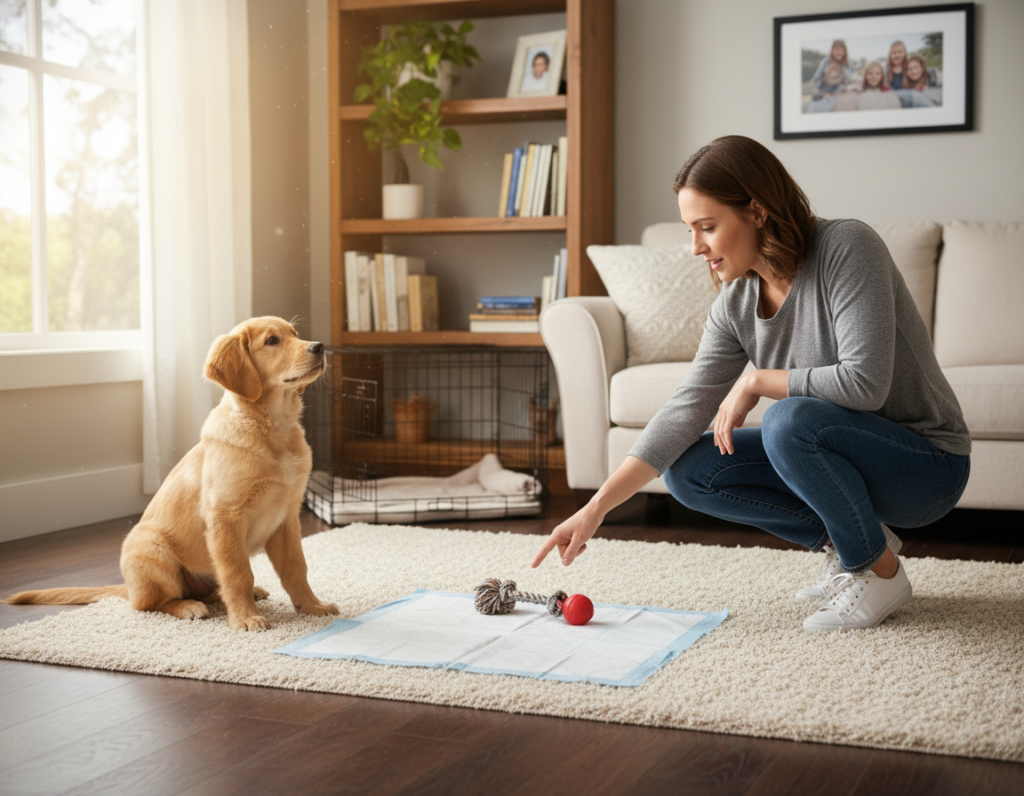
Pick one outdoor spot and one short cue to create a clear habit. Use the same place and phrase every time so the behavior links to the location.
How often to go out while awake
Take the puppy out often. Most young dogs need to eliminate about every 45 minutes while awake. Start with at least once per hour to be safe.
What to do after accidents indoors (and what not to do)
If you catch an accident, interrupt gently and carry the pup outdoors right away. Reward success there.
Do not punish, rub the nose in it, or yell. That creates fear and slows training. Clean soiled areas with an enzymatic cleaner to remove scent cues.
Why carrying your pet to the potty area helps early on
Carrying prevents dribbling on the way out and limits distractions. This shortens the loop between cue and reward so your pup learns faster.
- Simple protocol: leash or carry to the chosen spot, wait quietly, say the cue once, reward fast.
- Triggers to watch: after waking, after play, and after meals — always go out.
- Troubleshoot: if accidents cluster, tighten supervision, shrink the basecamp area, and increase potty breaks.
| Action | Purpose | Suggested Timing |
|---|---|---|
| Carry or leash to spot | Prevent accidents en route | Every outing |
| Use same cue | Send a clear signal | Each potty trip |
| Reward immediately | Reinforce correct place | Within seconds of finishing |
Feeding, Treats, and First-Day Food Rules
Feeding choices early shape potty timing, energy, and how soon training clicks. Keep meals simple and predictable so your new puppy can settle and learn.
When to offer the first meal
Offer the first meal after your pup has pottied, had a small drink, and spent a quiet 10–20 minutes decompressing. Keep portions modest if stress is high.
Using treats to reinforce calm behavior
Use small, soft, pea-sized treats to reward calm sits, correct chewing, willing crate entry, and settling near you. Deliver rewards within seconds so the link is clear.
- Stick to the current food to avoid stomach upset; transition slowly if you plan to change diets.
- Meal rules: scheduled feedings, no free-feeding, and water access that supports potty planning.
- Treat strategy: reward calm, not mistakes. Use treats as short training bursts for relationship-building.
“Small, consistent rewards teach the behaviors you want and make dog training feel easy.”
Make sure you keep meals and treats measured so the food routine helps, not hinders, learning.
Puppy Sleep and Nap Setup: Prevent Overtired “Gremlin Mode”
Planned naps and restful hours help prevent the frantic, overexcited episodes many new owners call “gremlin mode.”
How much sleep matters: Many puppies need about 16–18 hours of rest across the full 24-hour period. Missing those hours often shows up as biting, zoomies, and frantic behavior.
Make a sleep-friendly space
Choose a quiet, dim spot with a comfortable temperature. Low-level white noise from a fan or soft TV can mask sudden sounds.
Nap checklist:
- Crate or pen in a calm corner
- Dim lighting and steady temperature
- One safe toy or chew to settle the pup
Use the crate or pen for positive rest
Build good crate feelings by tossing treats inside, placing occasional chews there, and keeping nap routines the same. Let the dog sleep without constant touching or interruptions.
Connect naps to a better sleep night
Consistent rest blocks through the daytime help the sleep night go smoother. When energy is managed across time, evening chaos drops and overnight waking is less likely.
| Goal | Why it helps | Suggested practice |
|---|---|---|
| 16–18 hours total | Prevents overtired behavior | Plan several naps, short quiet play, then rest |
| Crate for naps | Creates safe, consistent cues | Toss treats, use chews, keep routine |
| Quiet environment | Masks startling noises | Dim lights, mild white noise, stable temp |
Introduce Family Members, Children, and Other Pets Safely
Slow, staged meetings help everyone stay calm while your new dog learns the household rhythm. Start one person at a time, seated if possible, and let the animal come to the person. Keep voices low and hands gentle so the meeting is predictable.
One-at-a-time greetings
Ask each family member to wait their turn. Let the dog sniff and move away freely. Reward calm interest with a small treat or soft praise.
Children rules
Supervise children closely. Teach kids not to pick up, hug face-to-face, or crowd the dog. Instruct them to pause when the animal steps back.
Resident dogs and cats
Introduce resident dogs in a neutral room, short sessions, and on-leash if needed. Watch for stiff posture, prolonged staring, or snapping and separate if tension rises.
For cats, provide high perches, baby gates, and escape routes so the cat controls distance.
“Avoid meeting unfamiliar dogs and busy dog areas until your vet confirms vaccines and safe socializing options.”
| Situation | Goal | Key signs | Action |
|---|---|---|---|
| Person meeting | Calm approach | Sniffing, relaxed tail | Seat, wait, reward calm |
| Children interaction | Safe play | Backing away, lip licking | Supervise, no picking up |
| Resident dog | Peaceful acceptance | Growl or stiff stare | Short sessions, separate if escalate |
| Cat in home | Escape routes | Arched back, hissing | High perches, separate rooms |
Surviving the First Night: Crate Training, Crying, and Middle-of-the-Night Potty
A calm, predictable evening routine eases crate training and reduces whining. Place the crate in your bedroom or right next to the bed on night one so the pup feels near you. Proximity lowers panic and speeds settling.
Where the crate should go
Put the crate within arm’s reach of your bed. This lets you hear any urgent needs while keeping the sleep night consistent.
Use scent to help settle
Include a soft blanket or toy that smells like the breeder or shelter. Familiar scents ease stress and make the crate feel safe.
Bedtime routine and rewards
Do a last water check, a short potty trip, and a calm cuddle. Then give a small treat for entering the crate and lower lights to signal sleep time.
Handling whining without reinforcing it
Pause and assess whether the whining signals a potty need. If not, offer brief calm reassurance but avoid play or long attention that rewards noise.
Night potty breaks
If a break is needed, keep lights low, walk quietly to the spot, reward briefly, then return. Make these trips boring so night = calm.
Managing evening energy
Plan a short play session in the evening and a final potty before lights-out. This often reduces the witching hour surge and helps crate training progress.
“Consistent routines and close proximity help most young dogs sleep more quickly and cry less.”
| Action | Why it helps | Suggested timing |
|---|---|---|
| Crate in bedroom | Reduces panic and builds security | Night one and early nights |
| Blanket or toy with scent | Provides comfort and continuity | Every sleep session |
| Quiet potty breaks | Keeps night calm and consistent | Only when clearly needed |
Next-Day Priorities After the First 24 Hours: Support, Vet Care, and Realistic Training
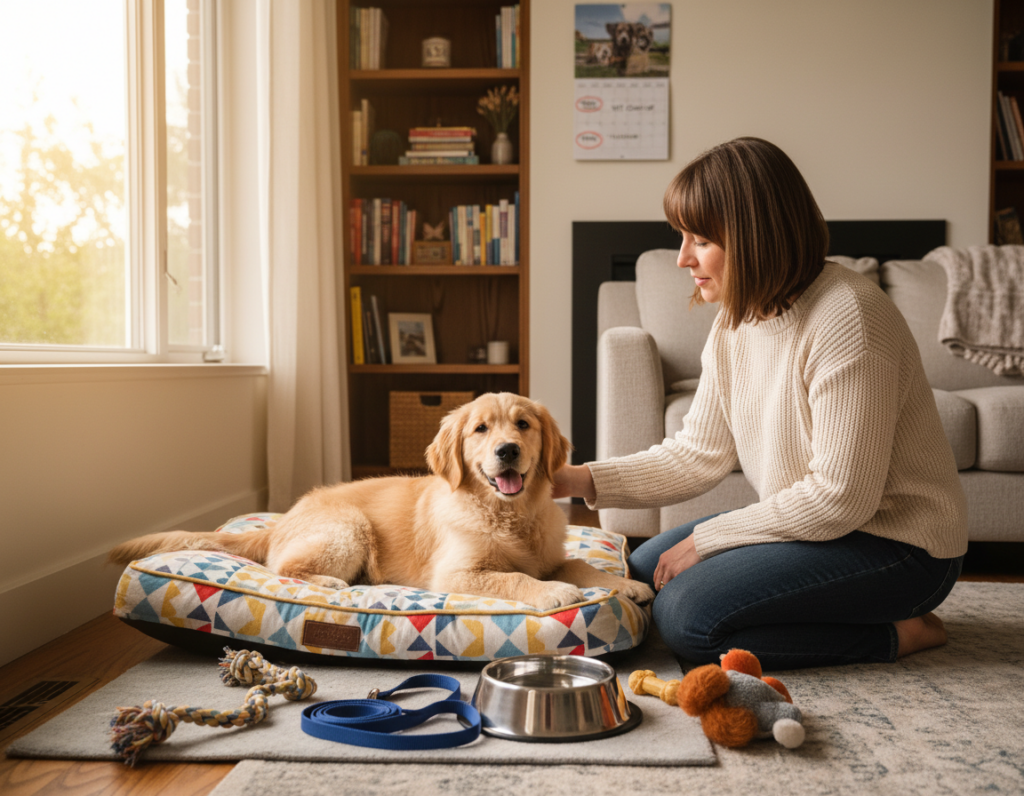
Use the hours after arrival to schedule care, protect stability, and set realistic training goals. Call your veterinarian and book an appointment within the next few days for a baseline exam, vaccine plan, and parasite screening.
Health and timeline
What to ask the clinic: baseline exam, vaccine timing, deworming advice, and any testing they recommend. Bring your records and current food label.
Bonding before heavy schedules
Focus on stability. Gentle handling, short name games, and calm crate sessions help the animal feel secure. Solid bonding reduces stress behaviors and makes later training more effective.
Practical training priorities
- Name recognition and simple cue practice for short periods.
- Positive crate moments and rewarding calm behavior.
- Short training sessions spread over time rather than long pushes.
Build your village
Identify one partner, friend, neighbor, or professional sitter who can provide breaks and steady coverage when work resumes. Backup support prevents burnout and keeps routines consistent.
“Vets handle health; qualified trainers handle behavior. Using both sets your companion up for long-term success.”
| Action | Why | Timing |
|---|---|---|
| Schedule vet visit | Health baseline and vaccine plan | Within 2–4 days |
| Short training bursts | Build skills without stress | 3–5 minutes, several times daily |
| Arrange help | Prevent burnout, ensure consistency | Before routine resumes |
Conclusion
Focus on clear systems and calm handling to set the tone for long-term success. Start with a small basecamp, an immediate potty routine, calm exploration, scheduled meals, frequent potty trips, planned naps, and a predictable bedtime. These steps protect safety and build trust fast.
Good behavior comes from management and reward, not punishment. Prioritize three make-or-break areas: crate comfort, potty consistency, and sleep protection. Keep the routine simple so it lasts beyond the first day at home.
Next steps: book a vet visit, plan slow introductions, and line up support so your new dog settles steadily and training can begin. Get started with consistency and patience.