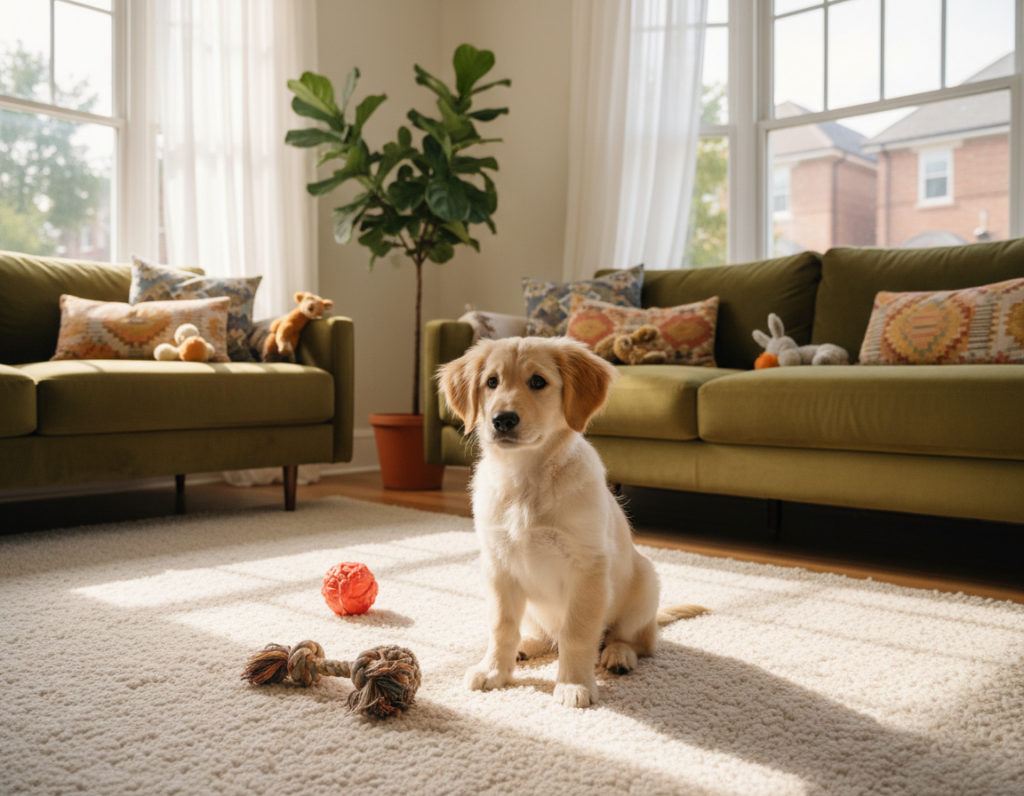
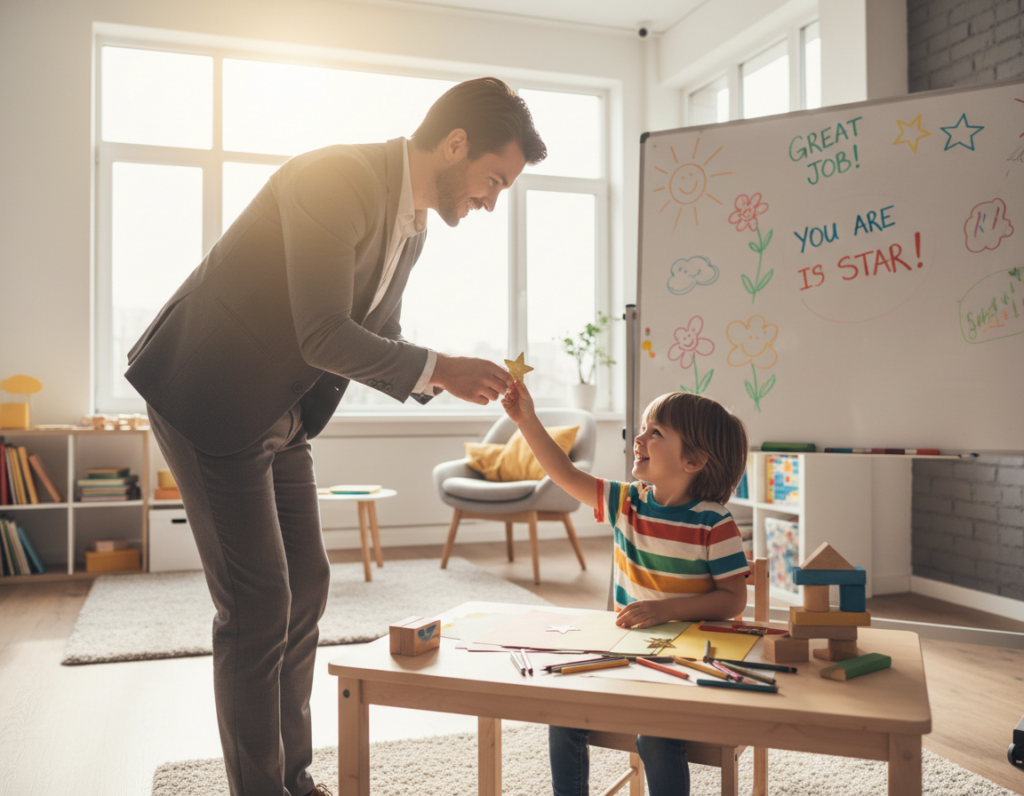
Structured play turns everyday moments into real learning. In this article we define play-based methods as short, focused sessions that teach manners while your puppy thinks it’s all a game.
Short sessions—often five to fifteen minutes—keep a dog engaged, reduce boredom, and build focus. These mini-sessions create real opportunities to practice cues like “come” and “drop it” while giving mental and physical exercise.
Expect practical tips: use simple toys, treats, and praise to reinforce good behavior. You will learn how to match a game to energy level and space, and rotate activities so dogs stay interested.
Safety is key: start indoors, use a fenced area or long line for outside work, and follow setup notes later in the article. Over time, this approach leads to clearer communication, stronger bonding, and calmer daily routines with your dog.
Why Puppy Training Games Work for Learning and Bonding
Brief, lively sessions let a dog practice obedience while staying engaged and curious. Play becomes real practice when you use short repeats to cue behaviors like come, drop it, wait, and sit.
Low-pressure practice gives puppies repeated chances to succeed. That repetition builds distraction-proof responses because the dog must listen while excited or moving.
Physical exercise—chasing, tugging, retrieving—pairs with mental work like problem solving and scenting. Together, both forms of exercise help calmer behavior and better overall health at home.
How short sessions help
- Short daily bursts (5–15 minutes) keep attention high and prevent boredom.
- Ending before the dog checks out preserves motivation for the next session.
- Using the right treat or toy keeps skills reinforced and makes learning a great way to bond.
| Benefit | What it builds | Practical tip |
|---|---|---|
| Distraction-proofing | Reliable recall and impulse control | Practice cues during play with mild distractions |
| Confidence | Problem-solving and calmness | End sessions on success; increase challenge slowly |
| Social skills | Calm approaches and polite greetings | Teach disengage cues during play with people |
Training vs. Playing Games: What’s the Difference?
Formal training is planned repetition in low-distraction settings. It focuses on precision and building a new cue step by step. By contrast, structured play blends rules with fun to teach the same behaviors while the dog is excited.
How play proof obedience around distractions
Proofing means the dog responds even when the environment changes. A dog may sit calm in the kitchen, but proofing aims for a sit that holds when a ball rolls past or someone walks by.
Use gradual challenges: add mild distractions, then increase difficulty only after success. This builds reliable obedience in real-life situations.
Why rewards matter: treats, toys, praise, and what to use when
Choose a reward that matches the goal. Use treats for precision and when teaching new cues. Use a toy for speed and high-energy recall. Use praise to maintain behavior once the dog understands.
- Calm greeting practice — treats for steady, controlled responses.
- Fast recall — toy reward to encourage speed and enthusiasm.
- Bridging reps — praise to link one successful cue to the next.
Timing is everything: mark the correct response immediately, then deliver the reward so the dog connects action to outcome. Rewards are not bribes; they are payment that builds clarity and long-term reliability.
When to Start and How Long to Play Each Day
Learning through play works at any age. Puppies, adult dogs, and senior dogs all pick up new skills when sessions are fair and rewards are meaningful. Start where your dog is, and build in small wins.
Who benefits and why
It’s never too late to add short, focused sessions to your routine. Young pups need very short bursts. Older dogs benefit from gentle mental work to support long-term health and engagement.
Daily timing and session length
Try several micro-sessions rather than one long block. Aim for 5–15 minutes per slot, multiple times a day. This saves energy and keeps a pup eager to return.
“End on a win”—stop while your dog is still enjoying the activity to keep motivation high.
Choosing space and spotting stress
Begin in a quiet room at home, then move to the yard, then to busier outdoor areas once success is clear. Make sure the area matches your dog’s focus level.
- Signs of boredom or overwhelm: sniffing off, wandering, frantic biting, or ignoring cues.
- If you see these, shorten the time or switch the activity immediately.
- Balance active play with rest so recovery and health are protected.
Gear You’ll Need for Training Games at Home
Before you begin, assemble a few core items that let you reward quickly and safely. A compact kit keeps sessions smooth and helps your dog link action to reward.
Treat pouch, low-calorie treats, and working food
What you’ll need first: a hands-free treat pouch, small soft treats, and part of your dog’s dinner as working food. Using kibble for multiple reps saves calories and keeps motivation steady.
Low-calorie treats matter when you repeat cues many times. This protects weight, especially for small dogs doing lots of reps in one day.
Favorite toy options
Rotate a few favorite toy types: a ball for fetch, a rope for tug, and a safe chew for quieter play. Switching toys prevents over-arousal and keeps the game fresh.
Tip: use the right toy to match the desired behavior—speedy recalls need a high-value toy, calm work benefits a chew.
Simple DIY supplies and household items
DIY items are inexpensive and effective. A muffin tin and tennis balls make a sniff-and-find game. A low-sided cardboard box serves for shaping. Cones or household markers create simple obstacle points.
- Starter kit: treat pouch, small soft treats, and part of dinner as working food.
- Rotate toys (ball, tug rope, chew) to match motivation.
- DIY: muffin tin + tennis balls, cardboard box, cones/markers from home.
Safety and outcomes: make sure toys are sized and tough enough to avoid choking or shredding. Supervise play and swap damaged items.
Right items make it easier to reward fast, keep sessions short, and hold attention—a great way to turn play into clear learning.
Safety and Setup Tips for Successful Game-Based Dog Training
Safety starts with planning: the right space and tools make all the difference for successful sessions. Set clear boundaries before you begin so the session stays fun and under control.
Default safety rule: recall and chase games start indoors or on a long line until your dog consistently comes when called. If recall is patchy, use a long recall line or keep practice inside until responses are reliable.
- Why fenced yards matter: play fetch or retrieve only where gates are secure. Move to open spaces only after dependable recall and solid control.
- Setup checklist: secure gates, remove tripping hazards, and choose surfaces that protect puppy joints and paws. Make sure footing is non-slip and clear of glass or sharp objects.
- Read arousal: if your puppy grabs, mouths, or loses focus, switch to a calmer nose or brain game. This avoids escalation and keeps learning positive.
- Pause and reset: step on the leash, ask for an easy cue, reward, then resume at lower intensity or end the session. This is a simple way to restore control and calm.
- Emotional safety: don’t push a fearful dog into intense play. Choose confidence-building alternatives to help dogs feel secure and willing to participate.
Final note: small setup steps make dog training safer and more effective. When you make sure the space and pacing match your dog’s needs, learning becomes steady and enjoyable.
Fetch and Retrieve Games That Teach Impulse Control
Turn a familiar fetch session into a focused drill that builds impulse control. This approach helps a dog learn to drop, sit, and return reliably while still having fun.
Two Ball Fetch to build “Drop it,” “Sit,” and reliable returns
Step-by-step:
- Use two identical balls or toys in a fenced area.
- Throw ball one. When your dog brings it back, run away or make excited noises to encourage approach.
- Praise the return, then show ball two to prompt a clean drop.
- Ask for a sit, reward with ball two, and throw it while you pick up ball one.
- Repeat short reps; the second toy motivates the release and prevents keep-away.
How to make yourself more interesting than the ball
Use body language: run away, clap, or call in an upbeat voice so returning to you feels like part of the game. Move confidently and act excited to reward the approach.
When to move from fenced areas to open spaces
Play only in a fenced yard at first. Make sure recall is dependable over many repeats before trying open areas.
Troubleshooting: shorten throws, reward with a treat on return, and reintroduce the second ball only when your dog is close. This method ties the play to real-life obedience—reliable returns and a clean drop protect dogs at the park and reduce toy conflicts.
Recall Games That Make “Come” Your Puppy’s Favorite Cue
Making “come” the best part of the day helps dogs choose you over distractions. Recall is a safety skill, and turning it into a fun routine builds speed and enthusiasm instead of avoidance.
Classic Hide and Seek: have one person hold the puppy while you hide with a treat or toy. Call the cue once, then praise and reward warmly when the dog finds you. Start with easy spots indoors.
Group hide-and-seek: spread family members around. Decide call order and have one person hold the dog if needed. Call one person at a time and reward each find to generalize recall to different people.
Chase recall: call “come” in a happy voice, step backward, then jog away to trigger pursuit. Reward immediately when the dog reaches you. Add a sit cue on arrival to prevent bouncing or keep-away.
“Tennis with your dog” triangle recalls: three people form a loose triangle and call in turns. Keep calls unpredictable and pay every successful rep so the dog learns to come to anyone.
- End each recall with a calm sit to teach controlled arrivals.
- If recall is unreliable, use a long line and low-distraction areas before increasing distance.
Name Recognition Games for Instant Attention
A clear name cue can become a magnetic prompt that brings your dog’s focus to you in seconds.
Goal: when you say your dog’s name you want an immediate head turn and eye contact that you can build into any cue.
The Name Game — indoor steps:
- In a quiet room, toss a small treat away and let your dog move to it.
- As the dog finishes the treat, say their name once in a neutral, inviting voice.
- Mark the look with a good or click, then toss the next treat the opposite way.
This pattern teaches that responding to the name predicts treats and attention. Repeating short reps builds focus fast and turns the cue into a habit.
Level up: vary toss direction unpredictably — over your shoulder, down a hallway, or between your legs — so the dog pays attention instead of guessing a pattern.
Start in a small room, move to the yard, then try busier outdoor spots once the puppy can win consistently. Keep treats tiny, keep reps quick, and stop before your dog loses interest to protect motivation and time.
Polite Greeting Games to Stop Jumping Without Stress
When you control the steps of a meet-and-greet, your dog learns calm equals connection.
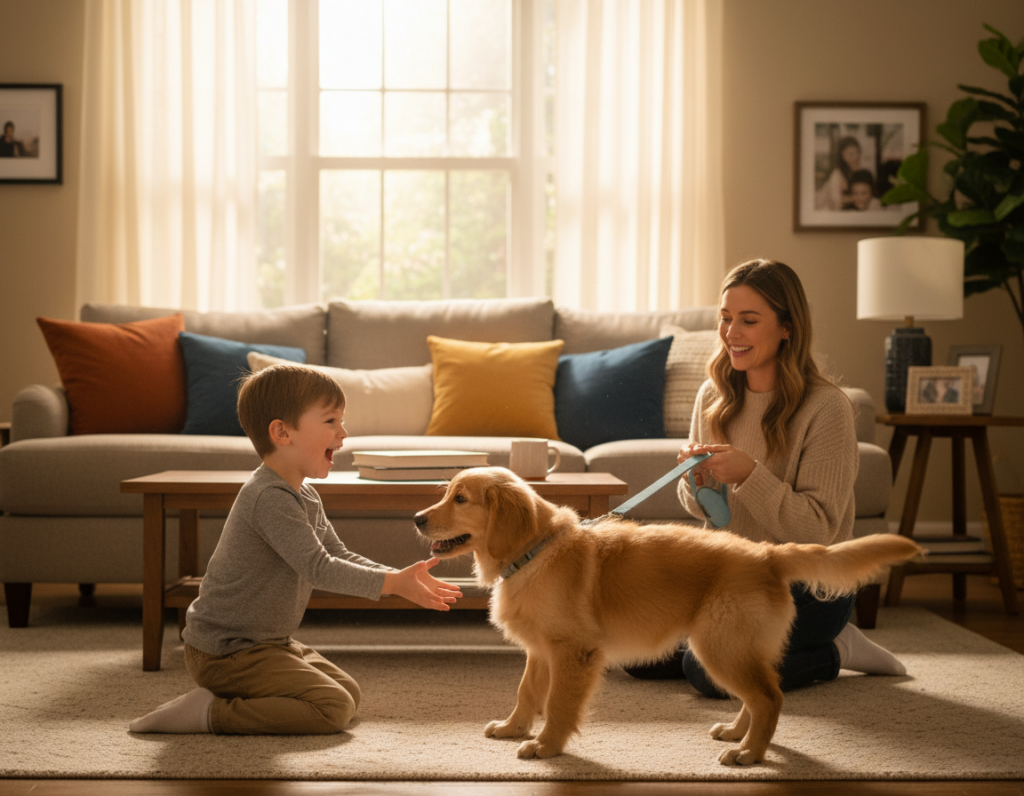
The “Oops!” Game teaches that calm behavior makes greetings happen. Approach slowly. If the dog jumps, say “oops” and have the person step back. When jumping stops, the person approaches again. Praise heavily when four paws stay on the floor.
The “Oops!” Game sequence
- Ask the person to approach slowly and smile; no reaching over the head.
- If the dog jumps, the person says “oops” and steps back immediately.
- Wait for all four paws to touch the ground before the person moves forward.
- When calm, reward with enthusiastic praise and a small treat to mark the right choice.
Coaching guests and kids
Explain that jumping works because it wins attention. This method changes the consequence without yelling or scolding.
Make sure guests and kids step back the instant the dog jumps. Only step forward when four paws are down. Keep steps short and predictable so the dog can learn the pattern.
- Management tips: keep the dog on a short leash for early reps.
- Practice first with familiar people, then widen to new guests.
- Keep greetings short and end on calm success to preserve motivation.
Reward strategy: pair calm behavior with praise and a small treat to teach what to do, not just what to stop.
Real-life payoff: calmer door manners, safer visits with children, and more control in public spaces. This approach reduces stress for the person and the dog while building reliable, polite greeting habits.
| Problem | Quick fix | Outcome |
|---|---|---|
| Jumping for attention | Step back + say “oops” | Dog learns calm gets attention |
| Inconsistent guests | Coach the person before greeting | Repeatable response from dogs |
| Overexcited arrivals | Use leash and short reps | Safer, calmer hellos |
Mealtime Training Games That Teach Patience
You can turn every dinner into a short lesson in patience that fits naturally into your day. Mealtime is predictable and happens every day, so it becomes a reliable chance to build calm behavior without extra time.
The Elevator Game with the food bowl
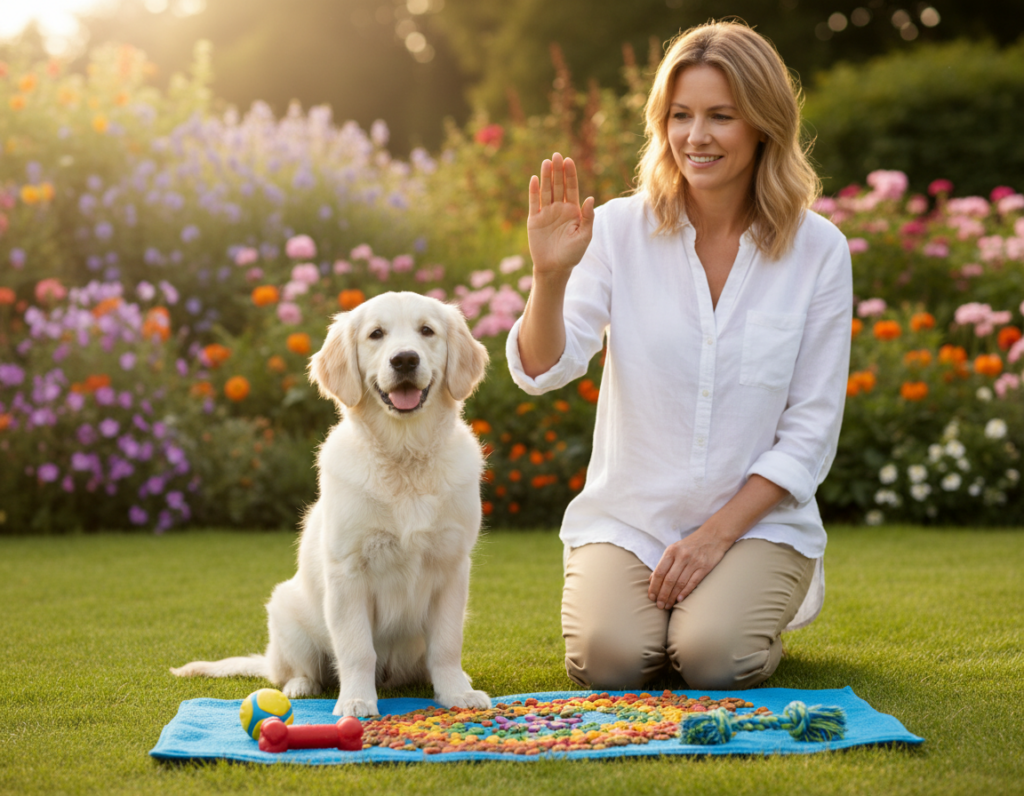
The Elevator Game uses the bowl to teach sit, wait, and a clean release cue. It makes a basic impulse-control cue part of a routine dogs already expect.
- Hold the dog’s dinner bowl near your chest and ask for a dog sit.
- Lower the bowl slowly toward the floor, keeping the sit and wait cue in place.
- If the dog moves, lift the bowl back up calmly and restart the step.
- When the bowl reaches the floor without movement, say the release cue “OK” and set the bowl down.
Reset rule and troubleshooting
If the pup breaks position, the consequence is immediate and consistent: the bowl goes up and the rep restarts. This clear reset teaches that patience, not grabbing, earns access to food.
For excited puppies, shorten the lowers and slow the motion. Build the time gradually so success stacks and control improves.
“Make mealtime the practice ground: small repeats, calm reward, steady results.”
| Benefit | How to run it | Outcome |
|---|---|---|
| Daily consistency | Use dinner every meal | Better impulse control around food |
| Clear consequence | Lift bowl on break and restart | Dog learns to hold position |
| Clean release | Say “OK” when bowl reaches floor | Reliable cue for permission to eat |
Brain Games and Nose Work for Indoor Enrichment
Small indoor puzzles give dogs practice thinking, choosing, and calming down on cue. These activities use scent and problem solving to tire a dog mentally when walks are short or the weather keeps you inside.
The Muffin Tin Game
Place kibble or small treats in several muffin holes and cover each with a tennis ball. Let your dog use their nose to find the food.
Adjust difficulty by baiting fewer holes or leaving some empty so the dog must search more carefully.
Foraging Box with Paper and Kibble
Fill a shallow box with scrunched paper and sprinkle kibble or treats inside. Supervise to prevent chewing or swallowing paper.
This setup works well in a living room or kitchen and makes mealtime more engaging while slowing fast eaters.
“Which Hand?” Scent Choice
Hide a treat in one closed fist and cue “which hand?” Reward correct picks. If the dog is wrong, show the empty hand and try again.
This quick close-quarters task sharpens decision-making and calm focus.
Keep sessions short and stop before frustration—short wins build confident, calmer dogs and support better health.
| Activity | Setup | Benefit |
|---|---|---|
| Muffin Tin | Kibble + tennis balls | Problem solving; slower eating |
| Foraging Box | Scrunched paper + kibble | Nose work; indoor enrichment |
| Which Hand? | Hidden treat in fist | Choice making; calm focus |
Hand and Body Targeting Games for Control and Confidence
Teaching a hand target gives your dog a clear visual cue and a fast way to focus on you. Start by presenting your palm near the muzzle and marking any investigation.
When the dog sniffs or nudges your hand, mark it and give a small treat. Repeat until the nose touch is reliable. Gradually increase distance so the cue works from across a room.
Hand Target to create a visual recall and improve responsiveness
Why it helps: a hand touch is simple, repeatable, and redirects attention away from distractions. Use tiny treats for precision and a toy reward occasionally to boost enthusiasm.
Progressions: distance, speed, and targeting through your legs
Increase challenge by adding distance, asking for faster responses, and changing body position. Try passing your hand through your legs so your dog learns to move calmly and read your body.
- Define the cue: nose to palm = come here.
- Initial steps: reward investigation, then reward actual touch.
- Progress: greater distance, quicker tempo, and leg-targeting.
- Use cases: call out a doorway, reposition for greetings, or guide attention during transitions.
Reward strategy: small treats for precision, occasional toy or praise for high-energy wins. This builds solid skills and steady attention that work in daily life.
Shaping Games That Teach Your Pup to Think
Small, rewarded choices let a dog discover the right move without pressure. Shaping means you reward tiny steps toward a goal so the learner pieces the behavior together.
Get in the Box uses a low-sided cardboard box, a clicker (optional), and small treats. Start by rewarding any interest: sniffing or looking at the box.
Step-by-step progression
- Reward a look or approach to the box.
- Mark and reward a paw on the rim.
- Reward one paw fully inside, then two, then all four.
- Place treats inside to lure the final step, then fade food as the behavior solidifies.
Scaling and safety
Make it harder by swapping smaller boxes, moving the box, or rotating it. This builds body awareness and problem-solving.
Optional: a clicker marks the exact moment your puppy succeeds and speeds learning for fast learners.
“Shaping teaches thoughtfulness: each small win builds confidence.”
| Focus | How to run it | Outcome |
|---|---|---|
| Interest | Reward approach and sniff | Curiosity and calm start |
| Entry steps | Mark paw placement, then full entry | Body awareness and deliberate movement |
| Challenge | Smaller box or different floor | Stronger skills and confidence |
Safety note: use a stable box on non-slip flooring and stop if your puppy chews cardboard excessively.
Loose Leash Walking Games That Turn Walks Into Training Time
Walks can double as short lessons when you turn leash time into a predictable set of fun challenges. Leash manners are hard for many dogs because the outside world is full of sights, smells, and people that grab attention. Using structured activities gives clear rules and reduces constant leash corrections.
Loose Leash Water Walking
Hold a full glass of water in one hand and the leash in the other. Only move when the leash forms a relaxed J shape. If the dog pulls and the water splashes, stop and wait for slack before continuing.
Start in a quiet yard and build up to busier sidewalks. This method gives immediate feedback and makes the ideal leash position obvious to the dog.
Marker-to-Marker Walking
Place cones, boxes, or even shoes about two paces apart. Walk from marker to marker and reward slack leash at each point. Gradually widen spacing and vary patterns to boost success.
Frequent, small rewards help dogs understand that staying near you earns treats and praise often.
Figure-Eight and “Drunk” Walking
Set two objects two meters apart and walk a slow figure-eight, rewarding calm focus and steady pace. The slower pattern lowers arousal and keeps attention on you.
For “drunk walking”, change direction every few steps. Reward when the dog follows and the leash stays slack. This makes your movement the cue, not the environment.
Progression advice: make sure you start in low-distraction areas, then add busier routes only after consistent wins. These exercises build real-life obedience: fewer pulls, safer control near people and dogs, and more enjoyable daily walking time.
Mix-It-Up Games to Prevent Boredom and Build Real-World Obedience
Mixing activities forces a dog to listen to you, not to a predictable routine. Use a small toolkit of varied drills to keep sessions fresh and useful for daily life.
Roll the Dice
Assign a behavior to each die face (sit, down, come, hand target, etc.). Roll, cue the chosen behavior, then reward. This prevents anticipation and proofs cues under random order.
- Pick four to six cues your dog knows.
- Roll, give the cue, reward success fast.
- Keep reps short and fun so the dog wins often.
Wild Sits
Briefly amp up excitement—run, clap, or tease a chase—then stop and ask for a calm sit. Reward the sit and resume play. Gradually increase intensity so emotional control improves around distractions.
Treat Countdown
Count out about 25 kibble pieces each morning. Use them all day to “catch” good choices: calm door greets, loose-leash pauses, or settling on command. This keeps rewards handy and links daily behavior to obedience wins.
| Mix | How | Real-life payoff |
|---|---|---|
| Roll the Dice | Random cues | Reliable responses in new settings |
| Wild Sits | Excite → sit | Control around kids, doors |
| Treat Countdown | Day-long rewards | Better everyday manners |
Conclusion
Turn short, joyful sessions into the backbone of your daily routine to teach real-world skills without pressure.
Consistent play-based work builds recall, impulse control, leash manners, and polite greetings while also giving exercise and mental stimulation that support health. Choose two or three simple activities to start and rotate them weekly so your puppy and dog stay motivated and avoid plateaus.
Match the game to the space: begin indoors or in the yard, then add distractions slowly. Use food, a favorite toy, or praise as clear rewards to teach each cue quickly.
Practical next step: set aside a few five- to fifteen-minute slots each day, involve every person in the household, and keep sessions upbeat and short. For more ideas, try the Puppy Playground exercises to blend play and learning naturally.