Anúncios
Human leftovers can hurt a pet. Some common items in U.S. kitchens may cause mild to severe illness depending on dose and a dog’s health. This guide lists everyday human foods that are unsafe and explains why they qualify as toxic foods for dogs.
The risk is dose-dependent and animal-dependent. A bite that leaves one dog fine may poison another. Expect categories like sweeteners (xylitol), grapes and raisins, alliums, chocolate and caffeine, alcohol and fermentation risks, high-fat scraps, bones, and raw items.
Prevention comes first. We focus on what to avoid at home and on the go, then on how to spot trouble, and finally what action to take. Many incidents are accidental — counter surfing, trash raids, or party leftovers.
Early signs often include vomiting or diarrhea, but some poisons cause delayed organ damage. If you suspect a bad bite, act quickly rather than wait.
Why human foods can be dangerous for dogs
Plain leftovers can cause real harm. Many kitchen items contain compounds that interfere with a dog’s normal physiology rather than merely upsetting the stomach.
Anúncios
What makes a item truly poisonous versus just rich
True toxicity means a compound damages organs or disrupts normal body systems. Rich or fatty meals often cause short-term digestive upset. But a substance like xylitol forces a rapid insulin surge and a dangerous drop in blood sugar. That is organ-level disruption, not just an upset stomach.
Why tiny amounts can still cause big problems
Small dogs have less body mass, so the same amount yields a higher dose. Some ingredients concentrate in dried fruit, making a single raisin more risky than a grape. Individual sensitivity and baseline health also change how severe poisoning can be.
When symptoms show now versus later
Some exposures cause immediate signs such as vomiting, tremors, or seizures. Others — grapes and raisins, for example — may not show signs until 24–48 hours, when kidney failure develops. Allium plants can trigger vomiting quickly and anemia days later as red blood cells break down.
Anúncios
Practical rule: if a known high-risk ingredient is involved, do not wait. Subtle signs like lethargy can be the first step toward life-threatening complications.
Toxic foods for dogs to avoid at home and on the go
Household snacks and treats can trigger serious reactions that demand fast action. Below is a compact, skimmable guide to the most dangerous items to keep away from pets during holidays, cookouts, travel, and everyday life.
Xylitol and sugar-free products
Common US exposures: sugar-free gum, candy, baked goods, peanut butter, and toothpaste. Xylitol causes a rapid drop in blood sugar and may lead to seizures or liver failure even in small amounts.
Grapes, raisins, and currants
Exact toxin unknown, but linkage to acute kidney failure is clear. Even one grape can cause vomiting, lethargy, and delayed kidney injury in some animals.
Alliums (onion, garlic, chives, leeks)
Raw, cooked, or powdered forms damage red blood cells. Watch for pale gums, weakness, and fast breathing after exposure to seasonings or baby foods containing onion powder.
Chocolate and caffeine
Both contain stimulants that produce agitation, tremors, arrhythmias, seizures, and in severe cases coma or death. Dark and baking chocolate are most concentrated.
Alcohol, raw dough, and fermented items
Fermentation produces ethanol. Raw dough can expand in the stomach and create alcohol, causing disorientation, slowed breathing, and serious toxicosis.
| Hazard | Typical source | Key signs |
|---|---|---|
| Macadamia nuts | Cookies, trail mix | Vomiting, fever, hind-leg weakness |
| High-fat drippings | Greasy leftovers, trimmings | Pancreatitis: abdominal pain, vomiting |
| Bones (cooked) | Poultry, rib bones | Splintering, choking, GI puncture |
| Raw fish/eggs/meat | Sushi, undercooked salmon, raw eggs | Foodborne illness, salmon poisoning |
Quick tip: Keep tempting snacks out of reach and learn to read labels. For a detailed slide list, see foods your dog should never eat.
Red-flag symptoms of food poisoning in dogs
Many incidents start quietly. A single episode of vomiting or sudden drooling may be the first clue that a pet ate something harmful. Watch closely for changes in appetite, energy, or bathroom habits.
Early gastrointestinal signs
Common signs owners see: vomiting, diarrhea, drooling, belly pain, and loss of appetite. These often come first and should never be ignored.
Neurologic and cardiac warning signs
Urgent symptoms include tremors, agitation, seizures, and inability to stand. Stimulant exposures like caffeine and chocolate may also cause a very fast heart rate, abnormal rhythm, weakness, collapse, or heavy panting unrelated to activity.
Kidney-related red flags
After exposure to grapes or raisins, early vomiting or diarrhea can be followed 24–48 hours later by lethargy, dehydration, and low urine output. These are classic warnings of possible kidney failure and need prompt care.
| Symptom group | Typical early signs | When to act |
|---|---|---|
| Gastrointestinal | Vomiting, diarrhea, drooling, belly pain | Any persistent vomiting or repeated diarrhea |
| Neurologic | Tremors, seizures, disorientation, weakness | Immediate emergency care |
| Cardiac | Fast heartbeat, arrhythmia, collapse | Seek urgent veterinary attention |
| Kidney | Lethargy, low urine output, dehydration | Emergency if seen after grape or raisin exposure |
Note: Onset varies by substance—some signs appear within hours, others worsen over 1–2 days. Record the timing, how much was eaten, and any product labels. That information helps the vet triage the case quickly.
What to do if your dog eats something toxic
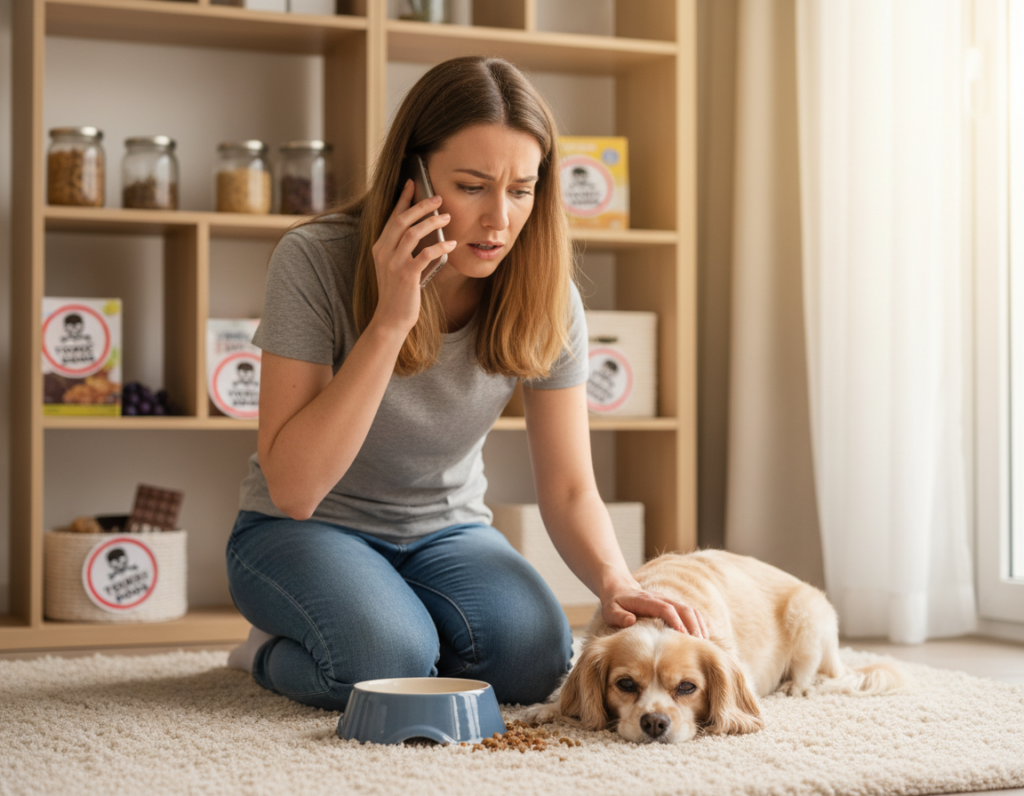
Act fast and stay calm. Do not wait for visible signs. Early action often changes outcomes, especially with xylitol or grapes and raisins.
Immediate checklist:
- Remove access to the item and secure the area.
- Check the packaging for ingredients and note the product and brand.
- Estimate how much was eaten and note the time of exposure.
- Do not give human medications or home remedies unless told to do so by a vet.
When to call emergency care right away
Call an ER vet immediately for any xylitol exposure, any grape or raisin ingestion, significant chocolate or caffeine consumption, alcohol, repeated vomiting or diarrhea, tremors, seizures, collapse, or breathing trouble.
Poison-help and what they will ask
In the United States call your vet, the nearest emergency clinic, or ASPCA Animal Poison Control Center at (888) 426-4435 for time-sensitive guidance.
| Trigger | Typical concern | Immediate action |
|---|---|---|
| Xylitol | Rapid hypoglycemia, liver injury | Call vet/poison control; bring packaging |
| Grapes / Raisins | Kidney failure risk | Emergency vet within hours |
| Chocolate / Caffeine / Alcohol | Stimulant or ethanol effects, seizures | Estimate amounts; seek emergency care |
Have the dog’s weight, age, medical conditions, exact product name, amounts, and current signs ready. Bring wrappers or containers to the clinic so staff can confirm ingredients and concentrations.
Hidden sources and common “surprise” exposures in the kitchen
Countertops, trash bins, and party trays hide multi-ingredient risks that owners often miss. A quick sniff or a single bite can mix several hazards into one dangerous meal.
Read labels and watch seasonings
Check ingredient lists on sugar-free products for xylitol and on snack mixes for caffeine or cocoa. Powdered seasonings may list onion or garlic in blends, so chips, soups, and marinades can conceal allium powders.
Trash, dough, and fermenting fruits
Compost and open bins often contain bones, greasy wrappers, gum, and rotting fruits that ferment into alcohol. Proofing bread or pizza dough on the counter is another hazard—swallowed dough can expand and create ethanol inside the stomach.
Shared snacks and party dangers
Brownies with nuts, trail mix with raisins and chocolate, or rum cake combine several risks at once. Macadamia and other nuts may worsen illness and increase vomiting or diarrhea after a single exposure.
| Hidden source | Common items | Why it’s risky |
|---|---|---|
| Pantry/labels | Sugar-free gum, candy, toothpaste | Xylitol causes rapid hypoglycemia and liver issues |
| Seasonings | Onion/garlic powder, soup mixes, chips | Allium compounds damage red blood cells |
| Trash & compost | Bones, fruit peels, gum, greasy foil | Choking, pancreatitis, fermentation to alcohol |
Prevention tips: keep trash sealed, store gum and candy in closed cabinets, never leave raw dough unattended, and place compost behind a locked door. Check full ingredient lists—shared snacks often hide multiple hazards.
Safer alternatives to share with your dog instead
Simple, vet-approved bites can replace risky table scraps and reduce stomach upset. Offer these options only as occasional treats, not meal replacements. Small portions help prevent weight gain and long-term health problems.
Lean, cooked meats
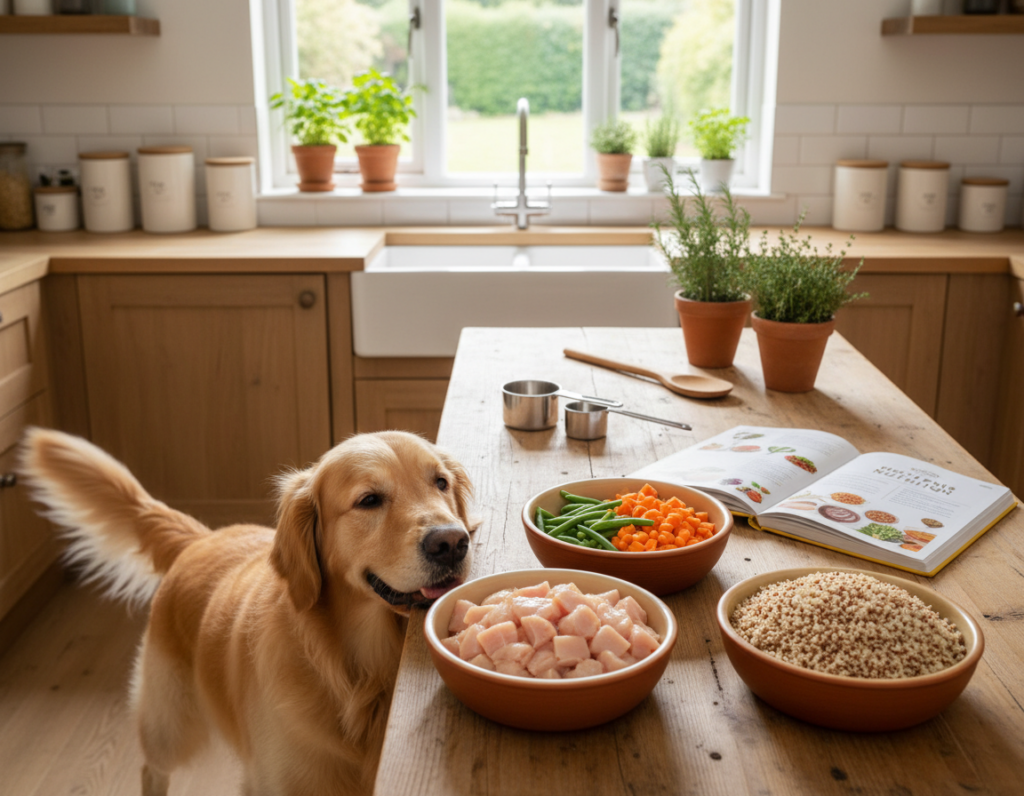
Plain, cooked chicken, turkey, or lean beef with all visible fat and skin removed is a top choice. Remove bones and avoid seasoning to lower the chance of pancreatitis and vomiting.
Safe fruits and vegetables
Serve apple, banana, orange, or watermelon slices with seeds and pits removed. Vegetables like carrots, green beans, cucumber, and zucchini are gentle and hydrating when given in small, bite-sized pieces.
Bland options for upset stomachs
Plain cooked white rice or pasta can soothe a sensitive belly. Paired with plain boiled chicken, these are commonly recommended short-term by veterinarians for mild diarrhea or vomiting.
- Prep rule: remove stems, peels, pits, and seeds before offering any human foods.
- Hidden hazard: avoid mixes that may include raisins, chocolate, macadamia nuts, or xylitol-sweetened products.
- Check with your vet: ask about portion sizes, especially for small dogs or pets with a history of pancreatitis or sensitive stomachs.
“Treat sharing should be occasional and safe — a little goes a long way toward good pet health.”
Conclusion
Prevention is the single best way to protect your pet from common kitchen hazards. Remember that many everyday human foods can be toxic foods for dogs, so keep tempting items out of reach and secure trash and compost.
Never feed xylitol, grapes/raisins/currants, alliums, chocolate or caffeine, alcohol, raw dough, or macadamia nuts. These carry the highest risk of severe poisoning and organ damage.
Watch for red-flag signs — vomiting, diarrhea, tremors, seizures, collapse, or unusual lethargy — and act fast. Early vet guidance often prevents worsening health problems and can reduce the risk of death.
Simple home rules help: store risky items safely, lock bins, and choose vet-approved treats when sharing. If exposure occurs, contact your veterinarian or ASPCA Animal Poison Control right away.