Learning basic nail care at home gives pet parents confidence and keeps pets comfortable. This short guide lays out what a simple routine looks like and why it matters.
Start by checking length, then choose between clipping or grinding. Good nail care includes checking for cracks, keeping the quick safe, and rewarding calm behavior. With practice, most owners can trim dog nails at home using quality clippers or a grinder and basic first-aid items.
Two core goals guide each session: keep nails short enough for comfort and mobility, and avoid cutting the quick. Small, cautious cuts are safer than long ones, and stopping early is okay. For very anxious pets, a groomer or vet is a fine option.
This article walks from “do the nails need attention?” to choosing tools, calming your pet, safe clipping, and handling bleeding or fear. It covers both clipping and grinding so you can pick what fits your pet’s temperament and household noise tolerance.
Why Nail Trimming Matters and When Your Dog Needs It
Long nails change how a paw hits the ground and can lead to lasting foot problems. When tips contact the floor first, toes can splay and traction drops. Over time this adds stress to tendons and may cause deformity or infection.
How overgrowth affects movement
Biomechanics matter: if a nail meets the ground before the pad, the whole foot shifts. That shifts weight, increases slipping on slick surfaces, and can create chronic pain.
Everyday signs to check now
Listen for clicking on hardwood and watch from the side to see if nails touch the ground. If nails extend past the toe pads while standing, that is a clear sign.
How often is enough?
Many pets need attention about every four weeks, but lifestyle changes this. Pavement walks often file tips down and can extend the time between care. Inactive or indoor pets may need work closer to every three weeks.
- Quick tip: watch sound on floors and contact with the ground to decide the best schedule.
- Consistent care helps the quick recede, making future cutting easier and safer.
For more on technique and why regular care helps, see proper nail trimming.
Tools That Make Dog Nail Care Easier at Home
Picking the right equipment makes at-home nail care faster and less stressful for both of you.
Choosing the right cutters for size and thickness
Match tool to the paw: scissor-style clippers often work best for small breeds with thin tips. Plier-style clippers give the leverage needed for thick, large-dog nails and cut cleanly without crushing.
Guillotine tradeoffs and quick safety
Guillotine clippers can feel easy for tiny tips, but they may hide the blade line and make it harder to judge where you cut. That can raise the chance to cut quick or cause bleeding.
“Guillotine styles sometimes make quick-gauging harder; choose the cutter you can see and control.”
When a grinder helps
A grinder files rather than slices, which is useful for black tips where the quick is hard to see. Be mindful: the noise can upset some pets and long hair may catch if not kept away.
Small first-aid kit
- Styptic powder — primary tool to stop bleeding.
- Flour or cornstarch — practical backup if you lack powder.
- Clean towel and calm rewards to steady the paw.
Helping Your Dog Stay Calm for Nail Trims
Calm handling is the single best way to make at-home paw care safe and quick. Less wiggling means fewer accidental nicks, less stress for your pet, and better control for you.
Make paws normal with short daily steps
Briefly touch, hold, and release each paw every day. Keep each interaction upbeat and short so the paw touch feels ordinary, not scary.
Massage the toes and run a gentle hand along the leg. This desensitizes the paw and builds trust.
Build positive association with treats and praise
Use small, frequent treats during handling. Pair each calm pause or successful touch with warm praise so the pet learns that good behavior earns rewards.
A lick mat spread with peanut butter or a soft spreadable treat can focus attention while you work.
Slow multi-day steps and environment tips
- Step 1: let the pet sniff the tool.
- Step 2: touch the tool to the paw, then reward.
- Step 3: add sound or vibration, then give treats praise.
- Step 4: take a tiny piece off one toe, then stop and reward.
Choose a quiet, well-lit spot and use a helper to steady the leg and hand out treats. If your pet escalates, stop early and try again later to protect trust.
How to Trim Dog Nails Safely at Home
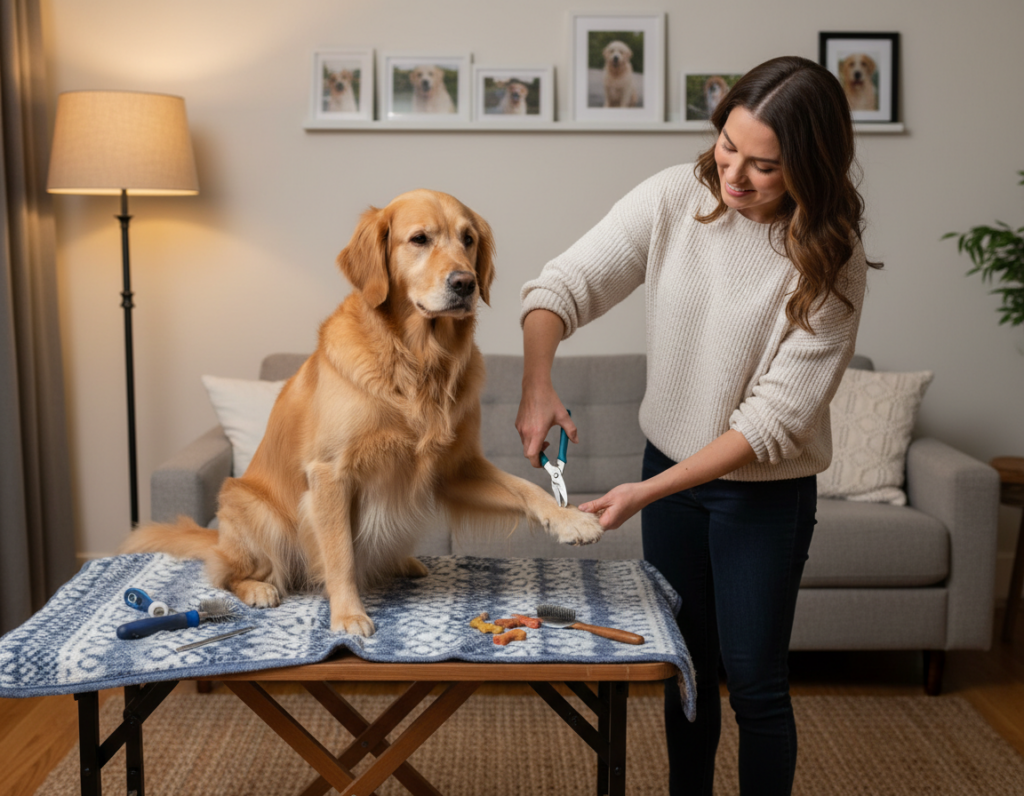
Set up your pet so the leg rests naturally and you can see the tip clearly. A calm, steady position reduces movement and prevents discomfort. Keep the paw close to the surface your pet is on and avoid lifting the leg beyond its normal range.
Hold and extend the paw
Place your thumb on the pad and a forefinger over the top of the toe. Gently push the pad back and your finger forward to expose the nail. Keep fur away from the blade or wheel so you do not catch skin or hair.
Spotting the quick
In light tips you can see a pink quick. In darker tips go slowly and shave small amounts until a chalky ring or a tiny dark dot shows. Stop when you see that sign to avoid hitting the quick.
Where to cut and angle
Remove only the tip first. Take 1–2 mm per clip and stay about 2–3 mm from the quick. Cut with the nail’s natural angle, roughly 45 degrees, to keep a rounded end and limit splitting.
Dewclaws and finishing
Check the inner dewclaws; they often overgrow since they don’t touch the ground. You may need several short sessions to reach ideal length. End on a positive note with praise and a treat. If you nick the quick, apply pressure and then styptic to stop bleeding, and pause the session.
| Step | Action | Why it matters |
|---|---|---|
| Position | Keep leg in natural range near a surface | Reduces strain and sudden moves |
| Hold | Thumb on pad, finger above nail, push pad back | Exposes tip without squeezing skin |
| Cut | Small clips at 45°, 1–2 mm each | Less risk of hitting quick |
| Finish | Praise, treat, stop if anxious | Builds trust for next part |
Grinding vs. Clipping and How to Handle Common Problems
Grinding and clipping both work; the right choice depends on control, noise tolerance, and the finish you want. Clipping is fast but can leave sharper edges. Grinding is slower and shapes the tip smoothly, which helps when you want to remove tiny amounts safely.
Safe grinding technique
Stabilize each toe and support the paw. Grind in small passes, removing little at a time.
Start across the bottom of the tip, then soften the edge from the top to round and smooth. Hold the tool a bit higher to improve control and avoid pressing into the quick.
Common cautions
- Keep surrounding hair clipped back so it cannot catch in the wheel.
- Avoid contact with skin to prevent friction burns from a fast wheel.
- Dust can irritate—work outdoors or in a ventilated room when possible.
Quick nick and problem solving
If you cut the quick, stay calm and apply styptic powder to stop bleeding. Flour or cornstarch work as backups.
If your pet startles at the sound, step back to desensitization and reward calm moments with dog treats. A helper holding the pet and offering treats reduces sudden moves and improves safety.
| Method | Speed | Finish | Best use |
|---|---|---|---|
| Clipping | Fast | May leave sharper edge | Quick sessions, confident handlers |
| Grinding | Slow | Smooth, rounded | Shaping, conservative removal |
| Emergency | N/A | Stops bleeding | Styptic powder or flour backup |
Conclusion
Keeping tips in check helps preserve good posture and reduces slipping on hard floors. Consistent care prevents pain, reduces gait changes, and limits long-term strain so everyday movement stays easier.
Watch for simple signs: clicking on wood or tips touching the floor means it’s time to act. Most pets do well with a monthly routine, but adjust if walks on pavement file tips down or if your companion is mostly inactive.
Go slow and steady. Small cuts or brief grinding passes, good light, and calm handling lower the chance of hitting the quick. Confidence grows with repetition and rewards.
If your dog is very stressed, nails are badly overgrown, or you feel unsure, a groomer or vet can safely perform dog nail trimming and show you the right length.