Anúncios
This guide helps owners recognize worry and stress in their pets and offers practical, humane steps to improve daily life.
Many people use the word anxiety as a catch-all. Professionals note it often hides other causes. The first step is calm observation and context before choosing a plan.
We will show how to spot common signs, map likely triggers, and rule out medical issues. Expect a clear roadmap: environment changes, consistent routines, training, and natural supports.
Predictability matters: steady schedules, clear cues, and gentle management reduce stress and make learning easier. Every animal responds differently, so track progress and adjust as needed.
This article favors positive reinforcement and humane methods. It previews a step-by-step separation section that explains gradual desensitization and counterconditioning and warns against flooding.
Anúncios
Recognizing Dog Anxiety and Signs of Stress at Home
Owners often miss subtle cues that show a pet is stressed at home.
Early detection makes training and management easier. Watch for panting without heat or exercise, trembling, pacing, excessive vocalizing, clinginess, startle responses, and hiding attempts.
Common signals owners notice
Body language can be quiet. Yawning, dilated pupils, drooling, and restless settling are all signs stress is building.
Anúncios
These cues matter because they show trouble before full-blown panic. A vigilant owner can intervene earlier.
Separation red flags when left alone
Look for agitation during your pre-departure routine. Reaching for keys or putting on shoes may trigger distress.
Other red flags include intense greetings, pacing that follows a fixed path, and accidents that only occur when you are gone. These often begin within minutes of departure and suggest separation anxiety.
When behavior looks destructive, vocal, or like house soiling
Destructive behavior focused at doors or windows, persistent barking or howling not tied to outside stimuli, and repeated escape attempts can point to fear rather than mischief.
- Note timing and context; many episodes start immediately after you leave.
- Record with a camera and log before-during-after details to build objective evidence.
- Address escape risks quickly — broken teeth and scraped paws are real hazards.
What’s Really Causing Your Dog’s Anxiety in Different Situations
A sudden move or a shift in daily life often exposes hidden causes of distress. Identifying the root helps decide whether management, training, or veterinary care is needed.
Common triggers from life changes
Moving, new household members, or a change in guardian are major real-world triggers. ASPCA data links these events to separation and distress when routines shift.
Schedule changes also matter. If an owner returns to commuting, longer alone periods can spark separation issues fast.
Fear-based noise triggers
Fireworks, thunderstorms, traffic, phones ringing, and objects dropping can all provoke strong fear responses. Cornell CVM notes that sound sensitivity causes prolonged recovery, not just a quick startle.
Fireworks are a common seasonal example: panic appears only on holiday nights, showing a clear cause-and-effect pattern.
When behavior overlaps other problems
Some behaviors look like anxiety but are resource guarding, territorial aggression at doors and windows, or age-related confusion. Treating the wrong cause wastes time and can worsen outcomes.
Track what happens, where it happens, and how long recovery takes. That timeline is a key diagnostic clue and guides the rest of your plan.
Rule Out Medical and Behavior Lookalikes Before Starting Training
Before you begin behavior work, confirm your pet’s physical health. Medical issues can create symptoms that appear behavioral. Treating a presumed problem with training won’t help if pain, infection, or endocrine disease is driving the response.
Medical issues to discuss with your veterinarian
When accidents or restlessness occur, ask the veterinarian about urinary tract infection, bladder stones, diabetes, kidney disease, Cushing’s disease, neurologic problems, and age-related incontinence.
Some medications increase urination or cause restlessness. Review the full med list with your vet so side effects are not missed.
Problems often mistaken for separation anxiety
Common lookalikes include urine marking on vertical surfaces, submissive or excitement urination during greetings, incomplete housetraining, juvenile chewing, and boredom-driven barking or howling.
- Senior dogs: cognitive dysfunction syndrome can cause night pacing, panting, and disorientation and needs a different care plan.
- Quick check: does the behavior happen only when left alone, or also with people present? Is the animal showing drooling, pacing, or other clear distress?
Clear answers at the vet speed progress. Once medical causes and lookalikes are addressed, training time is more efficient and your efforts will reduce stress at a lower level. Ask your veterinarian or vet team for specific advice before you start behavior changes.
Dog Anxiety Tips: Build Predictability, Routine, and a Calm Environment
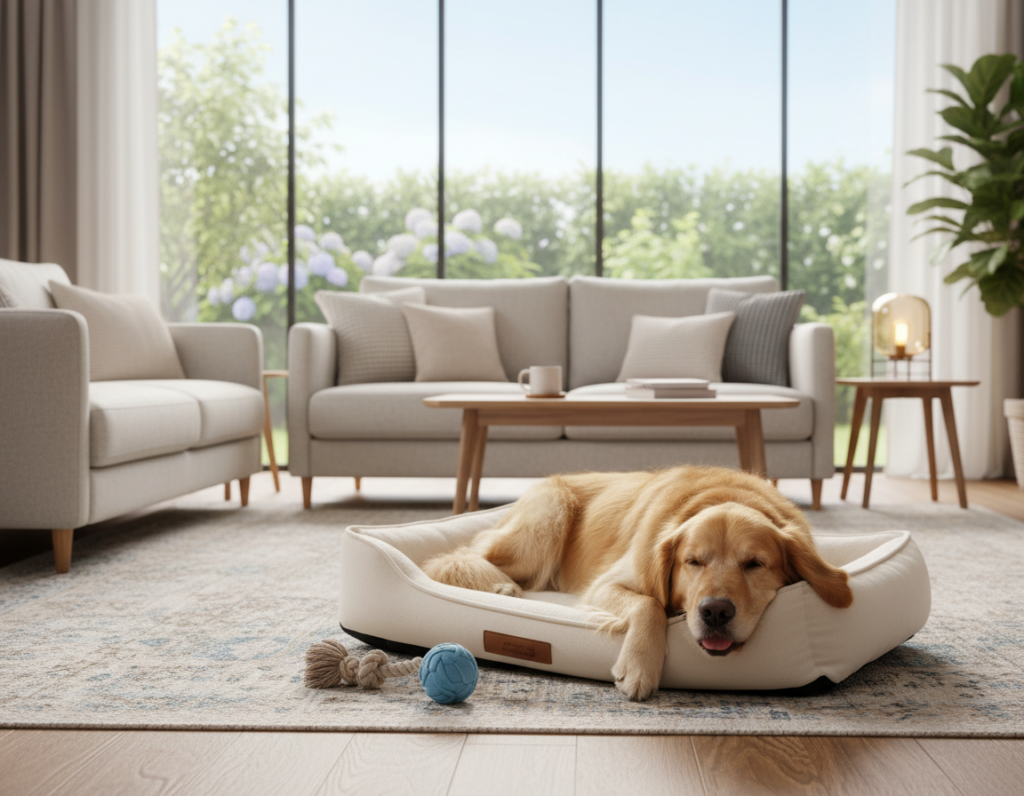
A steady rhythm of meals, walks, and rest helps pets know what to expect each day.
Practical routine template: feed at consistent times, walk on a predictable schedule, add a short training or play session, then allow quiet rest time. Repeat this daily so the household clock becomes familiar to your companion.
Create simple control cues
Teach small signals that give the animal choice and predictability. Examples: sit before petting, nose-touch before clipping a leash, or offer a paw to wipe. These cues help the pet feel in control and reduce uncertainty.
Plan for surprises and disruptions
Have a clear plan for guests, holidays, and deliveries. Use a separate room or baby gate, pre-stage toys or chews, and practice short departures so arrivals and doors stop being frightening.
Build a safe spot and crate basics
Set up a quiet room corner or a crate your pet already likes. Introduce the crate gradually, feed meals inside, keep sessions short, and never use it as punishment. Over time this becomes a positive retreat.
“If dog does X, then Y happens.” — Cornell CVM
How to Help a Dog With Separation Anxiety Using Desensitization and Counterconditioning
Start by defining a clear, measurable goal: teach your companion to accept brief alone periods without panic.
This goal should state what success looks like: calm behavior when left alone and quick recovery after a minor startle.
Set the baseline and watch early signals
Identify earliest signs such as pacing, panting, drooling, yawning, or dilated pupils.
Keep every practice below that threshold so the animal does not experience full fear.
Decouple departure cues
Practice pre-departure actions—pick up keys, put on a coat, then sit down—without leaving.
This reduces the power of cues that once predicted separation.
Graduated absences and food-based counterconditioning
Begin with out-of-sight steps and 1–2 second door exits, then add tiny increments over weeks.
For mild cases, offer a special food puzzle toy filled with low-fat cream cheese, peanut butter, or canned food right before short absences. Remove the toy on return so it stays special.
Structure sessions and avoid setbacks
Use calm exits and calm returns. Greet briefly, then wait for relaxation before resuming attention.
Allow recovery time between repetitions so arousal does not stack. Avoid leaving for long, intense alone periods during training.
Management options and confinement choices
When you cannot be home, consider a friend, professional dog sit, daycare, or taking the animal to work.
If a crate is already a safe place, it can help; if not, use an exercise pen or a dog-proofed room as a low-stress alternative.
“The treatment goal is to resolve underlying anxiety by teaching the animal to enjoy or tolerate being alone without fear.”
| Step | What to Do | Why it Helps |
|---|---|---|
| Define success | List measurable signs of calm during absence | Tracks progress and sets clear targets |
| Start below threshold | Short out-of-sight moves, 1–2 second exits | Prevents panic and allows learning |
| Countercondition | Special food puzzle before brief leaves | Alone time predicts reward, not fear |
| Use management | Dog sit, daycare, or in-home help | Prevents rehearsed panic while training |
For step-by-step guidance and evidence-based protocols, see ASPCA separation guidance.
Natural Ways to Help Calm an Anxious Dog
Adding predictable exercise and mental play reshapes how an animal spends its energy.
Daily movement lowers baseline stress by releasing endorphins. Regular walks, fetch, or a short sniff-focused outing before a long alone period help many pets settle when home.
Mental stimulation is a powerful buffer. Brief training sessions, puzzle toys, and scent games give the mind work instead of scanning for threats. Rotate toys and use food puzzles to keep interest high.
Sound, pressure, and scent supports
Calming music or white noise masks sudden outside sounds and reduces startle responses.
Thundershirt-style pressure wraps can help during storms or travel. Introduce them calmly so they predict comfort, not fear.
Pheromone products like Adaptil diffusers, sprays, or collars make the environment feel more reassuring during transitions.
Bonding, grooming, and supplements
Gentle grooming and short, predictable quiet rituals strengthen trust and promote relaxation.
Ask your veterinarian before trying supplements or calming treats. A vet can check interactions, dosing, and whether options match your companion’s overall health.
“Consistent routine plus sensible supports often reduces reactivity and speeds recovery.”
| Support | How to Use | When It Helps |
|---|---|---|
| Exercise | Daily walks, play, sniff time | Reduces stress, improves sleep |
| Mental Toys | Puzzle feeder, short training | Redirects focus, builds confidence |
| Sound | Calming music or white noise | Masks sudden noises, lowers startle |
| Comfort Tools | Pressure wrap, pheromone diffuser | Short-term relief during triggers |
| Supplements | Vet-approved treats or meds | Consider when behavior is persistent |
When to Get Professional Help From a Vet, Trainer, or Behaviorist
When home methods fail or behaviors escalate, professional help can protect safety and wellbeing.
Signs your dog’s level may require expert support
Call a pro if any of these occur:
- Self-injury from escape attempts or repeated frantic behavior.
- Refusal to eat or collapse of routine during short absences.
- Intense panic within minutes of departure or worsening aggression.
Choosing positive-reinforcement training and avoiding punitive methods
Seek trainers and behaviorists who use fear-free, reward-based work. Yelling, leash jerks, pinch or shock tools worsen stress and make behaviors harder to change.
Medication options and why to start with your veterinarian
A veterinarian or board-certified behaviorist can evaluate medical causes and decide if medication helps. Medication often lowers the level of arousal so training can succeed. Start with your vet for safe diagnosis and monitoring.
| When to Seek | Who to Contact | Why It Helps |
|---|---|---|
| Self-injury or severe panic | Behaviorist (CAAB/ACAAB or Dip ACVB) | Specialist assessment and structured plan |
| Persistent refusal to eat or sleep | Veterinarian | Rule out medical issues and consider meds |
| Escalating aggression or fear | Experienced CPDT or certified trainer | Safe, reward-based training and threshold control |
“Medication and training together can restore function and reduce suffering.”
Conclusion
Real progress happens when small, measurable wins are stacked over time. Start by finding the true driver of stress, then build a simple plan that increases predictability at home and reduces triggers.
Follow this order: recognize signs, identify triggers, rule out medical issues, add calming routine changes, and use humane training methods. Track short-term examples of success, such as faster settling after a delivery or interacting with a puzzle feeder during a brief absence.
Balance is key: routine, training, and management each play a part. If stress escalates, causes harm, or fails to improve, involve a veterinarian and a qualified behavior professional promptly. For clear, practical guidance see calm guidance.