Rising temperatures across the United States make planning to keep dog cool summer essential. Heat can overwhelm pets fast, so prevention matters more than a late fix.
This introduction sets a practical, how-to tone. You will get step-by-step guidance that focuses on prevention first and quick response if signs of heat stress appear.
Hot weather affects dogs differently than people because they have limited natural cooling. That difference makes everyday heat management a vital part of pet care.
Read on to learn how to cool your home, upgrade hydration, pick safer walk times, and choose cooling gear that actually helps. Safety is the priority: heat-related illness can become an emergency quickly, so the goal is always to reduce heat load before problems start.
Takeaway 1: Plan prevention first — shade, water, and timing cut risk.
Takeaway 2: Simple daily changes fit real routines and can prevent emergencies.
Why Hot Weather Is Hard on Dogs
C is wrong? No — here is a better start: A dog’s cooling tools are limited, which makes air movement and surface contact vital.
Core physiology: Dogs lose most heat by panting and through the pads of their paws when those pads touch cooler surfaces. Panting moves hot air from the lungs to the outside, while pads transfer heat to the ground or water.
Humid or still air reduces panting effectiveness. Without airflow, moisture on the tongue and in the respiratory tract does not evaporate well. That raises the need for extra ventilation or air conditioning.
Fur acts like insulation. It shields from sun but also traps warmth near the body as temperatures rise. And because dogs have few sweat glands compared with people, whole-body sweating is not an option.
- Short outdoor time or a warm room can overwhelm cooling capacity.
- Prevention means lowering heat exposure and improving heat dissipation opportunities.
| Cooling Method | How It Works | Limits |
|---|---|---|
| Panting | Evaporates moisture from respiratory tract | Less effective in humid, still air |
| Paw pads | Transfer heat to cooler surfaces | Depends on surface temperature and contact time |
| Fur | Insulates from sun and cold | Can trap body heat in warm conditions |
For more on which breeds are especially susceptible, see this resource on heat-sensitive dogs.
Know Your Dog’s Heat Risk Factors Before Temperatures Rise
Not every pet handles warm weather the same. A quick risk check helps you plan safe activity and spot trouble early.
Who is most at risk
- Brachycephalic breeds: short-nosed dogs pant less efficiently and heat faster.
- Seniors, overweight, and chronically ill pets: reduced stamina and medical meds can raise heat sensitivity.
Coat color and sun exposure
Coats change the heat equation. Light or thin fur can burn in direct sun, while dark fur absorbs more heat.
Safe temperature targets
| Measure | Practical guidance |
|---|---|
| Normal | Up to about 102.5°F (38.1°C) |
| Warning | 103°F+ — take action; risk of heatstroke increases |
| Note | Heat stress can occur even around 68°F (20°C) with humidity or exertion |
Talk with your veterinarian about your pet’s specific health limits and medication effects.
Watch for early signs: heavy panting, drooling, weakness or disorientation. Act before heatstroke develops.
How to Keep Dog Cool Summer at Home
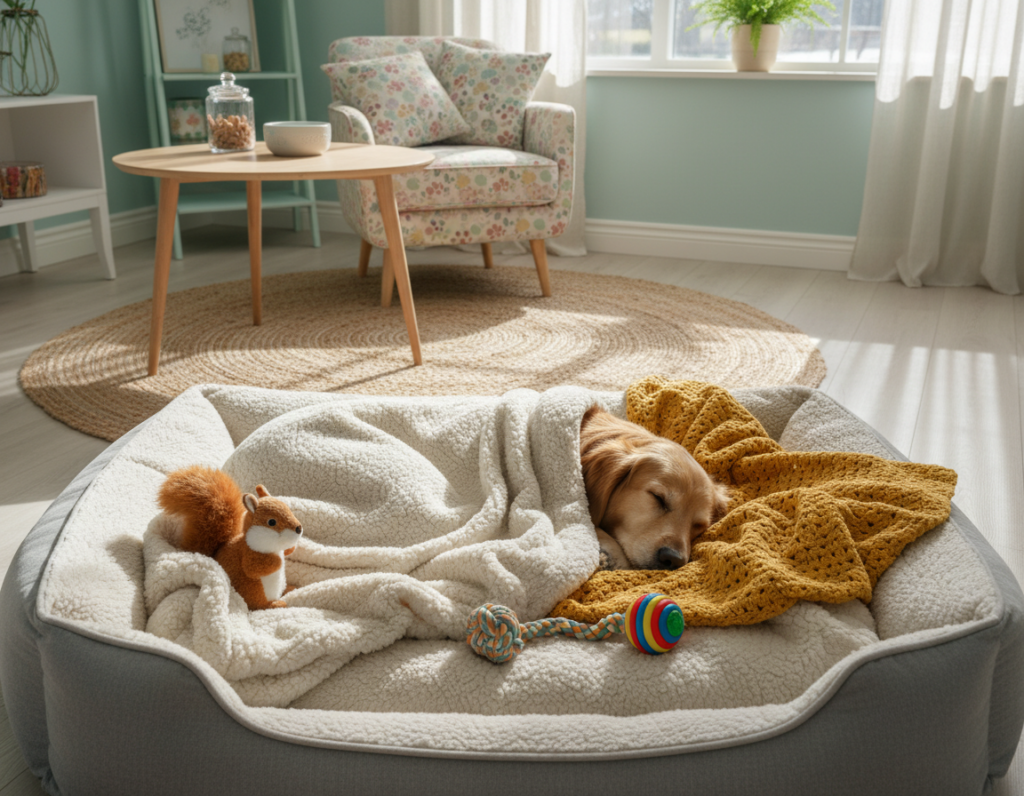
Create a dedicated cool zone inside your home to lower heat stress and give a safe resting spot during hot days.
Create a cooler indoor zone
Use air conditioning when available and run fans to move air across the room. Moving air helps panting and skin evaporation work better.
Close blinds and curtains on the sun-facing windows midafternoon to stop heat gain through glass.
Power-outage plan and coolest rooms
If the AC fails, move to the coolest room in the house — basements or shaded lower-level rooms are usually best.
Use a battery-operated fan and offer cool water; monitor for heat signs and limit activity.
Practical cooling surfaces
Lay a damp towel or a cooling crate pad on tile or an elevated mesh bed. Elevated beds let air flow under the body and aid heat loss.
Safe cooling rules
Apply cool water to the coat and underside, but avoid ice-cold contact. Very cold surface exposure can constrict blood vessels and trap heat inside.
Windows and floor hot spots
Watch sunlit tile floors, enclosed sunrooms, and rooms with west-facing windows. These areas can become warmer than the rest of the house.
| Method | How it helps | Best use |
|---|---|---|
| Air conditioning + fan | Lower room temp and increase air movement | All-day cooling in main living areas |
| Damp towel / cooling pad | Conductive and evaporative cooling for skin contact | Short rest periods or crate use |
| Elevated bed | Improves airflow under the body | Continuous use in shaded rooms |
| Basement / shaded room | Naturally cooler without power | Power outage plan or quiet daytime refuge |
Hydration Strategies That Actually Work in Summer Heat
Water is the single most dependable tool to help pets maintain normal body temperature on hot days. Proper fluids support panting, circulation, and overall heat balance.
Keeping fresh, clean water available at all times
Refill bowls regularly. Offer multiple stations around the house and place one in the coolest room during warm months.
Tip: Swap bowls during the day so water stays cool and inviting.
On-the-go hydration: travel bowls and extra supply
Carry a collapsible bowl and more water than you expect for walks, hikes, and car trips.
Extra supply prevents drinking from puddles or unsafe sources and reduces dehydration risk.
Cooling treats that encourage drinking
Make ice cubes with dog-safe fruit or plain broth. Water-based “pupsicles” are a low-calorie option for shaded downtime.
Avoid sweetened or xylitol-containing snacks. Monitor portions for small pets.
When dehydration is a concern
“If gums are dry, the skin tents, or the pet is lethargic, seek veterinary advice promptly.”
An unflavored pediatric electrolyte solution may help short-term, but consult your veterinarian before use.
| Scenario | Action | Why it helps |
|---|---|---|
| At home | Refresh bowls twice daily; multiple stations | Makes drinking easy and frequent |
| On the road | Carry extra water and a travel bowl | Prevents unsafe drinking and dehydration |
| After exertion | Offer small amounts often; frozen treats as reward | Rehydrates gradually and cools the body |
Safer Outdoor Time: Shade, Timing, and Smarter Exercise
Protecting paws and lowering heat load starts with when and where you go outside. Plan walks and play for the coolest parts of the day to reduce burn and overheating risk.
Walk when the ground is cooler to protect paws
Walk early in the morning or after sunset. These times cut exposure to high temperatures on asphalt and concrete.
Tip: Asphalt can reach about 52°C at peak sun and can burn sensitive pads quickly.
Checking pavement heat with the seven-second hand test
Place the back of your hand on the pavement for seven seconds. If it feels uncomfortably hot within that time, choose another surface.
This quick test helps you judge surfaces before letting dogs step on them.
Choose grass and shaded routes to reduce heat load
Grass and tree-covered areas lower radiant heat and provide breathable shade. Shaded routes cut direct sun exposure and help body temperature stay down.
Reduce intensity: shorter sessions and fewer high-energy games
Swap long sprints and intense fetch for short, slow walks, sniff-focused outings, or low-impact training games. Shorter sessions with breaks lower overall exertion.
Shade that works: trees and breathable shelter vs. enclosed houses
Tree shade and open, breathable shelters allow airflow and reduce trapped heat. Avoid enclosed houses or metal shelters that can act like ovens in strong sun.
| Action | Why it helps | When to use |
|---|---|---|
| Early/late walks | Cooler ground and air | Morning, evening |
| Seven-second test | Quick surface safety check | Before outdoor time |
| Shade route | Less radiant heat | Shaded parks, grassy areas |
Always watch your pet closely outdoors. Bring them inside at the first sign of heavy panting, lagging energy, or seeking shade — these are real ways to prevent heat emergencies.
Cooling Gear and Water Play for Hot Days
Practical cooling tools plus targeted water play make hot days manageable for most pets.
Evaporative and conductive gear that really helps
Cooling vests, bandanas, and gel mats work by evaporation or direct contact with the skin. Vests and bandanas soak up water and use air movement to lower surface temperature.
Gel mats add conductive cooling when placed on a cool floor. Use them for short rests, not all-day wear.
Choosing the right gear
- Fit matters: gear should allow free movement and not rub sensitive areas.
- Materials should be breathable and support airflow rather than trap heat.
- Avoid pads or fabrics that become wet and hold moisture against the skin for long periods.
DIY cooling kit for quick relief
Pack a spray bottle, a folded towel, and extra cool cloths for outings. Light misting to the underside, groin, and paws helps more than dousing with very cold water.
Tip: Do not use ice-cold objects directly on skin; moderate cool is safer and more effective.
Safe water play and pool time
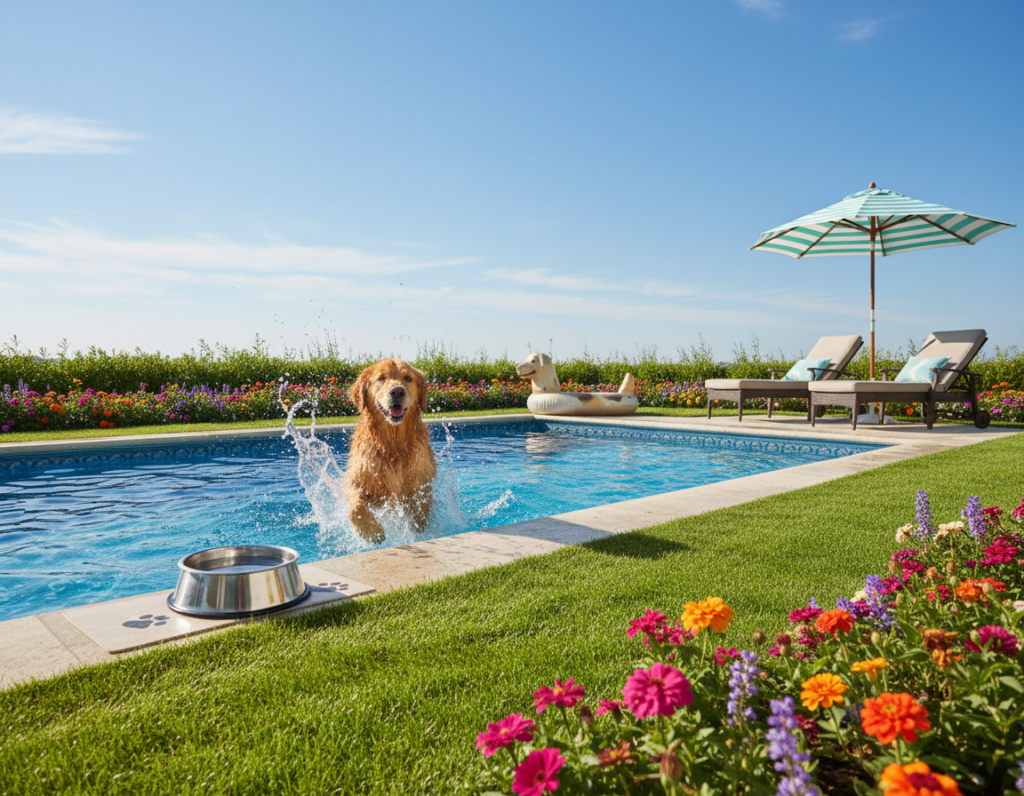
Kiddie pools, sprinklers, and gentle hose misting are fun and lower body heat when supervised. A life jacket designed for animals adds security near deeper water.
Always watch closely around a pool and limit sessions to short breaks with dry rest intervals.
Paw protection for hot surfaces
When pavement is hot, breathable booties shield paws and reduce burn risk. Choose booties that vent moisture so heat does not build underfoot.
Heat Dangers to Avoid Completely
Some everyday surfaces and short errands can become life-threatening in minutes when heat builds up.
Why parked cars overheat fast even with windows cracked
Never leave a dog in a parked car. Interior temperatures climb quickly and cracked windows do not stop that rise.
On a 23°C day, the cabin can hit about 43°C in 30 minutes. At 32°C outside, a car may reach 43°C in just 10 minutes. When it’s 35°C, interiors can reach 54°C after 30 minutes.
Those benchmarks show why a “quick” errand can turn fatal. Heatstroke can develop very fast — in as little as 15 minutes — so err on the side of caution.
Hot asphalt, artificial turf, and sun-baked patios as burn risks
Asphalt, tarmac, artificial turf, and baked patios can exceed ~52°C in peak sun. Brief contact can burn paw pads and cause immediate pain.
Burned paws reduce mobility and raise overall stress levels. That makes it harder for animals to reach shade or water, which increases the risk of heatstroke.
Recognize early signs — heavy panting, drooling, unsteady gait, or seeking shade. Move the pet to shade, offer water, and cool gradually. If signs worsen, seek veterinary care immediately.
- No parked cars: Always take the animal with you or leave them at home in a cool place.
- Avoid hot surfaces: Walk on grass, use shaded routes, or reschedule outings to cooler hours.
- Plan ahead: Choose indoor activities, alternate routes, or wait for lower temperatures rather than pushing through risky weather.
For practical prevention tips and emergency guidance, read this short guide on protecting pets in extreme heat.
Conclusion
Good preparation and small daily habits prevent most overheating emergencies.
Summary: Create a cool, ventilated zone at home, offer fresh water often, choose cooler walk times, and favor shade-first outdoor routes. These steps lower heat load and cut risk for vulnerable animals.
Daily checklist: refill water, close sun-facing blinds midday, plan morning or evening walks, and avoid hot pavement or surfaces.
If overheating occurs: move the pet to a cooler area, apply cool—not cold—water to the body, and contact your veterinarian right away. Even if recovery seems quick, professional advice is recommended.
Save or share these tips with family, pet sitters, and walkers so everyone follows the same safety routine.