Anúncios
This buyer’s guide helps U.S. pet owners pick food that matches life stage, size, activity, and budget without trusting marketing hype.
Vet-verified sources like PetMD and Chewy stress that the best options are veterinarian-approved and meet AAFCO standards. Talk with your vet before switching dog food to avoid gut upset and to tailor choices to existing health needs.
Expect the guide to show a clear decision path: vet input first, label basics (AAFCO), then life stage, size, and format choice — dry, wet, or fresh. We also cover safe treats, toppers, and common mistakes to avoid.
Consistency matters. Frequent changes make it hard to track what works and can cause digestive problems. This article aims to support smarter buying and better conversations with your veterinarian or a veterinary nutritionist.
What “healthy” means for dog food in the United States today
Labels can be confusing. Buyers see terms like real, natural, or premium and assume the formula covers all needs. In practice, the key is whether a product meets recognized nutrient standards and suits your pet’s life stage and condition.
Anúncios
Complete and balanced nutrition vs. “good ingredients” marketing
Marketing highlights ingredients, but ingredients alone don’t prove adequacy. The real predictors are feeding trials or a formulation statement that follows AAFCO guidelines.
“Focus on nutritional adequacy and vet guidance rather than buzzwords on the bag.”
| Claim on Label | What to check | Why it matters | Quick verdict |
|---|---|---|---|
| “Real chicken” | Guaranteed analysis & ingredient position | Protein source matters, but ratios matter more | Informative, not definitive |
| “All natural” | AAFCO statement or feeding trial | Shows if the formula supplies complete nutrients | Check label proof |
| “Premium” | Brand research and vet support | Research-backed formulas predict consistent outcomes | Worth investigating |
Why dogs’ digestive systems and needs differ from humans
Dogs process proteins, fats, and certain minerals differently than people. Sharing table scraps can unbalance mineral ratios and fatty-acid intake even if the food looks wholesome.
Anúncios
Buyer takeaways: look for nutritional adequacy, match to life stage, watch digestibility, and track clear outcomes—stool, coat, energy, and weight. Later sections cover safe whole-food add-ins and the 10% rule to keep balance.
Start with your vet: the safest shortcut to the right nutrition
Start your nutrition plan by booking time with a veterinarian who knows your pet’s full medical story. A vet’s review turns packaging claims into sensible next steps.
Why this matters: veterinary input accounts for prior labs, current medications, and chronic conditions. That context prevents choices that look good on a label but conflict with real needs.
When to consult a board-certified veterinary nutritionist
An advanced specialist is most valuable for complex cases. Consider a referral when your animal has multiple conditions, suspected food allergies, or gastrointestinal disorders like protein-losing enteropathy.
Also, ask for specialist input if commercial therapeutic options don’t fit or if you plan a home-prepared plan that must be balanced precisely.
Health history items to bring to the appointment
- Current food and treats (brands, amounts, and brands)
- Recent stool patterns and any changes
- Skin or coat changes and weight trends
- Appetite, activity level, and all medications
| Who to see | When to choose | What they provide |
|---|---|---|
| Primary vet | Routine switches, basic weight or stool concerns | Practical advice, diagnostics, and monitoring plan |
| Board-certified nutritionist | Multi-condition cases, allergies, complex GI issues | Custom formulas, home-prepared balancing, specialized protocols |
| Referral team | When medical disease needs coordinated care | Integrated treatment and targeted nutrient adjustments |
Conditions like kidney disease or diabetes change protein, sodium, and calorie targets. Self-selecting food without advice can worsen disease markers. Use your vet’s recommendations to narrow choices, then apply the label checks later in this guide.
Monitoring is essential. Vets interpret outcomes over time and decide if portions, products, or tests should change. That follow-up is part of true nutritional care.
Match food to life stage: puppies, adults, and seniors
Choosing food by life stage helps avoid nutrient gaps that show up as growth or mobility problems later. Life-stage formulas vary in calorie density and mineral ratios to meet changing needs. Use life stage as your first filter to narrow choices.
Puppy growth needs and why mistakes can have lifelong impact
Puppies need controlled growth and precise calcium-to-phosphorus balance. Incorrect ratios can cause skeletal and developmental problems that last a lifetime.
Avoid DIY or unbalanced homemade plans for a puppy unless a board-certified nutritionist has formulated them. Commercial puppy formulas are designed to deliver the higher nutrient density young animals require.
Adult maintenance diets for stable energy and weight
Adult food focuses on predictable digestibility and steady energy so you can track changes easily. Keep portions consistent to maintain healthy weight and body condition.
When small shifts occur, predictable formulas make it easier to spot appetite, stool, or activity changes in dogs.
Senior support: nutrients and moisture for aging dogs
Seniors often need more support for lean mass, mobility, and immune health. Consider higher-moisture formats if thirst decreases with age.
“Senior” classification depends on activity and health, not only age in years. Some animals benefit from a modified formula earlier, based on medical history.
| Life stage | Key priorities | Quick buyer tip |
|---|---|---|
| Puppy | Controlled growth, correct calcium/phosphorus, higher nutrients | Choose labeled puppy formula; avoid unbalanced homemade plans |
| Adult | Stable energy, digestibility, weight maintenance | Pick a consistent formula to monitor changes easily |
| Senior | Lean-mass support, mobility nutrients, extra moisture | Consider wet or mixed formats and check mobility-focused ingredients |
Size and breed considerations that change what to buy
Size and breed shape what food fits best, from kibble shape to calorie targets.
Kibble shape and safety: Large pieces can be a choking hazard for small breeds. Pick a kibble your dog can chew comfortably. If your pet gulps or has dental limits, try a smaller or softer format and watch feeding behavior.
Kibble size and choking risk for small dogs
Small mouths need smaller pieces to reduce choking and improve chewing. Brands often label sizes; test a handful first at home.
Metabolism differences: calories per pound vary by size
Smaller dogs burn more calories per pound than larger breeds. That means portioning must match body condition, not bowl size. Use a body condition score and adjust portions to prevent weight gain.
Breed-linked sensitivities to watch for in ingredients
Certain breeds show tendencies toward GI or skin reactions tied to specific ingredients. Track recurring problems and confirm with your vet before removing ingredient groups.
“Choose kibble that fits the mouth and calories that fit the activity level.”
- Practical step: choose a kibble size your pet can break with one or two chews.
- Measure by condition: adjust portions using a body condition score, not cup size alone.
- When in doubt: consult a professional and choose the right dog food for breed-specific guidance.
Lifestyle and activity level: feeding athletes, couch potatoes, and everyone between
Feeding for lifestyle means balancing portions and protein to support work, play, or rest.
Calorie density and portion control for weight management
Match calorie density to activity: athletic dogs often need more energy per cup, while sedentary animals benefit from lower-calorie formulas and measured portions.
Portion control is the primary tool for managing weight. Extras like chews and table scraps can erase a calorie deficit quickly.
Protein needs for lean muscle, recovery, and daily energy
Protein supports lean muscle and recovery after exercise. Consistent, animal-based protein sources are common in complete formulas because they supply essential amino acids.
For working or athletic animals, choose a formula with stable protein levels to help keep energy steady and preserve muscle during training.
Treat strategy that won’t derail progress
Apply the 10% rule: treats should be about ten percent of daily intake. High-fat choices add calories fast and can cause weight gain.
- Count treats in your daily calorie total.
- Swap high-calorie snacks for low-calorie produce when suitable.
- Use treats for training, but favor small pieces and repeatable rewards.
“Track weight and body condition; adjust portions gradually rather than making sudden cuts.”
Weigh your pet periodically and note body condition. Small, steady adjustments help maintain ideal weight and consistent stool, while preserving treats for training and rewards.
For more guidance on matching food to lifestyle, see choosing the right dog food.
Core nutrition basics every label should support
Certain items must appear on any label that truly delivers complete nutrition. Read packaging to confirm the formula supplies protein, energy sources, essential fats, and balanced vitamins and minerals.
Protein: animal-based sources to look for
Protein should come from named animal sources such as chicken, beef, turkey, eggs, or fish. These supply the essential amino acids most pets need.
Check the ingredient order and guaranteed analysis. A single ingredient like chicken matters, but total protein percentage and digestibility determine real value.
Carbohydrates and fiber
Carbs provide usable energy and fiber for gut health. Grains, fruits, and vegetables can be useful sources rather than empty fillers.
Look for recognizable items—brown rice, oats, peas, pumpkin, or apples—that add both energy and soluble or insoluble fiber.
Fats and fatty acids that support skin, coat, and immune function
Essential fatty acids, especially omega-3 and omega-6, keep skin and coat in good condition and support the immune system. Fish oil and linoleic-acid sources are common examples.
Signs of deficiency include dull fur or flaky skin; a formula with declared omega levels is preferable.
Vitamins and minerals: why ratios matter
Labels should show vitamin and mineral coverage, not just single additions. Calcium and phosphorus ratios are critical, and trace minerals like zinc, iodine, and selenium have defined roles.
Do not assume adding off-the-shelf supplements fixes an unbalanced formula. Improper supplementation can disrupt mineral ratios and cause harm.
- Complete and balanced means adequate protein, carbs/fiber, essential fats/fatty acids, and correct vitamins and minerals.
- Use ingredient examples to judge sources, but evaluate the whole formula and AAFCO statements later in this guide.
The healthy dog diet checklist for choosing commercial dog food
Use a simple, step-by-step filter to separate complete formulas from marketing claims. Below is a quick checklist you can use in an aisle or while shopping online.
Fast commercial food checklist
- Find the AAFCO nutritional adequacy statement — confirms the product is formulated or tested to meet minimum nutrition.
- Check guaranteed analysis for reasonable protein and fat levels for the life stage.
- Scan ingredients for named animal proteins and recognizable whole-food sources.
- Confirm brand quality — research-backed formulas, transparent quality control, and veterinary involvement.
- Consider palatability and consistency — pick a product your pet accepts to avoid frequent switching.
- Match budget and portions so you can feed consistently over time.
What the AAFCO statement means
The AAFCO line tells you if a product meets nutrient profiles or passed feeding trials. It’s one of the fastest ways to filter out incomplete products that only tout single ingredients.
Choosing reputable brands
In buyer terms, a reputable brand uses research-backed formulas, strong quality control, and veterinary experts in formulation. Start your search with widely vet-recommended names like Hill’s Science Diet, Purina Pro Plan, and Royal Canin, then refine based on your pet’s needs.
“Pair this checklist with your vet’s advice for animals with special medical needs.”
Dry, wet, fresh, and freeze-dried: picking the right format
Choosing the right format—kibble, wet, fresh, or freeze-dried—starts with matching daily routine, budget, and appetite. Think about cost per day, ease of storage, moisture needs, and how simple portions are to control.
Dry kibble for convenience and budget stability
Dry kibble is popular because it stores well, measures easily, and gives predictable cost per day. It supports consistent portioning, which helps track weight and body condition.
For many owners, kibble fits busy schedules and longer shopping cycles. If dental comfort becomes an issue, reassess format choices as years pass.
Wet food for moisture and picky eaters
Wet food adds moisture and can tempt picky eaters without excess treats. It’s useful for boosting daily water intake and for animals with reduced appetite.
Wet formats usually cost more per serving and spoil faster once opened, so weigh palatability against convenience and waste.
Fresh and minimally processed options: what to verify
Fresh plans are minimally processed and appealing, but verify that the company employs veterinary nutritionists and that recipes meet AAFCO statements.
Reputable examples often cited in vet-reviewed contexts include JustFoodForDogs JustFresh, Freshpet Homestyle Creations, and Nom Nom Freshly-Made. These are examples, not endorsements.
“Match the format to routine and reassess as needs change over the years.”
- Compare formats by cost per day, convenience, storage, moisture, and portion control.
- Pick kibble for shelf stability and budget predictability.
- Use wet food to increase moisture or to win over picky eaters.
- For fresh plans, check veterinary expertise and AAFCO compliance before committing long-term.
Homemade diets: benefits, risks, and who they’re actually for
Some owners prefer kitchen-made meals for control, but that choice brings trade-offs few expect.
Who homemade plans suit: owners willing to follow a precise, measured recipe and work with a board-certified veterinary nutritionist. This approach is most sensible for specific medical cases where commercial options fail.
Real benefits
Ingredient control lets you avoid triggers and raise moisture for better hydration. In targeted situations, tailored formulas can address clinical needs under specialist oversight.
Major risks and data
UC Davis found 95% of 200 home-cooked recipes lacked at least one essential nutrient and 84% lacked multiple. Dogs need nearly 40 daily nutrients; missing items like vitamins or minerals cause real problems over time.
Diet drift and puppy risk
Many owners change recipes within a year; fewer than 15% stick to the original plan. Small swaps, skipped supplements, or altered cooking methods—called diet drift—create gradual deficiencies.
Puppy growth is especially vulnerable. Incorrect calcium/phosphorus ratios during growth can cause lifelong harm. For growing animals, avoid unverified home plans unless a specialist designs and monitors them.
If you want fresh food without the risk, consider reputable fresh commercial options that meet AAFCO standards instead of unverified recipes.
Food safety and bacteria: protecting pets and people at home
Kitchen safety belongs in every feeding plan because bacteria can affect both pets and people. Families with kids, seniors, or immune challenges face higher risk when handling animal proteins.
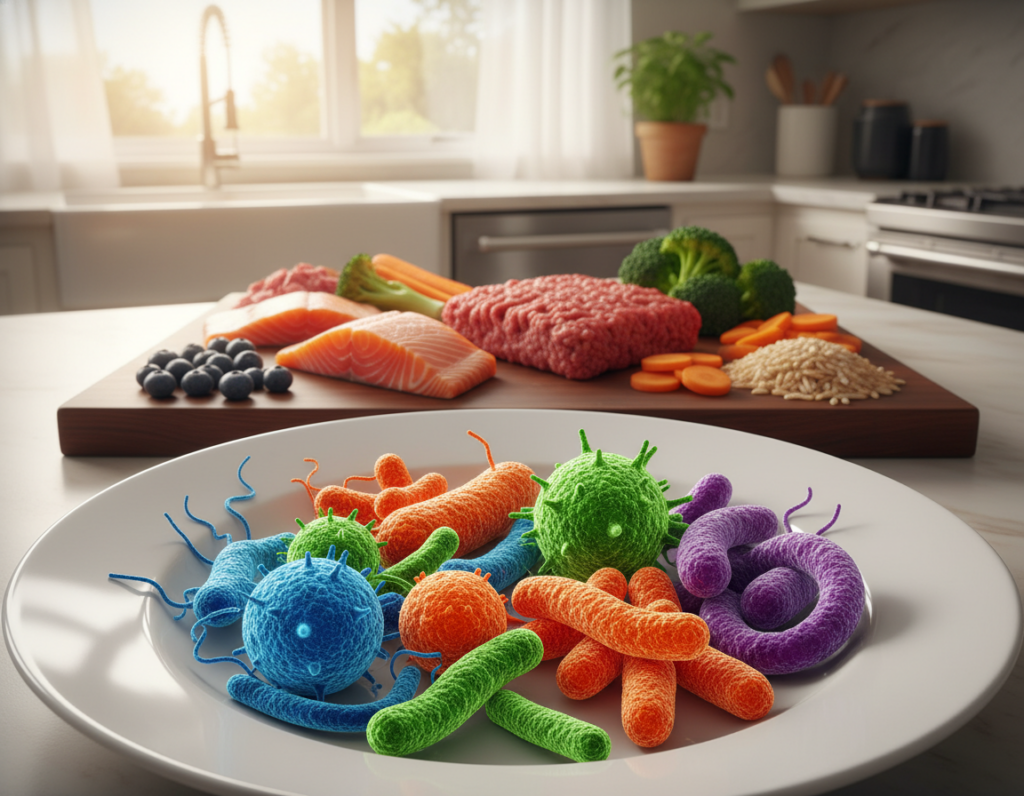
Fully cook meat and eggs to reduce pathogen risk
Always cook meats and eggs thoroughly before using them as toppers or in home recipes. Salmonella can survive undercooked proteins and cause illness in a person or a dog.
Other pathogens and cross-contamination risks
E. coli and Listeria are additional threats linked to raw or poorly stored food. Cross-contamination from cutting boards or utensils makes the kitchen a common source of exposure for dogs and household members.
Practical hygiene, storage, and portioning basics
- Wash hands before and after food prep and after handling raw meat.
- Sanitize cutting boards and keep raw and cooked tools separate.
- Clean bowls after each meal and refrigerate leftovers within two hours.
- Thaw safely in the fridge, not on the counter, and discard food that smells off.
Takeaway: consistent hygiene and correct storage protect long-term health and reduce GI problems that owners sometimes mistake for food issues. A safe kitchen keeps both people and pets well.
Using whole foods as toppers and treats without unbalancing the diet
Smart toppers add texture and flavor, but keep the main food as the nutritional base. Treats and add-ins should remain a small share of daily calories to preserve balance.
The 10% rule: keeping treats as a small share of daily intake
Keep it simple: treats and toppers should be about 10% of daily calories. That prevents whole foods from displacing a complete commercial formula.
Best vet-friendly add-ins
Use pumpkin for fiber and gentle prebiotic support. Offer plain yogurt sparingly for probiotics—avoid added sugar or sweeteners. Cooked white rice can be a short-term bland option when a vet advises it, but use caution with diabetes.
Crunchy produce and safe options
Good crunchy choices include carrots, green beans, cucumbers, apples (no seeds), and blueberries. Chop produce into bite-size pieces, especially for small or fast-eating dogs.
Practical checks: introduce one new thing at a time, watch stool and skin, and stop if GI upset appears. Keep treats predictable so the main food continues to meet all nutrient needs.
Foods to avoid: common diet mistakes and toxic risks
Certain human foods pose real hazards; knowing which to avoid prevents emergencies. Keep a short plan for quick checks and action if exposure occurs.
Toxic ingredients and why the ASPCA list matters
Use the ASPCA toxic foods list as your go-to reference. It names items that cause poisoning and tells owners when to call a vet or the ASPCA Animal Poison Control Center.
High-fat pitfalls: pancreatitis and weight risks
Fatty add-ons can trigger pancreatitis and speed weight gain. Even small amounts of fatty table scraps or peanut butter repeated often add calories and strain the pancreas.
Unsalted peanuts are okay in tiny amounts, but avoid brands with xylitol and skip large servings.
Bone hazards and choking risks
Cooked chicken bones can splinter and perforate the gut. Raw or cooked bones and oversized kibble pieces also cause choking. Cut produce small and match kibble size to your animal’s mouth.
| Hazard | Why | Quick action |
|---|---|---|
| Toxic ingredients | Can cause acute poisoning | Check ASPCA list; call vet/poison control |
| Fatty foods | Pancreatitis, weight gain | Limit treats; avoid xylitol |
| Bones/kibble size | Splintering, choking | Choose safe chews; size-appropriate kibble |
“When in doubt, contact your veterinarian or the ASPCA Animal Poison Control Center right away.”
Special health needs: when “regular” food isn’t enough
For animals with ongoing medical problems, food can be part of the treatment plan—not just daily fuel. Conditions like sensitive stomachs, obesity, dental issues, diabetes, kidney disease, and urinary tract concerns change what “appropriate” looks like. In many cases, a targeted therapeutic formula replaces a standard maintenance product.
Common scenarios that require specific choices
Sensitive stomach: low-residue, limited-ingredient or highly digestible formulas ease GI issues.
Obesity: weight-management products focus on lower calories and higher fiber to preserve lean mass.
Dental limitations: softer textures or wet options help animals that cannot chew dry kibble safely.
Diabetes: consistent carbohydrate sources and portion control help stabilize blood sugar under vet supervision.
Kidney and urinary disease: some plans need lower phosphorus or altered minerals; higher-moisture formats often help seniors and urinary cases.
How therapeutic formulas differ
Therapeutic foods target specific nutrient profiles—controlled protein, precise electrolyte ratios, altered fat, or added compounds for urinary pH. They are evidence-based, not just ingredient-driven, and should be chosen with a vet or a board-certified nutritionist.
Monitoring checklist and timelines
- Stool quality, frequency, and gas
- Vomiting occurrences and persistence
- Itchiness, rashes, or skin changes
- Coat shine and hair loss
- Energy levels and play/activity
- Weight trend (steady or drifting)
Note: stool changes can show quickly after a switch; skin, coat, and weight improvements often take weeks to months. If unexplained signs persist, contact your vet rather than cycling foods rapidly—frequent changes can worsen GI issues and hide the true cause.
“Targeted nutrition is a medical tool. Use it with veterinary guidance for the best outcomes.”
Budget, buying, and transition plan for long-term success
Smart buying treats cost as part of long-term care. Calculate the true cost per day and pick an option you can afford to feed consistently for months or years.
Choosing an affordable option you can stick with
Compare price per day, not just bag price. Divide the bag cost by the daily serving to reveal real expense. Add typical treat spending and any topper costs.
Tip: a slightly pricier formula that your pet accepts and you can buy regularly is usually better than frequent swaps to cheaper varieties.
How to transition foods and minimize GI upset
Change slowly over 7–10 days by mixing more of the new food each day. Watch stool, appetite, and energy.
If upset appears, pause and return to the last tolerated ratio. Contact your veterinarian if vomiting, blood, or severe diarrhea occur.
Tracking progress year over year
Record weight, body condition, stool quality, and activity at least once a year. Note changes in palatability or cost that affect your plan.
“Treat budget and consistency as tools for long-term wellness.”
Conclusion
Start with your vet, consult verified sources, and use AAFCO proof as a basic filter for any purchase.
Use this guide’s decision path—vet input, AAFCO adequacy, life-stage and size fit, then a format you can sustain—as your shopping roadmap. Track measurable outcomes: stable weight, steady stool, good energy, and clear skin and coat.
Treats and toppers should support, not replace, a complete plan. Apply the 10% rule to help keep overall balance. Prioritize food safety, avoid toxic items, and reduce choking risks with size-appropriate options.
Needs change as dogs age. Re-check portions and product fit regularly, use reputable sources, and work with your veterinarian to help keep long-term health on track.