Anúncios
At-home care is more than a bath and a brush. This quick intro defines dog grooming basics and shows why a small routine keeps your pet happy and healthy.
Start with coat care, bathing, drying, nail trims, ear and eye checks, and teeth cleaning. Learn simple fixes for mats, skunk spray, or a loose nail so you can act fast and calm.
We’ll set clear, beginner-friendly steps and note when to call a groomer or veterinarian. You’ll also get a short tool list: brushes, shampoo, clippers, nail trimmers, otic solution, toothpaste, towels, and styptic powder.
Safety and comfort guide every tip: use warm water, pet-specific products, gentle handling, and slow desensitization for puppies or anxious animals. Frequency varies by breed, coat type, and shedding, so the routine is easy to adapt to real life.
Why Grooming Matters for Your Dog’s Health and Comfort
A short weekly check can reveal skin, ear, eye, or nail issues early and save you stress later. Treat regular care as a mini wellness exam that looks beyond the coat to overall health.
Anúncios
What to notice during checks
Coat and skin: look for dry patches, redness, dandruff, or mats forming behind the ears and under the legs. Changes in shine may point to diet or product issues.
Ears and eyes: note odor, redness, swelling, or brown/yellow discharge in the ear. Wipe eye discharge gently with a soft cloth — never rub the eyeball.
Nails and mobility: if you hear clicking on floors, nails are too long. Long nails can alter gait and cause pain.
Anúncios
How this helps your home and routine
Consistent brushing removes dirt and loose hair, cuts down fur tumbleweeds, and keeps furniture cleaner. That also lowers allergens tracked into the home.
- Pair short sessions with calm times and rewards.
- Keep checks brief so your pet stays comfortable.
- Use these moments to spot cuts, burrs, or hot spots early.
| Area | Signs to watch | What to do |
|---|---|---|
| Coat | Dry patches, mats, dull hair | Brush, check diet, try a gentle shampoo |
| Skin | Redness, flakes, hot spots | Clean, avoid irritants, consult vet if swollen |
| Ears | Odor, discharge, swelling | Wipe outer ear; vet visit for persistent signs |
| Nails | Clicking, uneven wear | Trim small amounts; use styptic if needed |
Build Your At-Home Grooming Kit With the Right Tools
“The right set of supplies reduces surprises and helps you handle common coat and nail tasks with confidence.”
Dive into a compact kit that covers coat care, bath work, nails, ears, eyes, and oral health. Keep everything in a single bag or small box so you save time and avoid last-minute searches.
Brushes and combs:
- Slicker brush — general detangling and removing dead hair.
- Pin brush — for long single coats; bristle for short/medium coats.
- Rubber curry — polishes short coats; flea comb for fine tangles.
- Medium-toothed comb plus fine or wide options depending on coat type.
Bath, nails, ears, teeth, and trimming
For bath time pack pH-balanced shampoo and shampoo conditioner, non-slip tub setup, warm water, and old towels. Nail work needs good light, dog nail clippers with a guard, and styptic powder for quick nicks.
Oral care: a dog toothbrush and dog toothpaste keep teeth and teeth gums healthy; gauze or finger brushes help resistant pets.
Also include otic solution, sterile gauze, and dog-safe wipes for ears and eye care. If clipping hair, choose electric clippers and blades (Oster No. 10 is common) and use guarded combs near skin folds.
“Store supplies together and set a regular time so grooming becomes routine instead of a scramble.”
Understand Your Dog Coat Type Before You Groom Dog Hair
Your pet’s coat dictates the tools you pick and how often you should work on it. Identifying whether the coat is short, long single, or double sets the plan for brushing, bathing, and trimming.
Short coat, long single coat, and double coat needs
Short coat: Low-maintenance. A weekly brush removes loose hair and keeps skin healthy. These coats rarely mat but may shed visibly.
Long single coat: Needs daily or every-other-day brushing with a pin or bristle brush to prevent tangles and matting. Longer hair also benefits from leave-in conditioner after baths.
Double coat: Thick undercoat plus a topcoat. Use a slicker or rake to remove dead undercoat during shedding seasons. Avoid frequent shaving — it can damage the insulating undercoat and alter regrowth.
When shaving is the wrong move
Shaving is not a quick summer fix for many breeds. Removing the undercoat can cause sunburn, uneven regrowth, and permanent texture change. Reserve full clipping for severe matting or per professional advice.
Choose tools and timing by outcome
Pick tools for the result you want: reduce shedding with a de-shedding tool, prevent mats with a slicker, or keep long hair tidy with a pin brush.
- Baseline: brush most dogs once a week.
- Long or heavy-shedding coats: add short daily sessions for better control.
- Short coats: quick weekly checks save time and spot issues early.
Tip: Ask a breeder, groomer, or vet tech for breed-specific advice. Small, regular sessions beat long, stressful grooming marathons and save time in the long run.
Dog Grooming Basics: Set a Routine That Fits Your Dog and Your Schedule
Set a steady care plan so short weekly touch-ups and deeper monthly sessions fit into real life. A clear plan makes maintenance less stressful and helps you spot problems early.
Weekly vs. monthly: a realistic split
Weekly quick tasks take little time and keep issues from growing. Do light brushing, a brief teeth swipe, check nails and a fast look at the ears and eyes.
Monthly deep session is where you follow a full sequence: brush thoroughly to remove tangles, do pre-bath trims if needed, bathe and rinse well, towel or no-heat dryer dry, clean ears with an otic solution, trim nails, brush teeth, and finish with a final brush and leave-in conditioner.
Help for puppies and anxious pets
- Start early with short, calm touches and rewards.
- Let them sniff tools, then touch paws and ears daily.
- Introduce dryers and clippers from a distance before using them up close.
- Use treats and praise to make each step a positive part of home life.
“Consistency is the part that makes care manageable; pick times you can keep.”
When to get help: leave anal-sac expression and severe mats to a professional groomer or vet. Regular at-home sessions will reduce how often you need pro time.
Brushing Your Dog the Right Way to Protect Skin and Coat
Learn simple brushing steps that reach the skin without causing irritation or pulling. Proper technique stimulates circulation, lifts flakes, and removes loose hair safely.
How to brush down to the skin without irritating skin
Use a coat-appropriate tool and start with gentle pressure. Hold hair near the base to reduce tugging, then use short strokes that follow the hair growth.
Line brushing means working in narrow strips from topcoat to skin. Move slowly and watch for sensitive spots. Stop if you see redness.
Where mats and tangles form most often
High-risk zones include behind the ears, under the legs and armpits, along the collar line, and at friction points. Check these areas every session.
For mats, use a slicker or a mat rake for removal. Work from the edges inward and never yank—slow work prevents skin damage.
How regular brushing reduces shedding and keeps coat shiny
Brushing removes loose undercoat and debris, which cuts down on tumbleweeds in the home. It also spreads natural oils that add shine and protect skin.
Short, frequent sessions beat one long session. Aim for comfort and health, not perfection.
- Tool picks: pin brushes for long hair, bristle brushes for short/medium coats, slickers for dead hair, curry combs to polish.
- Debris tip: use a comb to ease out burrs or plant material rather than pulling.
| Need | Tool | Action |
|---|---|---|
| Remove tangles | Slicker brush / mat rake | Work edges first; short strokes; hold base to avoid pulling |
| Polish coat | Curry comb / bristle brush | Use circular motions to lift oils and smooth hair |
| Long single coats | Pin brush | Brush daily to prevent matting and distribute oils |
| Reduce shedding | De-shedding tool / slicker | Remove loose undercoat during shedding season |
Bathing at Home Without Drying Out Your Dog’s Skin
Plan baths around coat type and activity level to avoid stripping essential oils.
How often to bathe: bathe when the coat is dirty, smelly, or after messy outings. Too-frequent washing removes natural oils and makes skin dry and itchy. Short-haired, low-activity pets need fewer baths than active or long-haired ones.
Bath steps that protect skin
Use warm water in the tub and wet the coat thoroughly. Apply a pH-balanced shampoo from the neck back and work the lather to the skin. Rinse until the water runs clear.
Pick the right shampoo type
Choose an oatmeal formula for dry skin or a hypoallergenic/medicated option for irritations. Never use human products; they can strip oils and upset skin balance.
Protect ears and eyes
Place cotton balls in the ears to keep water out and wash the face gently with a damp cloth. A drop of mineral oil can soothe eyes if advised by your vet.
- Use a non-slip mat and keep water comfortably warm.
- Speak calmly and reward good behavior to make bath time easier.
- Avoid outdoor baths in cold weather; see a vet for sores or severe irritation.
“A measured routine keeps the coat clean while preserving natural oils and skin health.”
Drying, Detangling, and Post-Bath Coat Care
How you dry and detangle after a bath makes a big difference in coat health and comfort.
Towel, dryer, or no-heat human dryer?
Towel drying works well for most pets. Pat and blot to remove surface water rather than rubbing, which can tangle hair.
Dog hair dryers are best for thick, double coats; they move more air at lower heat and speed up drying safely.
If you use a human hair dryer, set it to no heat and keep it several inches away to avoid overheating skin.
Post-bath detangling sequence
Start with gentle towel blotting, then brush once the coat is partially dry to remove loose hair and small tangles.
Work in sections and use short strokes. Finish with a light brush-through when fully dry to prevent mats from setting.
When and how to use leave-in conditioner
Use leave-in conditioner for dry or tangle-prone coats, or after dematting work. Spray lightly and comb through to avoid greasy buildup.
- Stage towels and your favorite brush before the bath to save time.
- Keep your pet on a non-slip surface and brush in sections to catch damp spots.
- Post-bath brushing is where you lock in the benefits: less shedding, a smoother coat, and fewer mats until the next session.
“A quick, staged routine saves time and prevents problems—dry well, brush smart, and use light conditioner when needed.”
Nail Trimming at Home for Healthy Feet and Better Mobility
A short, steady nail routine keeps paws healthy and mobility strong.
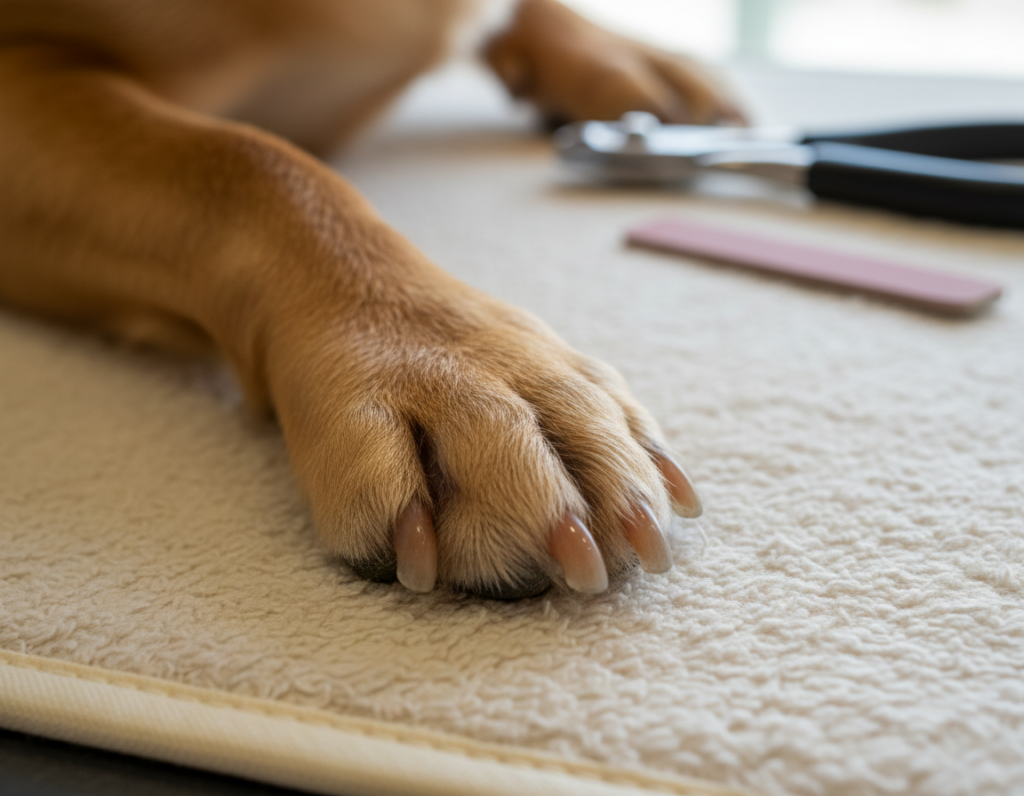
Why it matters: Overlong nails change how the foot lands. That can make walking awkward and increase the risk of cracks or painful breaks near the base.
Signs nails are too long
If you hear clicking on hard floors, the nails are too long. Look for nails that curve downward or force toes to splay outward.
Safe clipping method
Stabilize the paw and clip tiny amounts at a time. Stop before the quick—it’s hard to see on dark nails. Trim only the hooked tip and repeat weekly micro-trims to lower stress.
Dewclaws and checks
Don’t forget dewclaws—trim them carefully. Inspect pads and nails for cracks, redness, swelling, or signs of infection.
If the quick bleeds
Apply styptic powder and gentle pressure immediately. Pause the session so your pet stays calm. If bleeding won’t stop, contact your veterinarian or a professional groomer.
| Sign | What to do | Tool |
|---|---|---|
| Clicking on floors | Trim hooked tip; schedule weekly micro-trims | Sharp clipper, file |
| Nails curving or toes splaying | Shorten slowly; check gait | Clippers, light restraint |
| Cracks or swelling | Inspect, clean, vet if infected | Antiseptic, styptic powder |
“Small, regular trims keep paws functional and reduce emergency trips to the vet.”
Ear Cleaning and Eye Care to Prevent Irritation and Infection
Clean, dry ears and gentle eye wipes are easy steps that protect comfort and health. Make ear and eye checks a short part of your regular home routine so you catch problems early.
How to clean the outer ear safely and dry after water
Work only on the outer ear. Gently lift the pinna so you can see inside. If you use an otic solution, apply a few drops as directed, then wipe reachable surfaces with gauze or a cotton ball.
Never push cotton deep into the canal. After baths, swims, or rain, pat the ear dry and allow air to circulate to remove moisture.
Red flags that need veterinary attention
Stop home cleaning and see a vet if you notice severe redness, swelling, lots of debris, brown or yellow discharge, or a strong yeasty odor.
Wiping eye discharge without rubbing the eye
Moisten a soft cloth or cotton ball with warm water and wipe from the outer corner away from the eye. Use dog-safe wipes or eyewash; avoid human products that can sting or upset delicate skin.
“Routine ear and eye care is a small part of overall health that saves stress and prevents infection.”
- Step-by-step ear: view, apply solution (optional), wipe outer areas, stop if painful.
- Moisture control: dry after water exposure to lower infection risk.
- Eye care: wipe corners outward; avoid rubbing the eyeball.
Brushing Teeth to Support Teeth, Gums, and Whole-Body Health
Simple tooth care at home prevents plaque buildup that starts within 48 hours. Oral bacteria can harden into tartar and affect comfort, appetite, and broader health.
How often to brush
Aim for daily brushing when possible. If that’s not realistic, commit to several short sessions per week. Plaque begins to form after about 48 hours, so regular attention matters.
Step-by-step brushing your pet can tolerate
Start slow. First, touch the muzzle and lift lips so your animal accepts handling. Rub gums and outer teeth with a clean finger to build trust.
Next, let them lick a small amount of dog toothpaste, then introduce a soft brush. Brush the outer surfaces with light pressure for a few seconds and reward immediately.
Useful backups between brushing sessions
Dental chews and chew toys can help reduce plaque accumulation, but they do not replace brushing. Use them as supplements on busy days.
“Keep sessions short and positive to make oral care a consistent part of home grooming and overall health.”
Fix Common Grooming Problems at Home
With simple tools and a steady approach, many common pet-care problems are solvable at home.
Dematting: a safe decision tree
Identify mild tangles versus tight mats. Mild tangles loosen with a detangler spray and a comb. Tight mats that pull at the skin need stepped care.
Step-by-step dematting
Spray a detangler, hold the hair at the base, and work from the outside inward with a comb. If the comb stalls, try a mat rake with short, careful strokes.
Use a mat splitter only when you can protect the skin with your free hand. Stop if the pet shows pain and consider a pro.
Clippers, skunk odor, and paw care
For severe matting you cannot comb out, use a guarded clipper slowly or hand the task to a professional groomer to avoid cuts.
To remove skunk spray: mix 1/2 quart hydrogen peroxide + 1/8 cup baking soda + 1 tsp liquid dish soap in an open container. Apply in a tepid bath, avoid eyes, rinse thoroughly, repeat if needed, then follow with a pH-balanced shampoo and conditioner.
Tomato juice or vinegar may mask smell but do not break down the oily compounds, so odor can linger.
Paw trimming and safety
Trim hair between pads for traction using small blunt scissors or a narrow clipper blade. Check pads for cracks or irritation and stop home care if you find wounds or infection. Contact a veterinarian for signs of trouble.
Quick tip: early, gentle action prevents painful matting and keeps paws comfortable.
Conclusion
Close with a practical plan: short weekly checks at home, a monthly deep session, and the right kit on hand make care simple. Match brush type, shampoo, and trimming to coat and size so you work smarter, not harder.
Follow a repeatable routine: brush, bathe when needed, dry thoroughly, keep nails short, clean ears and eyes gently, and brush teeth several times a week. These steps protect comfort and long-term health.
Use pet-specific products, trim nails in tiny increments to avoid the quick, and stop if you find pain or heavy matting. Book professional help for severe mats, persistent odors, or unclear skin issues.
Next step: assemble your grooming kit, pick a weekly time slot, and start with short, calm sessions so your dog learns that care is normal, safe, and stress-free.