This roundup of the best toys for dogs helps U.S. dog owners pick play items that hold attention and avoid waste. It covers top picks by category and shows how to match a toy to play style, age, and safety needs in typical pet homes.
Dogs often prefer items that smell like food, make noise, or invite tearing. They light up most when an owner joins play. This guide previews fetch, chew, puzzle/treat-dispensing, tug, plush, and interactive prey-drive options so shoppers can jump to the right match.
Common pain points include ignored gadgets and plush items shredded in minutes. The goal is to prevent waste by pairing motivation and durability, using rotation and simple participation tips.
Safety is non-negotiable: pick correct size, tooth-friendly hardness, and supervise plush or rope toys that can shed parts. Brands like KONG, Chuckit!, Nina Ottosson, Omega Paw, and Squishy Face Studio appear with practical usage tips.
What “Engaged” Really Means for Dogs During Playtime
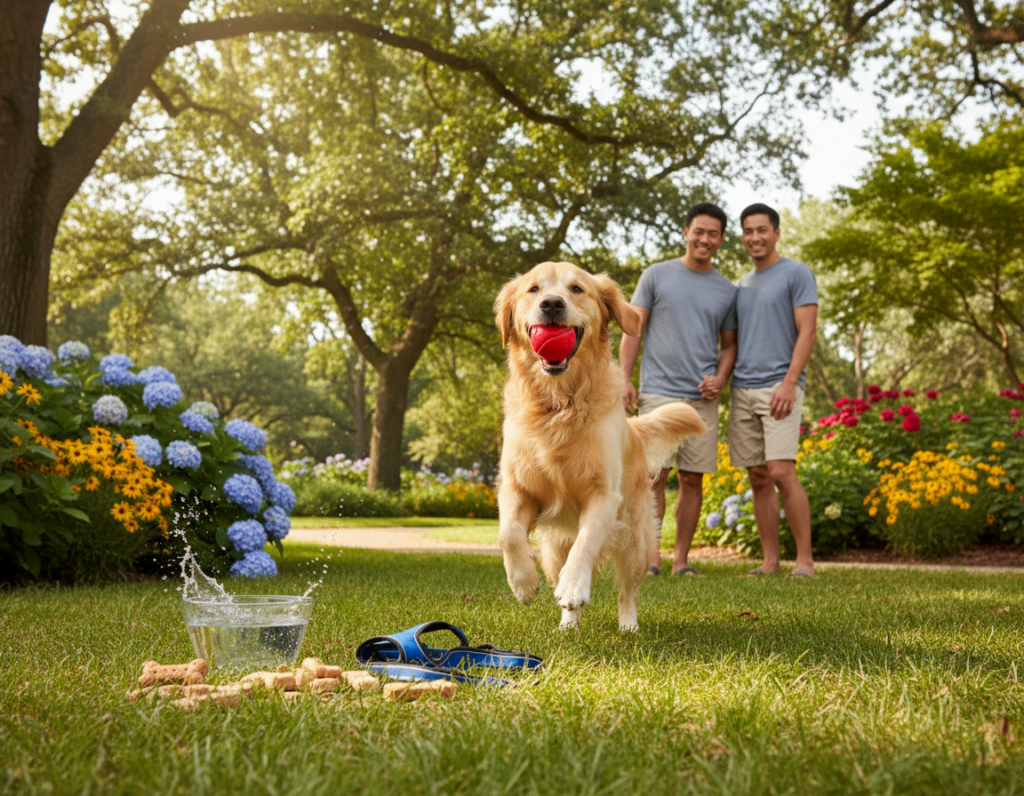
When a dog is genuinely engaged, play lights up their body and brain at once. Engagement combines physical movement—running, tugging, chewing—with mental work like puzzle solving and scent searching.
Real outcomes follow a solid session: less boredom-driven destruction, fewer nuisance behaviors, and a calmer companion at home. A short interactive game can burn energy and cut misbehavior fast.
How different activities help
Fetch delivers high-energy exercise. Puzzle feeders add mental fatigue. Chewing eases stress, and tug builds impulse control and social bonds.
Make owner-led play count
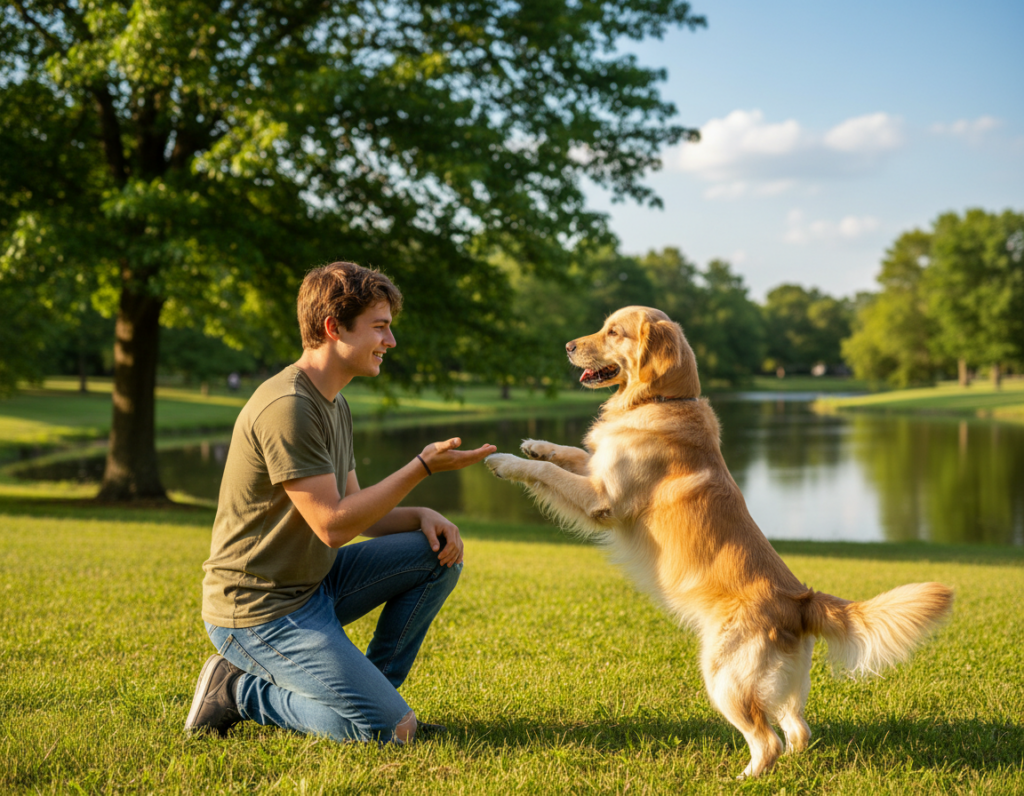
Dogs love social play; owner involvement often makes a piece immediately more rewarding. Use that boost to fold in training—fetch or tug as rewards, and practice cues like “drop it” and recall amid excitement.
- Aim for one short interactive game each day plus independent enrichment when busy.
- In multi-dog homes or public parks, pick items that work with visibility and sharing—multipacks help when others join.
How to Choose Dog Toys Based on Your Dog’s Play Style
Quick play-style quiz: Does your dog chase, chew, work for food, or carry comfort items? Many are mixed; pick the dominant drive first.
Fetch-driven: Pick a ball or disc with a predictable bounce, easy pickup, soft mouth feel, and durable material. Discs made for dogs reduce muzzle wear and last through repeated retrieves.
Chewers: Choose a chew that resists shredding and won’t splinter. Rubber or nylon options teach a puppy what is acceptable to chew and protect adult teeth from hazards.
Food-motivated: Treat-dispensing and puzzle toys let a dog work for treats while you take a short call. These items turn idle time into mental exercise.
Cuddlers: Plush comfort pieces should be soft, light to carry, and offer quiet engagement. Avoid plush with loose parts for determined shredders.
| Play Style | Top Category | Key Feature | Use Tip |
|---|---|---|---|
| Chaser | Fetch (balls, discs) | Predictable bounce, easy pickup | Short sessions + recall games |
| Chewer | Durable chews | Non-splintering, durable | Rotate to protect interest |
| Foodie | Treat-dispensing | Adjustable difficulty | Use during alone times |
| Cuddler | Comfort plush | Soft, washable | Supervise with heavy chewers |
Safety First: Size, Materials, and Tooth-Friendly Picks
Choosing the right size and material can prevent a harmless game from turning into a veterinary emergency. Vets warn that a toy too small can be swallowed and block the airway or gut. Always match size to your pet’s mouth and chewing style.
Choosing the right toy size to reduce choking and obstruction risks
Check that a play item is large enough that it cannot be swallowed whole. For gulpers and strong-jawed small breeds, pick items clearly oversized for the muzzle.
When “too hard” is a problem for teeth
Fingernail test: if you cannot press the surface with a fingernail, it may be too hard for healthy teeth.
Ultra-hard chews can crack enamel and require costly dental work under anesthesia. A slightly softer rubber often protects teeth better than rock-hard materials.
Plush and rope toy risks: detachable parts, stuffing, and supervision
Fabric items often fail at seams, eyes, or stuffing. Rope toys can shed strands that tangle or choke.
Supervise new items, retire toys that show tearing, and reserve plush or rope for interactive sessions with owners.
- Safety checklist: correct size, non-toxic material, no easy-to-remove parts, and appropriate hardness for your dog’s teeth.
- Inspect toys regularly; discard when pieces start to tear off.
- Remember: durable does not always mean safest—choose appropriate material for repeat, risk-free play.
Best Toys for Dogs Overall That Keep Them Busy Longer
Shortlist: a handful of durable, repeatable picks that deliver long sessions of licking, chewing, carrying, or foraging. These options suit many households and cut boredom-driven behavior.
Classic KONG — stuffed, frozen enrichment
Why it works: fill with a semi-liquid mix (yogurt+peanut butter or wet food), then freeze. That turns a rubber piece into a long-lasting licking project that can buy real minutes of calm.
Use tips: keep a second unit frozen so one is always ready. Run a straw or skewer through the center while freezing to keep the air hole clear and reduce rare tongue issues.
Who it’s best for: dogs that enjoy chewing and food-based enrichment.
KONG Ring — durable, carry-around favorite
The Ring stands up to repeated play and is easy for most mouths to carry. It’s a default win when you want a low-mess item that often survives years of use.
Who it’s best for: dogs that like to fetch and carry objects between naps.
KONG Goodie Bone — fetch, grip, and training aid
The Goodie Bone balances well for throwing and encourages a center grip. Use it in short training rounds or as a fetch option that’s easy to pick up.
Who it’s best for: dogs in training and active retrievers that prefer a firm grip.
KONG Wobbler — food-dispensing mental work
The Wobbler turns mealtime into a foraging game. It dispenses a fair amount of food quickly, so subtract those calories from the next meal and always supervise high-arousal pushers.
Who it’s best for: food-motivated dogs that need mental exercise.
- Quick checklist: repeatable enrichment, durable material, and broad household appeal.
Best Fetch Toys for High-Energy Dogs and Busy Owners
A long throw can turn five minutes of play into a full energy burn for an active dog. Match distance and durability to your routine: high-energy breeds need repeatable chases, while busy owners benefit from gear that reduces effort and extends play.
Chuckit! Classic Launcher
Why it helps owners: this launcher extends throwing distance and lowers shoulder strain so sessions last longer with less effort. It’s ideal for retriever-type breeds that never seem to tire.
KONG Jumbler Football
The Jumbler has indented handles that make pickup easy and add a light bounce. It’s a great interactive option, though it may not hold up to power chewers and will need occasional replacement.
Safer alternatives to standard tennis balls
Standard tennis balls wear down and can fuzz or split. Rubber balls resist abrasion and last longer during frequent play.
Park tip: choose bright, visibility colors so you can spot your ball quickly and avoid mix-ups with other owners’ gear.
Disc selection for athletic breeds
Pick a dog-designed disc that is softer on the mouth and built for midair catching. Border Collies, Australian Shepherds, Rat Terriers, and Retrievers often love disc chasing and athletic work.
- Mini-buying criteria: size relative to muzzle, desired bounce or float, and whether your dog prefers a ball, disc, or odd shape.
- Match gear to lifestyle: distance and repetition for high-energy dogs; easy-launch tools to save owners’ shoulders.
Best Chew Toys for Teeth, Teething, and Power Chewers
Powerful jaws and teething mouths need purpose-built outlets to avoid household damage and tooth problems.
Benebone Wishbone keeps many chewers engaged with real flavor and a shape that encourages long sessions. Use it under supervision and pick the size that matches your dog’s bite strength.
Tree root chews such as heather-root pieces satisfy dogs that habitually seek wood. They can last weeks and curb destructive chewing, though they cost more and will need replacing.
Deer antlers are popular but controversial. Vets warn they can be too hard and risk fractured teeth. If you offer one, monitor wear and stop use at the first chip.
Rubber vs. edible chews
Rubber chews are cleaner and reusable but may not entice every dog without added food enrichment.
Edible chews satisfy fast but add calories and mess. Rotate items and retire any that splinter or become small enough to swallow.
- Power-chewer tips: choose reputable products, size them correctly, and replace when sharp edges appear.
- Puppy note: prioritize softer, gum-soothing textures and rotate options during teething to reduce fixation.
Best Treat-Dispensing and Puzzle Dog Toys for Mental Stimulation
Puzzle feeders turn idle minutes into focused problem-solving that tires a dog’s mind fast.
Why these devices work: treat-dispensing and puzzle dog toy designs combine scent, motion, and problem-solving. They occupy a dog independently and reduce boredom-driven behaviors while offering a rewarding challenge.
Nina Ottosson by Outward Hound puzzles
Nina Ottosson puzzles provide structured problem-solving enrichment. Start with easy levels and show your dog how pieces move. Increase difficulty as the dog learns to keep the challenge high and avoid frustration.
Omega Paw Tricky Treat Ball
The Omega Paw Tricky Treat Ball encourages movement-based foraging. It rolls, spills little rewards, and feels like a game that keeps a dog experimenting for minutes at a time.
Portion-control rules: measure toys’ treats, use part of the daily kibble, and subtract those calories from meals. Wobbler-style dispensers can release a lot of food, so track intake to prevent slow weight gain.
| Item | Primary Use | Fill Ideas | How Long It Lasts |
|---|---|---|---|
| Nina Ottosson Puzzle | Problem-solving | Kibble, low-cal treats | 5–20 minutes (increase difficulty if solved fast) |
| Omega Paw Tricky Treat Ball | Foraging movement game | Kibble, small crunchy treats | 10–30 minutes depending on rollability |
| KONG Wobbler-style | Slow feeding, mental work | Kibble, mix-in wet food bits | 15–45 minutes if frozen/filled densely |
Practical tips: use measured kibble, rotate toys, and supervise initial sessions to check durability. If a dog solves a game too quickly, raise the difficulty or swap to a different design to keep engagement high.
Best Tug Toys for Bonding, Training, and Impulse Control
Tug sessions can be an efficient way to channel excitement into focused teamwork between owner and dog.
When done with rules, tug builds confidence and impulse control while you both enjoy active time.
Clean Run Fleecy Fluffy Fur Braided Tug
Why it works: the braided fleece gives a soft grip that suits dogs that like chase-and-grab and a gentle mouth feel.
Use tip: keep sessions short and praise calm releases to reinforce good manners.
Tug Of War Donkey — squeak, crinkle, novelty
This stuffed donkey adds crinkle material and a squeaker to ramp excitement. It is vivid and fun but not indestructible.
Always supervise and put the toy away after play. If seams split or stuffing appears, retire the item to prevent swallowing risks.
Training essentials: teaching “drop it”
Teach a reliable drop cue using trade and reward. Offer a high-value treat, say the cue, then mark and reward the release.
Restart tug as a bonus only after a clean drop. Keep games low and level to protect necks and end before over-arousal.
- Practical rules: start/stop cues, no teeth on skin, and calm handling after play.
- Multi-dog note: tug can trigger competition; choose participants and environment carefully when others are nearby.
- Replacement guidance: retire toys with loose stuffing, exposed seams, or frayed fabric to reduce swallowing hazards.
| Item | Primary Feature | Supervision Need | Best Use |
|---|---|---|---|
| Clean Run Fleecy Braided Tug | Soft braid for gripping | Low — supervise initial sessions | Bonding, soft-mouth tug |
| Tug Of War Donkey | Squeaker + crinkle | High — remove if torn | Novelty play, short bursts |
| General Tug Rules | Structured start/stop cues | N/A | Training impulse control |
Best Plush Toys for Gentle Players That Love to Cuddle
Gentle players prefer soft, easy-to-grip items that invite calm, low-impact play. Plush pieces are ideal for cuddlers and dogs that like to carry around a comfort object rather than tear it apart.
KONG Knots Bear: durable carry and washable design
KONG Knots Bear stands up to carrying, shaking, and outdoor drops better than many teddies. It is machine-washable, so it stays fresh after muddy outings.
Note: it is not chew-proof. If your dog chews aggressively, reserve this as an interactive, supervised comfort item.
Frisco Giraffe Bungee Plush: softer chewing with a squeak
The Frisco Giraffe Bungee Plush offers soft give and a squeaker to keep interest. It suits puppies and adult dogs that prefer light mouthing and cuddling.
Expect moderate lifespan; the bungee adds resilience but monitor seams and the squeaker over time.
How to make plush last longer
Rotate plush so each session feels new and avoid leaving one item out 24/7. Store extras between playtimes to reduce obsessive chewing.
- Introduce a soft piece as a puppy to encourage gentle carry-around habits.
- Stitch small tears immediately so stuffing doesn’t become the prize.
- Offer alternative chew options and retire plush if your dog begins ingesting fabric.
| Who it suits | Top feature | Care tip |
|---|---|---|
| Gentle players & cuddlers | Soft, washable, light to carry | Rotate and wash periodically |
| Puppies & light-mouth adults | Squeaker + soft give | Supervise during adolescent chewing stages |
| Supervised comfort use | Durable seams, replaceable | Repair small rips; discard if fabric is eaten |
Best Interactive Toys for Prey Drive and Indoor Energy Burn
A compact chase session can calm a restless pup by satisfying the full hunt sequence: stalk, chase, pounce.
Why prey-sequence play matters: Trainers recommend flirt poles because they let a dog complete each hunting step without needing a large yard. This style of game tires a dog mentally and physically and helps curb destructive energy when outdoor options are limited.
How to use a flirt pole safely
Keep sessions short and structured. Use controlled movement with brief bursts, then pause to reward calm behavior.
Avoid overlong runs that cause frantic chasing. Teach and reward cues like “wait,” “leave it,” and “drop it.” Stop while successful so the pup stays motivated rather than exhausted.
Why choose the Squishy Face Studio Flirt Pole V2
The Squishy Face Studio Flirt Pole V2 gives distance between owner and mouthy pups. That space reduces accidental nips and makes the play safer for human hands.
It also fits owners who want a compact tool to train impulse control and practice recall during a single game session.
Breed and environment notes
Herding breeds often thrive on chase-oriented outlets; ramp up intensity slowly. Reduce speed and session length for brachycephalic or low-stamina breeds.
Indoors, pick a non-slip surface and clear breakables. Outside, avoid slick turns and keep other pets at a safe distance.
| Use | Key Benefit | Safety Tip |
|---|---|---|
| Short chase bursts | Mental + physical tiredness | Limit to 5–10 minutes |
| Impulse training | Practice wait/leave/drop | Pause & reward calm |
| Distance play | Reduces nipping risk | Use longer pole like Squishy Face V2 |
For more built-in interactive ideas, see this interactive dog toys guide to expand safe, effective game options at home.
Best Dog Toys by Life Stage and Breed Size
Match a dog’s life stage and breed build to play options that support healthy teeth, learning, and lasting interest. Use this short guide to stop guessing and choose items that suit mouth shape, strength, and habits.
Puppy needs: teething and learning
Puppies benefit from soft, gum-soothing textures and clear “yes chew” options. Offer rubber rings and plush with reinforced seams to teach acceptable chewing.
Rotate chew-friendly pieces and pair play with brief training to reinforce good habits.
Small breed choices
Small breeds enjoy light, easy-to-carry pieces. Prioritize shapes that fit the mouth but are too large to swallow.
Look for firm-but-gentle materials and supervise vigorous chewers.
Medium breed balance
Medium dogs need durable yet tooth-safe items. Combine a chew, a fetch item, and one puzzle to meet energy and enrichment needs.
Large and giant breed gear
Scale up: thicker rubber, bigger rings, and reinforced seams prevent gulping and rapid destruction. Choose oversized pieces that stand up to power.
- Toy toolkit: one fetch, one chew, one puzzle, and one tug/plush tailored to play style.
- Supervise puppies and adolescents closely; seniors may prefer softer, easier-to-grip items and less vigorous play.
How to Keep Dog Toys “New” So Dogs Stay Interested
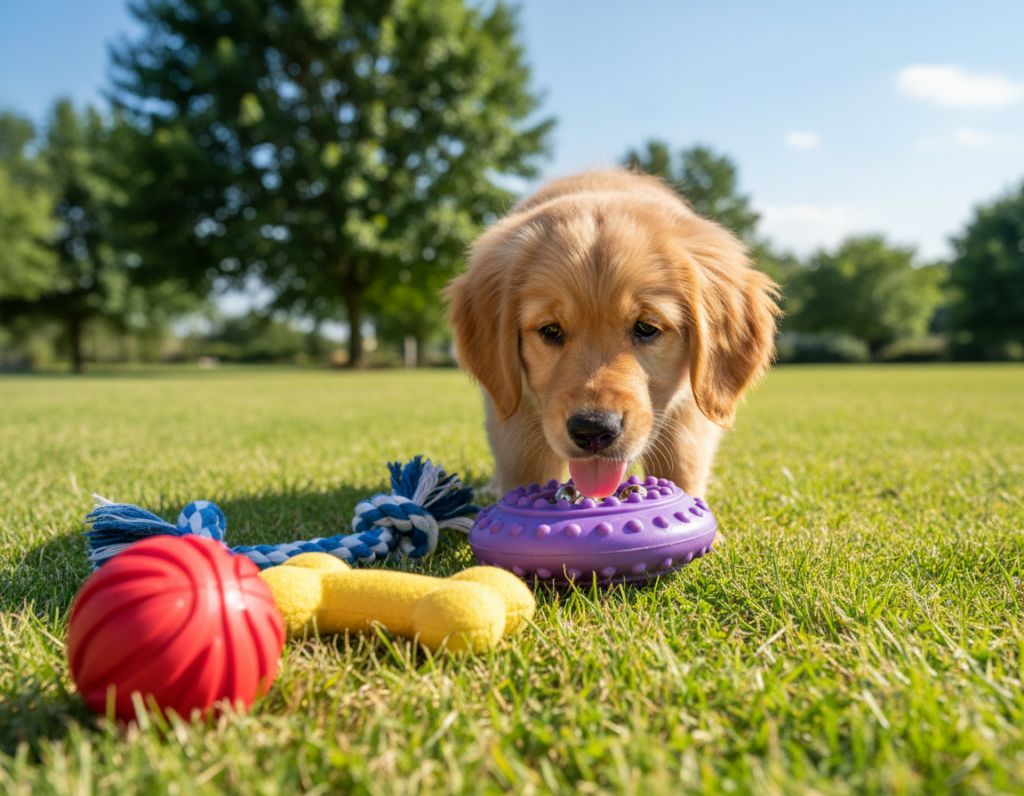
Simple storage and swap routines create fresh excitement without buying new gear every week. Rotate items so each play piece feels novel and earns attention again.
Toy rotation strategy: out of sight, out of mind
Plan: keep 4–8 play items in use and store the rest. Swap weekly so a single toy returns feeling like a new toys discovery.
Scent hacks to refresh familiar toys safely
Dogs often react to scent. Roll a toy in clean grass, tuck it near a small handful of kibble, or briefly rub it with a bit of wet food. Use only dog-safe scents and avoid perfumes or oils.
What research suggests dogs find most exciting
Studies show dogs love items that smell like food, make noise, or mimic prey textures. Owner-led play boosts interest quickly—sometimes in just a few minutes. But beware: torn parts that can be swallowed are a hazard.
- Pick up toys after play and assign special items for owner-only sessions.
- Rotate separately when multiple dogs share toys to reduce guarding and keep novelty high for others.
| Strategy | Why it works | Quick tip |
|---|---|---|
| Weekly rotation | Restores novelty | 4–8 items in circulation |
| Scent refresh | Re-engages smell-driven interest | Use grass or kibble; avoid fragrances |
| Owner participation | Raises excitement fast | Spend a few minutes daily |
Conclusion
A smart play plan blends safety, fit, and a clear role for each item in your dog’s day.
Match play style, choose the right size and a tooth-friendly material, and favor designs that offer stuffing, dispensing, chasing, or interactive work. Good examples include KONG Classic, Ring, Goodie Bone and Wobbler; Chuckit! launcher; Benebone; Nina Ottosson puzzles; Omega Paw; Clean Run tug; Frisco plush; and the Squishy Face flirt pole.
Safety first: inspect often, retire pieces that shed parts, and avoid overly hard chews that risk fractures. Build a small rotation rather than a pile to keep interest high.
Start simple: pick one exercise item, one calm enrichment piece, and one interactive bonding option. For more curated picks and sizing guidance, see this best dog toys guide. The right dog toy is the one your pet uses safely, repeatedly, and with enthusiasm—especially when you join in.