Anúncios
Bringing a new furry friend into your home is a joyful whirlwind of soft fur and tiny paws. However, many owners quickly realize that a young dog explores the world with endless energy and very little focus. Everything is a distraction, from a falling leaf to a stray dust bunny in the corner.
Developing a strong life connection starts with the ability to capture their attention consistently. If your four-legged companion is not looking at you, they certainly are not listening to your cues. This basic skill forms the cornerstone of every future lesson your dog will eventually learn.
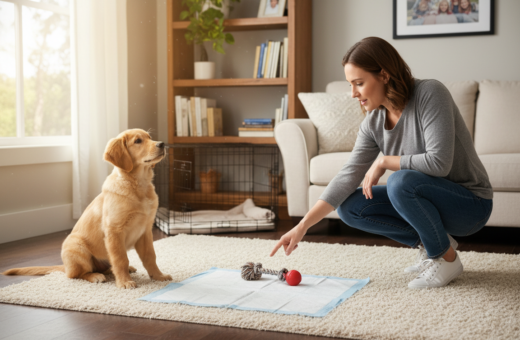
You do not need complex tricks to start training effectively in your living room today. Instead, focus on building a bridge of communication that helps your puppy learn to ignore various environmental distractions. Teaching this focus is not about instant perfection but about shaping a happy, well-adjusted dog for the future.
By understanding how puppies think, you can turn daily interactions into rewarding training moments. This guide explores how to keep your dog engaged through simple, proven methods and realistic expectations.
With patience, you can grow their attention and set your dog up for success. Every moment spent with a dedicated puppy helps build a lasting bond between you both.
Anúncios
Why Puppy Focus Training Matters for Long-Term Success
Teaching a puppy to focus helps build a great relationship and future success. By focusing on attention during the early stages of dog training, you create a strong base for all future skills.
Focus makes advanced training easier as the puppy grows older. They learn that looking at their owner leads to high-value rewards and positive outcomes. This early experience helps them handle distractions in the real world.
A specific “watch me” cue helps you control your pet’s focus during busy moments. Eye contact does more than just improve their behavior. When dogs look into your eyes, both of you release oxytocin, the love hormone.
Anúncios
Establishing eye contact builds a biological reinforcement loop that strengthens the bond between you and your pet.
In everyday life, having your pet’s attention is vital for their safety and manners. Focus training helps when visitors walk through the door or when it is time for dinner.
- Managing excited greetings to prevent jumping on guests.
- Learning to sit and wait patiently for a food bowl.
- Redirecting focus away from dangerous items found on walks.
Investing time now prevents bad habits like selective listening or leash reactivity later. Puppies with focus develop better self-control in exciting or scary situations. This results in calm dogs that are a joy to live with at home.
Understanding Your Puppy’s Developing Attention Span
To master training, we must look at the biological reality of a growing canine’s brain. A puppy has a prefrontal cortex that is still physically forming during the first year of life. This specific area handles decision-making and impulse control, making sustained focus a biological challenge for young animals.
Owners should start training in a quiet environment to minimize distractions. You need to be the most interesting of all things in the room to keep their gaze. Keeping sessions short, between two to five minutes, prevents mental fatigue and keeps the behavior positive.
“The secret of success with a young dog is to quit while you are ahead, ensuring they stay excited for the next session.”
It is helpful to remember that even an adult dog has natural limits to its concentration. For a young learner, the world is full of sensory input that competes for their mental energy. By keeping your expectations realistic, you build a stronger bond and avoid unnecessary frustration.
How Puppy Brains Process Information
Cognitive development in puppies differs significantly from that of a mature dog. They possess a much shorter working memory capacity and higher distractibility levels. This novelty-seeking nature is an evolutionary survival trait that helps them learn about their world quickly.
However, this means they struggle to filter out irrelevant environmental stimuli. Their brains are highly plastic during these developmental windows, making this the best time to form lasting neural pathways. Establishing positive patterns now will benefit the dog for the rest of its life.
Age-Appropriate Expectations for Focus Duration
Setting realistic goals is vital for a successful training day. Every dog develops at a slightly different pace based on breed and temperament. However, following general age-based guidelines helps prevent owner frustration and keeps the attention of the animal sharp.
Training should occur in brief intervals throughout the time you spend together. Here are the typical limits for sustained concentration based on physical maturity:
- 8-10 weeks: 2-3 minutes of active learning.
- 3-4 months: 5-8 minutes of steady work.
- 5-6 months: 10-15 minutes of engagement.
Always watch for signs of mental tiredness, such as yawning or sniffing the ground. If your puppy loses interest, it is often a sign that their brain needs a break. Adjusting your pace to their biological clock ensures long-term success in every session.
10 Proven Methods for Puppy Attention Span Training
Mastering puppy attention span training involves using specific techniques that turn every interaction into a valuable learning moment. You must realize that a young dog does not naturally know how to ignore a busy world.
By using a structured program, you can teach your pet to prioritize your voice over everything else. These methods move from basic skills to advanced focus exercises that work in any environment.
1. Teach the “Watch Me” Cue for Solicited Attention
The easiest way to teach a “watch me” cue is to lure the behavior with a high-value snack. Hold a treat in front of your dog nose and slowly bring it up between your eye area.
Your pup will follow the hand movement and stare at your forehead. Mark this behavior with a clicker or a word like “yes” and give the reward immediately.
Once the dog follows the hand signal every time, add the verbal cue like “look” before moving your arm. This stationary exercise builds a strong foundation for ignoring distractions later.
2. Build Eye Contact Training Into Daily Routines
You can turn normal parts of your day into training micro-sessions. Catch the moments when your pup naturally glances at your face and reward them.
Mark these voluntary check-ins with enthusiastic praise or a quick treat. This reinforces the habit of looking to you for guidance without being asked.
Over time, your dog will learn that eye contact is the key to getting what they want. This simple habit creates hundreds of learning opportunities throughout the day.
3. Practice Impulse Control with Wait Exercises
Impulse control exercises teach your dog that rushing toward food or toys does not work. Use “wait” protocols to show that pausing leads to rewards.
Place a toy on the floor and cover it with your hand if the pup lunges. Wait for the dog to back away and make contact with your eyes before allowing them to play.
This teaches attention and patience at the same time. The dog learns to check in with you before acting on their impulses.
4. Use Hand Targeting for Focus Redirection
Hand targeting is a versatile training tool that provides a clear task for your pup. Teach your dog to touch their nose to your open hand on cue.
This concrete action redirects attention away from scary or exciting distractions. It is much easier for a pup to perform a known behavior than to simply “stop” being distracted.
Use this in a busy park to keep your dog focused on you. It gives the pup something familiar to do when the environment feels overwhelming.
5. Capture Voluntary Attention Without Verbal Cues
Capturing attention without a cue builds intrinsic motivation in your dog. Stand in a place with mild distractions and wait silently.
When the pup chooses to look at you instead of the environment, mark it and give a treat. This teaches the dog that choosing you is always the best option.
This advanced method ensures your dog look at you even when you aren’t talking. It turns attention into a game that the dog wants to win.
6. Keep Training Sessions Short and Frequent
Short sessions are vital because a pup has a limited attention span. Aim for two to five minutes of focused work several times a day.
Brief periods of training prevent mental fatigue and keep the dog excited for more. It is better to stop while the pup is still successful and happy.
Frequent, short bursts align perfectly with how a dog brain processes new information. You will see faster progress than with one long, boring hour of work.
7. Leverage High-Value Rewards Strategically

Identify what your pup loves most to find your puppy training treats high value options. Reserve special rewards like small pieces of cheese or liver strictly for focus exercises.
Using premium treats creates a powerful incentive for the dog to ignore a squirrel or another dog. High-value rewards provide clear communication that focusing on you pays off.
Always match the reward to the difficulty of the task. A quiet room may only need kibble, but a busy park requires the “good stuff” to keep attention.
8. Introduce Distractions Gradually and Systematically
Start your dog training in a silent room where you are the most interesting thing around. Once your pup succeeds there, move to the backyard or a quiet walk.
Slowly add distractions like a toy on the ground or a person walking nearby. If the dog loses attention, you are moving too fast and should go back a step.
The goal is an 80% success rate before increasing the challenge. This systematic way of training builds confidence without causing frustration.
9. Practice Moving Attention Exercises
Moving attention takes the “watch me” cue to the next level. Practice having your dog maintain eye contact while you both walk slowly.
You can also move backward to encourage the pup to follow your face with their eye. This helps the dog stay focused even when the environment is changing.
These exercises are essential for real-world scenarios like passing other dogs on the street. It ensures that training stays effective even when you are on the move.
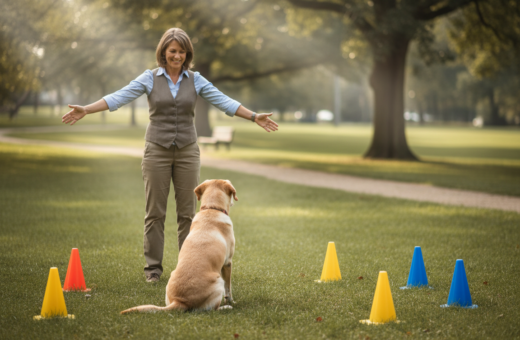
10. Train in Multiple Environments for Generalization
A dog does not always realize that “sit” in the kitchen means the same thing in the park. You must practice in many places to help your pup generalize their skills.
Take your training to a friend’s house, a busy street, or a new environment with different smells. Each new location challenges the dog to maintain attention despite new sights.
Deliberate practice in varied settings makes the behavior reliable. This is the final step in creating a dog that listens to you anywhere, every time.
Essential Tips to Keep Your Puppy Engaged During Training Sessions
Success in dog training often depends on the small habits you build at home throughout the day. These tips help you maximize every moment you spend together to foster better engagement.
Position Yourself as the Source of All Rewards
You want dog behavior to improve by becoming the gatekeeper of all fun things. Ask for a sit before giving a chew or a chew toy to teach them that access to value comes through you.
If they know rewards come from your hand, they will naturally pay more attention to your presence. High-value praise and a consistent praise word make the learning experience better in your home environment.
Give Your Puppy Your Undivided Attention
Many owners and owners of young pets make the common mistake of checking their phones during a session. Your dog is remarkably perceptive and will mirror the level of focus you show them.
Give your dog your full energy during this time to model the behavior you expect. This way, you teach them that training and mutual attention are shared priorities when you work together.
Incorporate Training into Mealtimes
Mealtime is a perfect time to practice a new skill while your dog is hungry and highly motivated. Use training sessions that keep puppies focused to turn standard breakfast routines into a rewarding challenge.
Let them work for kibble to keep dogs engaged and mentally stimulated throughout the day. These tips ensure you want dog focus to stay sharp during dog training and daily training tasks. Practicing before meals makes dogs very eager to listen and learn.
Conclusion
Building a solid foundation for your puppy starts with capturing their interest every single day. Focus training isn’t about perfection; it’s about building a deep connection with your young dog. These exercises help your dog learn that you are worth watching, no matter what happens at home.
With consistency and clear communication, you will lay the groundwork for success. Great attention is made, not born, and your dog will eventually check in even during chaos. Dogs that learn essential skills early often become the most reliable companions as they grow.
It is never too late to start training and improve how your dog reacts to new things. Be patient as you explore different things and reward your dog for choosing you. Small progress builds confidence for both the owner and the pup.
Remember to celebrate wins when you teach stay without confusing your puppy. When dogs enjoy the process, their focus improves naturally. Keep training fun so you and your dogs thrive during every training session for your dog.