When you can’t take your dog outside—because of rain, heat, or a busy day—keeping them active indoors becomes essential. Many dogs build up energy quickly, and without an outlet, that energy often turns into restlessness, barking, or destructive behavior.
This guide covers practical ways to keep your dog moving and mentally engaged at home, even with limited space or time.
In this article, the focus is on indoor physical activity, with simple routines that also include mental stimulation—but the main goal is to help your dog release energy safely inside your home.
Two clear goals drive each routine: help your pet burn energy safely and provide mental stimulation to reduce boredom-based behavior. These activities cut anxiety, curb destructive habits, and support healthy weight and mood.
This guidance applies to puppies through seniors. Match plans to age, breed tendencies, and fitness level. Dramatic routine changes should prompt a vet check, especially for dogs with joint, breathing, or endocrine issues.
There will always be days when going outside isn’t an option—whether it’s bad weather, a busy schedule, or limited space. Having a simple indoor routine helps your dog stay calm, balanced, and easier to manage at home. For more ideas on mental and physical play, see exercise and mental stimulation for pets.
Why indoor activity matters for your dog’s health and behavior
Short, consistent sessions at home add up to meaningful health gains for your companion. These small bursts keep weight in check and ease strain on joints. Maintaining a good body condition can reduce risks like joint problems, breathing trouble, and endocrine disease.
How movement supports long-term wellness
Regular short sessions build endurance and lower obesity risk. When outdoor walks are limited, repeatable play and training fill the gap and keep fitness steady.
How mental work eases boredom and anxiety
Scent games, puzzles, and simple cues tire a companion much like running. High-drive breeds benefit when thinking tasks replace long runs on low-activity days.
How much to aim for each day
Use a baseline of about 30 minutes daily of combined movement and brain work. Split time into short blocks for puppies, seniors, or busy households.
- Watch for restlessness, pacing, chewing, or clingy attention—these often signal boredom.
- Stop or slow play at signs of slipping, heavy panting, or frantic arousal.
- Build intensity gradually and consult your veterinarian before major routine changes for seniors or those with limits.
The table below shows a simple way to balance daily physical activity and mental stimulation indoors.
| Goal | Daily Target | Signs to Watch | Adjustments |
|---|---|---|---|
| Weight control | 10–20 min movement | Weight gain, low endurance | Increase short sessions, reduce treats |
| Mental stimulation | 10–15 min puzzles | Restlessness, destructive chewing | Use scent games, training cues |
| Overall wellness | ~30 total min/day | Heavy panting, slipping | Slow build-up; vet check if needed |
| High-drive needs | Multiple short bursts | Frantic behavior, inability to settle | Increase mental tasks and supervised play |
Set up your home for safe, successful indoor playtime
Pick the best play zones
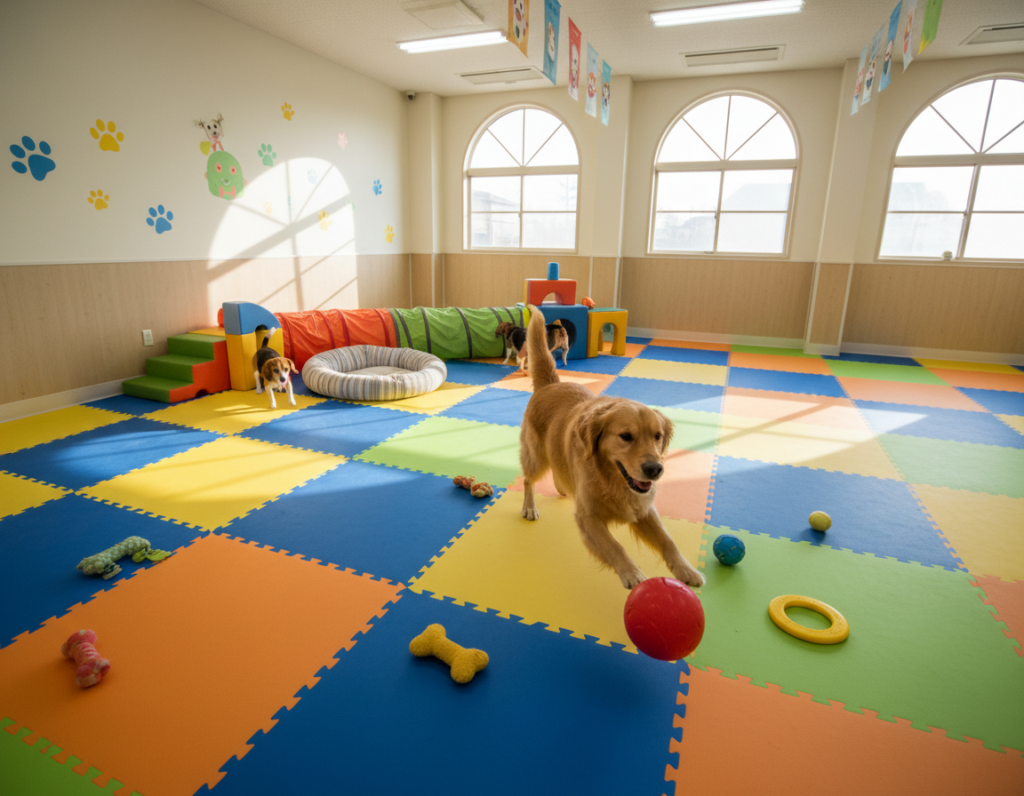
Choose a clear hallway, basement, or open room that fits your companion’s size and turning radius. Remove breakables and move small furniture out of the chase path.
Improve traction with rugs or mats on slick floors. This reduces slips and protects joints during quick turns.
Choose toys and items for each session
For throw-and-retrieve, use soft, low-bounce toys and a soft ball to avoid damage. Pick durable, easy-grip tug toys for controlled play.
Match puzzle items and enrichment toys to chewing strength and supervision level to keep play safe and satisfying.
Quick safety checklist
- Check floors for slip hazards and remove loose cords.
- Block or close doors to stairs if games include fast turns.
- Move sharp edges out of paths used for chase or fetch.
Tug, rope, stairs, and reward rules
Use a designated tug toy and avoid pulling too hard to protect teeth. Teach commands and practice “drop it” so tug reinforces impulse control.
Rope toys can fray and be swallowed. Supervise closely, replace frayed rope, and never leave that toy unsupervised.
Stairs can burn energy but are not suitable for short-legged or long-backed companions. Make sure treads have grip and keep stair sessions short.
Treats and food strategy
Use small, low-calorie treats or part of daily food as rewards to avoid overfeeding. Try puzzle feeders or slow-feeder bowls for fast eaters to reduce vomiting and bloat risk.
| Area | Best use | Key safety step |
|---|---|---|
| Hallway | Short fetch, recall drills | Clear breakables, use soft ball |
| Open room | Tug, puzzle play, training | Move sharp edges, supervise tug |
| Stair area | Short stair repeats (careful) | Non-slip treads, skip for long-backed pets |
| Kitchen or dining | Food-based games, slow-feeder use | Portion treats from daily food, monitor intake |
Indoor dog exercise routines that burn energy in small or large spaces
You can burn lots of energy with simple games that fit a hallway or a living room. Pick a routine that matches your space and your pet’s shape and age. Small bursts work for puppies and seniors; longer circuits suit high-drive dogs.
Hallway fetch and safe throws
Run indoor fetch in a clear corridor with a soft, low-bounce ball or plush toy. Keep throws low to avoid hard jumps and slipping.
Follow each retrieve with a quick “drop it” rep to reinforce commands and slow the pace.
Stair games: high output, short reps
Toss a toy up or down a flight for fast bursts of energy while you stay put. Limit repetitions and watch for heavy breathing.
Avoid stairs for long-backed or short-legged breeds, dogs with joint pain, seniors, or post-surgery pets.
Tug of war with rules
Use a designated tug toy and start play on cue. End on cue and require release on “drop it” so the game builds control.
“Rules make tug a training win: start, stop, and release on command.”
Hide-and-seek and scent games
Ask for a short stay, hide behind furniture or a door, then call them in an upbeat voice. Praise when they find you.
Progress to harder spots and add scent-only hides for more thinking work.
Quick routines and options
- Find-it scavenger hunts: start with smelly treats, then use kibble and toys.
- Flirt pole play: keep the lure low, avoid neck jerks, and build in rests.
- DIY obstacle course: use boxes, broom poles, pillows; teach one obstacle at a time.
- Bath-to-pool intro: use shallow warm water, supervise closely, and keep sessions short.
| Space | Best activity | Key safety tip | Energy yield |
|---|---|---|---|
| Small (apartment) | Tug, flirt pole, find-it | Clear breakables, short reps | Moderate |
| Hallway/open room | Indoor fetch, timed circuits | Use soft ball, low throws | High |
| Stairs | Stair retrieves | Limit reps; skip for certain breeds | Very high |
| Bath/pool area | Water intro or therapy swims | Always supervise; short sessions | Moderate–High |
Build brain-and-body workouts with training, puzzle toys, and enrichment
Mixing obedience cues with puzzle feeders creates a compact brain-and-body session that fits any living area. Short, varied reps tire a dog by asking them to think and move. Keep sessions upbeat and under five minutes for puppies and seniors.
Obedience drills and fun tricks that tire minds
Chain simple commands—sit, down, come, stay—then add a trick like shake or roll over. Repeat with brief breaks and quick rewards. This routine builds focus, improves manners, and helps bond with your pet.
Puzzle toys, snuffle mats, and slow-feeders
Treat-dispensing toys that roll reward movement, while snuffle mats and lick mats slow feeding and calm anxious dogs. Use a slow-feeder bowl for fast eaters to reduce vomiting or bloat risk. Balance treats with meal portions to manage weight.
Chew-based enrichment for dental health
Offer long-lasting dental chews, heavy-duty chew toys, or supervised frozen vegetables like carrots. Monitor wear and remove small pieces to prevent swallowing.
Helpful chores that build teamwork
Teach tasks such as “put toys away,” fetch a leash, or carry a light item. These chores add movement, reinforce training, and strengthen the bond through useful play.
“Rotate puzzles and chews to reduce boredom and keep training rewarding.”
| Activity | Benefit | Safety tip |
|---|---|---|
| Chained commands & tricks | Mental stamina, manners | Keep reps short |
| Treat-dispensing & snuffle mats | Calm stimulation, movement | Adjust meal portions |
| Chews and frozen snacks | Dental health, busy time | Supervise, pick size/durability |
Conclusion
Wrap-up: Combine brief physical play with quick thinking drills to tire and calm your companion. Aim for about 30 minutes total per day split into short bursts that fit your schedule and space.
Keep safety first: improve traction, clear the play area, choose sturdy toys, and supervise tug or chewing. Use stairs and high-speed games with extra caution.
Rotate games and toys in simple ways to prevent boredom and keep progress steady. Adjust intensity by age, body type, and health, and call a veterinarian before big changes if there are limits.
Practical next step: pick two energy-burn activities and one calming enrichment item to make an easy weekly plan you can repeat each day.