This short dog body language guide explains how animals tell us what they feel without words. People often watch a wagging tail and miss the full message. Learning to read posture, face, tail, movement, and distance makes daily life safer and more predictable in the United States.
This resource teaches readers to interpret the whole animal, not a single sign. You will learn to spot early discomfort signals, prevent escalation into fear or aggression, and improve training choices.
Expect practical tips to help you respond in the moment and build long-term better behavior. The guide also stresses baselines: breeds and individuals have different neutral postures, so context matters more than strict rules.
How Dogs Communicate With Body Language (Why You Must Read the Whole Dog)
Signals rarely stand alone; consider posture, face, and movement together. A wagging tail shows arousal, not always happiness, so pairing that cue with stance and expression is essential.
Why one signal can mean different things in different situations
Panting after a run is normal. Panting when it’s cool and nothing physical just happened can signal stress. Context turns the same cue into different meanings.
How breed and individual “neutral” posture changes what you see
Breed structure alters neutral carriage: a curled tail on a Chow Chow is normal while an Italian Greyhound carries a low tail. Note ear shape and typical mouth posture for your pet.
How to build your dog’s baseline by observing daily behavior
Observe during rest, calm greetings, play, and mild alertness. Jot or mentally note typical ear, tail, and mouth positions.
- Tip: Quick mental check-ins help spot shifts—stiffer, lower, or more forward positions signal change.
- Practice: Keep a short journal to track patterns and prevent problems early.
Start Here: A Quick Scan Method to Read Your Dog in Any Situation
A short, systematic sweep of posture and balance gives you the clearest first clue in any encounter. Use this quick scan before petting, introducing, or taking items away. It reduces risk and helps you choose the right response.
Check overall posture and weight distribution first
Look at the full stance. An alert animal stands with weight evenly distributed; a fearful one shifts weight back. This initial posture tells you the first sign to respect.
Then read tail, ears, eyes, and mouth as a package
Read these features together. A wagging tail with tense ears and hard eyes is different from a loose wag with soft eyes and an easy mouth. Mixed cues often mean uncertainty.
Look for changes over time: loose to stiff, slow to frozen
Watch for shifts: loose → stiff, moving → slow, slow → frozen. Stiffness is a key sign to pause and give space. Freezing can be a low-level warning when the animal feels cornered.
Notice distance and movement patterns
Movement matters. Curving away, turning the head, or sniffing the ground usually lowers tension. Moving forward with a hard stare often raises it. Use this scan as your quick, repeatable way to decide what to do next.
Tail Wagging and Dog Tail Position: What a Wag Really Means
A wag signals arousal more than it guarantees a friendly mood. A moving tail shows emotional charge, but the meaning depends on height, speed, and the rest of the animal’s posture.
Emotional arousal versus a happy dog signal
Do not assume a wagging tail equals friendliness. Tail wagging marks arousal — that arousal can be excitement, stress, or play. Always scan posture, mouth tension, and eye softness to tell which.
Tail height and common positions
Neutral position varies by breed; many animals show comfort with a relaxed carriage.
A high or flagged tail can mean confidence or rising arousal. A low tail often signals uncertainty. A tucked tail usually indicates fear or discomfort.
Wag style, speed, and direction clues
Wide, loose sweeps pair with relaxed movement. Tight, twitchy wags or rapid tail wagging suggest high arousal and deserve closer attention.
Direction offers extra clues: more right-side motion links to positive contexts, more left to negative ones. A circular, “helicopter” wag often appears during very friendly greetings.
Quick actions for owners
- If you see a high, stiff tail with a stiff stance, create distance and avoid escalation.
- If the tail is low or tucked, reduce pressure, step back, and give the animal an exit.
- Never rely on one tail detail alone; use the whole read to decide how to act.
Ears, Eyes, and Mouth: The Most Misread Dog Body Language Signals
Reading the face—ears, eyes, and lips—lets you catch tension long before a problem starts. Watch the head for small shifts; they often come first and are easy to miss if you focus only on the tail.
Ear position and floppy-ear breeds
Forward ears usually show alert interest. Pinned-back ears often signal discomfort or appeasement.
In floppy-ear breeds, check the ear base and overall head tilt rather than ear tip alone. The base reveals true intent.
Soft eyes, hard stare, and the “whale eye”
Soft eyes and a neutral forehead suggest calm. A hard stare with fixed focus can precede escalation.
Whale eye — when the white shows — is a clear stress marker. It often appears during handling or when a dog feels trapped.
Lips, panting, yawning, and teeth
Relaxed lips and an easy mouth mean comfort. Tense lips, lip licking, or lip smacking point to unease.
Panting when it’s not hot and yawning can be calming signals, not rudeness. Teeth showing needs context: loose, relaxed teeth may be an appeasement grin; pulled-back lips with hard eyes are a warning.
Simple package read
If ears pin back + whale eye + tense lips, stop advancing and give space immediately. That combined read is one of the clearest signs to change your approach.
Relaxed and Comfortable Signals (What “Loose and Wiggly” Looks Like)
A relaxed animal shows movement that is loose, rhythmic, and easy to read at a glance. This clear, calm state is the baseline you want to encourage with daily routines and gentle praise.
Posture and overall movement
Look for loose muscles, natural curves, and no freezing. A calm pet shifts weight freely, approaches or retreats normally, and keeps a soft, wiggly gait rather than a stiff stance.
Face cues that mean comfort
Soft eyes, a neutral forehead, and an easy mouth are classic signs of ease. Lips should not be pulled tight, and ears sit in their natural position for that breed.
Tail and greeting signals
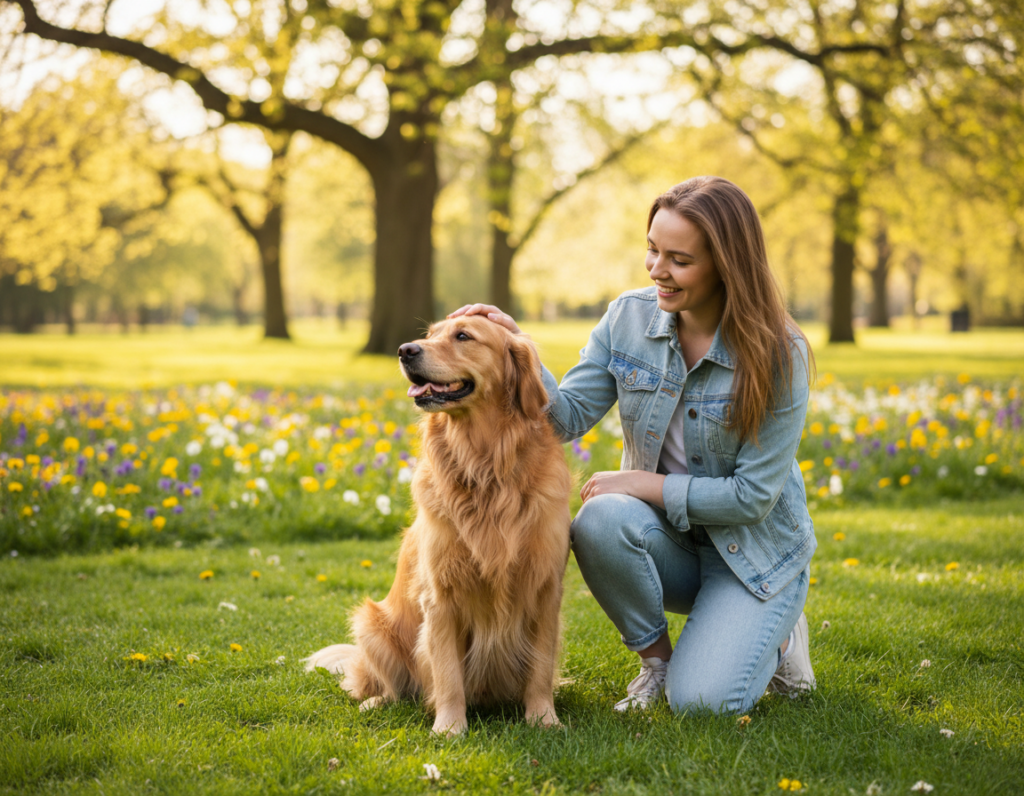
A friendly tail rides around spine height and moves in wide, sweeping motions. During calm greetings the whole animal wiggles; that full-body looseness is more reliable than any single wag.
Practical tips
Distinguish relaxed panting (after play or walk) from stress panting by checking the rest of the read. Reinforce calm behavior with quiet praise, predictable routines, and space to choose interaction.
Alert and Interested Body Language: When Your Dog Is Assessing
Alert posture is an information-gathering state, not an automatic sign of trouble. It often appears on walks, at windows, or when someone approaches. Reading it correctly helps prevent escalation and keeps everyone safer.
Ready stance and key features
An alert animal usually holds weight evenly, with focused eyes and ears oriented to the stimulus. The mouth stays closed without tension and the tail may be steady or wag slightly. This neutral posture shows assessment, not aggression.
When assessment shifts toward over-arousal
Watch for tightening muscles, faster movement, less blinking, and direct closing of distance. These are early signs that assessment might become a threat-related reaction.
Immediate owner actions
- Increase distance and remove pressure.
- Break the hard stare by moving in an arc rather than meeting it head-on.
- Ask for a simple, successful behavior (sit or look) to refocus attention.
- Avoid forcing greetings or crowding; this prevents rehearsing reactive patterns.
| State | Visual cues | Risk level | Owner response |
|---|---|---|---|
| Alert (assessing) | Even weight, focused eyes, ears forward, steady tail | Low | Observe, give options, redirect gently |
| Over-aroused | Tensed muscles, rapid movement, fixed stare | Medium | Increase distance, break stare, cue easy task |
| Threat escalation | Forward weight shift, hard stare, stiff tail | High | Create space, avoid approach, seek help if needed |
Calming Signals and Displacement Behaviors: How Dogs Self-Soothe Stress
Many self-soothing behaviors look accidental, but they are purposeful attempts to lower tension. These subtle actions let an animal manage social pressure and avoid escalation.
What they look like
Calming signals include sniffing the ground, slowing movement, turning the head away, and walking in a curve instead of approaching straight on. These are ways to say, “I’m not a threat.”
Displacement behaviors are actions that seem random: scratching, self-grooming, shaking off, yawning, or puffing out an exhale after handling or play. They help release tension.
Subtle cues owners miss
Watch for a single front paw lift, repeated lip smacking, or quick tongue flicks when the animal isn’t eating. Those small signs often appear before larger stress responses.
How to respond in the moment
- Stop advancing and relax the leash.
- Create space and reduce noise or handling.
- Offer an obvious exit route and let the animal choose to move away.
- Respect these signs early to lower the chance of freezing, growling, or snapping later.
Fear and Discomfort Signals: Spot Them Before Growling or Biting
Fear often shows up as a low, guarded stance long before any vocal warning. Learn to read this early retreat posture so you can act calmly and safely.
Classic posture and retreat cues
The classic fear/discomfort profile is a low, stiff pose with weight shifted back and ears tucked. The tail may be tucked and the whole animal looks ready to move away rather than approach.
Physiological and movement signs
Other cues include unusual drooling, pacing or circling, whining, and sweating through the feet. These are physical markers that discomfort is rising.
Teeth, lips, and one-warning behavior
Showing teeth with curled lips, combined with a frozen stance and hard eyes, is a serious warning. Some canines give only one warning before biting. Treat these as a true stop signal, not misbehavior.
- Immediate actions: increase distance and remove hands from the space.
- Avoid hugging, hovering, or forcing interaction.
- Pause until the animal returns to looser posture and calmer cues.
Appeasement (Not “Submissive”): When Your Dog Tries to Look Less Threatening
Subtle moves like slow steps and soft squints help an animal avoid conflict without words. This set of signals is best called appeasement, because the intent is to reduce social pressure.
Appeasement grin vs a snarl: looseness and context
An appeasement grin may show front teeth but appears with a loose, wiggly posture. A snarl has pulled-back lips, stiff muscles, and fixed eyes. Check overall looseness and the situation before you act.
Slow movements, squinting, avoiding eye contact, and tucked tail wag
Common signals include slow steps, head turns, squinting, and ears pinned back. The tail can be low or tucked yet still wag tightly. These signs say: “I don’t want trouble.”
Rolling over: “I’m not a threat” versus anxious belly-up behavior
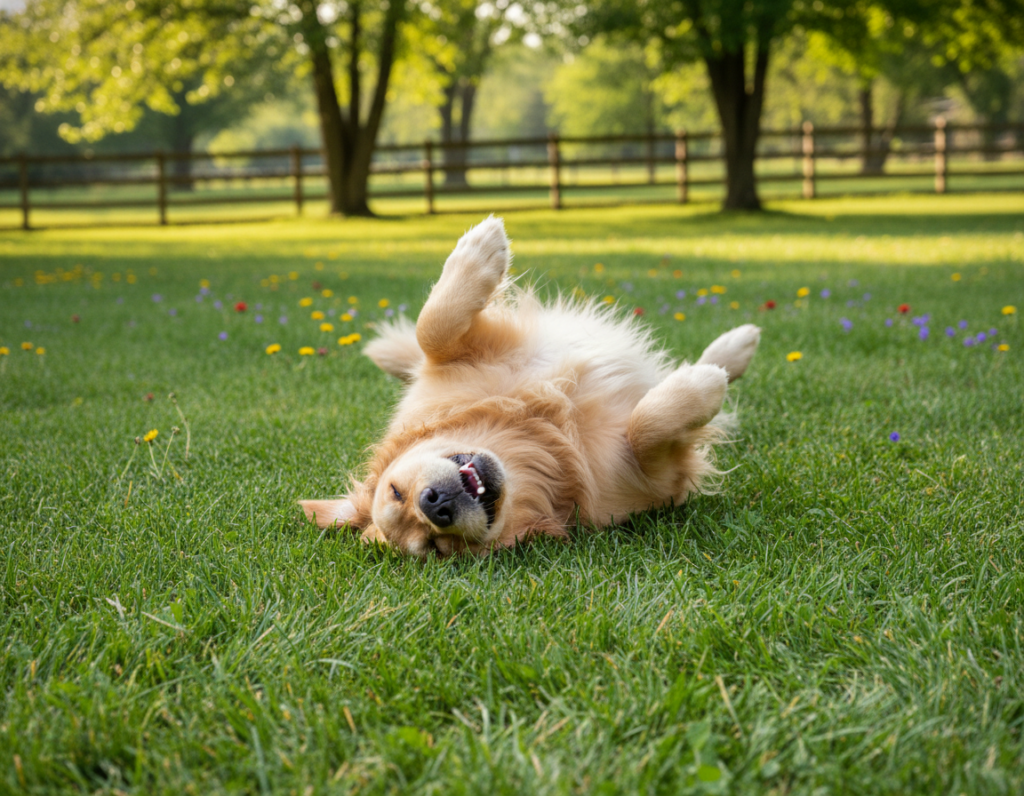
Exposing the belly can invite a belly rub or signal trust. But if the belly is tight, the tail tucked, or the mouth stiff, the pet might be scared. Don’t hover or lean over; start petting at the back and only move toward the belly if the animal stays relaxed.
| Signal | What it means | Owner response |
|---|---|---|
| Loose grin | Appeasement; reduced threat | Stay calm, offer gentle contact at the back |
| Tight wag, low tail | Anxious appeasement | Give space; avoid direct approach |
| Belly-up, relaxed | Trust or invitation | Approach slowly; allow choices before belly rub |
| Belly-up, tense | Fearful or defensive | Step back; remove pressure to prevent snapping |
For more on reading subtle cues, see this how to read dog body language.
Play Signals vs Problem Signals: Reading the Play Bow and Beyond
A clear play invite looks different from a nervous stretch — learn the visual cues that separate friendly fun from rising tension.
What a true play bow is
The classic play bow is front legs down and rear end up. It functions as an invitation and a reset signal that keeps interactions friendly.
“Come on, let’s play” — the bow offers safe intent before chasing begins.
Healthy play vs warning signs
Normal play shows loose, bouncy movement, role switches, and short pauses to reset. Look for mutuality: both animals opt in and take turns.
Problem signs include stiffness, freezing, hard staring, relentless pursuit, or inability to disengage. Those cues suggestplay is tipping into conflict.
When stretching masks stress
Stretch-like poses can be displacement behaviors if paired with tense posture or tucked tail. Treat them as potential stress markers, not automatic play invites.
- Owner tips: Watch for loose posture and frequent breaks.
- Interrupt gently if one participant looks overwhelmed.
- Call them apart or toss treats to create calm distance, then resume only when both return to wiggly, relaxed behavior.
Threat, Guarding, and Aggression Body Language: The Early Warning Ladder
Some escalation starts so quietly you can miss it if you only watch motion. Canines often give a sequence of small cues before an actual aggressive act. Learn the steps so you can stop problems early.
Frozen posture as a low-level warning
A freeze is a common early signal when a dog feels scared, cornered, or is guarding resources. It replaces loose movement and shows focused attention.
If a pet freezes, back off and do not force interaction.
Forward weight, head orientation, and facial tension
Guarding posture often includes a forward weight shift with the head and neck pointed at the trigger. Movement drops and the animal watches closely.
Facial tension looks like a hard stare, tight mouth, and stillness. These are clear signs that escalation may follow.
Twitching high tail and raised hackles
A high, twitching tail signals high arousal and can appear during assertive moments. It is often paired with stiffness and direct focus.
Raised hackles (piloerection) mean arousal, not always aggression. They can show excitement, intense interest, or stress.
Immediate safety steps
- Create space and stop reaching or crowding.
- Avoid direct eye contact and move calmly away.
- Remove triggers when possible and manage the environment.
- Prioritize management over testing the animal; get help if needed.
| Stage | Visual cues | Risk | Owner action |
|---|---|---|---|
| Freeze (early) | Still posture, focused head, stopped movement | Low–Medium | Give space; do not touch or crowd |
| Guarding | Forward weight, hard stare, tight mouth | Medium | Increase distance; remove trigger |
| Aggressive escalation | High, twitching tail, stiff advance, raised hackles | High | Create large distance; seek professional help |
Putting the Dog Body Language Guide Into Practice at Home and in Public
Small, consistent choices in handling and approach change how people and pets interact every day.
Petting and handling: how to avoid making belly-up moments worse
Treat a belly-up roll as information, not an automatic invitation. Avoid leaning over or trapping the animal on furniture.
If the pet stays loose, slide a hand gently from the back toward the belly. Stop the moment you see lip licking, whale eye, or other signs of discomfort.
Approaching unfamiliar dogs: why hovering, crowding, and direct staring backfires
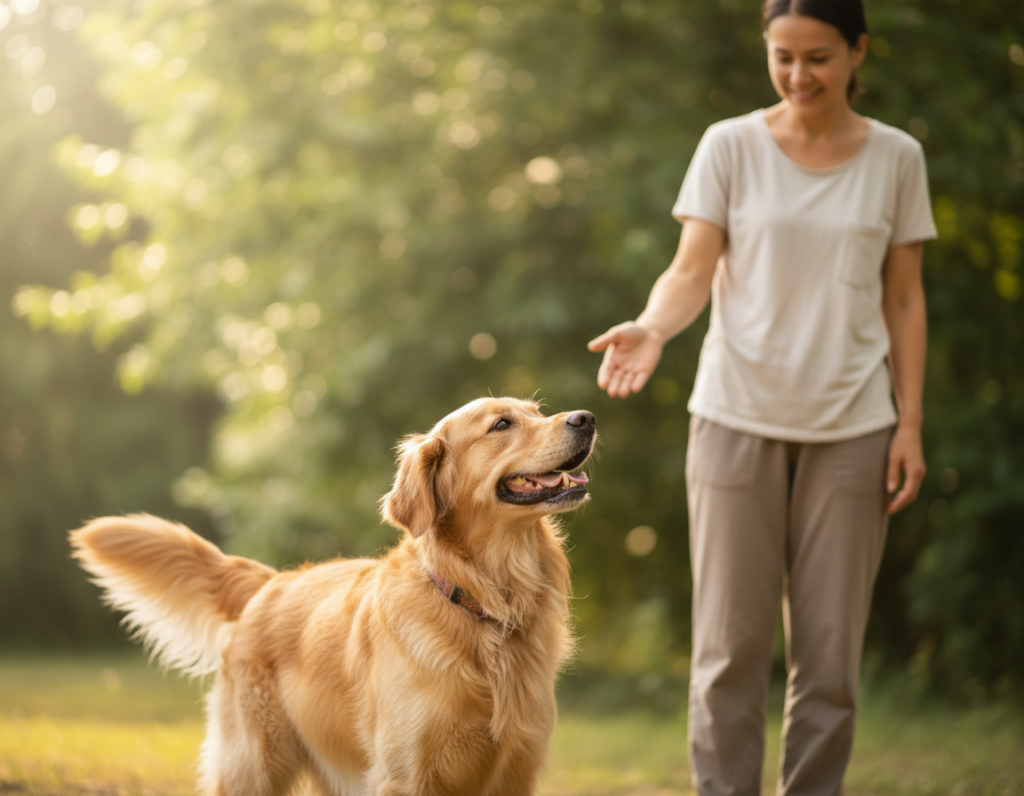
Never hover or crowd. Look away, approach in a soft arc, and let the animal choose to come closer.
Direct stare raises tension. Give clear exits and keep your posture relaxed so the encounter stays low-risk for both people and pets.
Training smarter by rewarding calm behavior and respecting discomfort signals
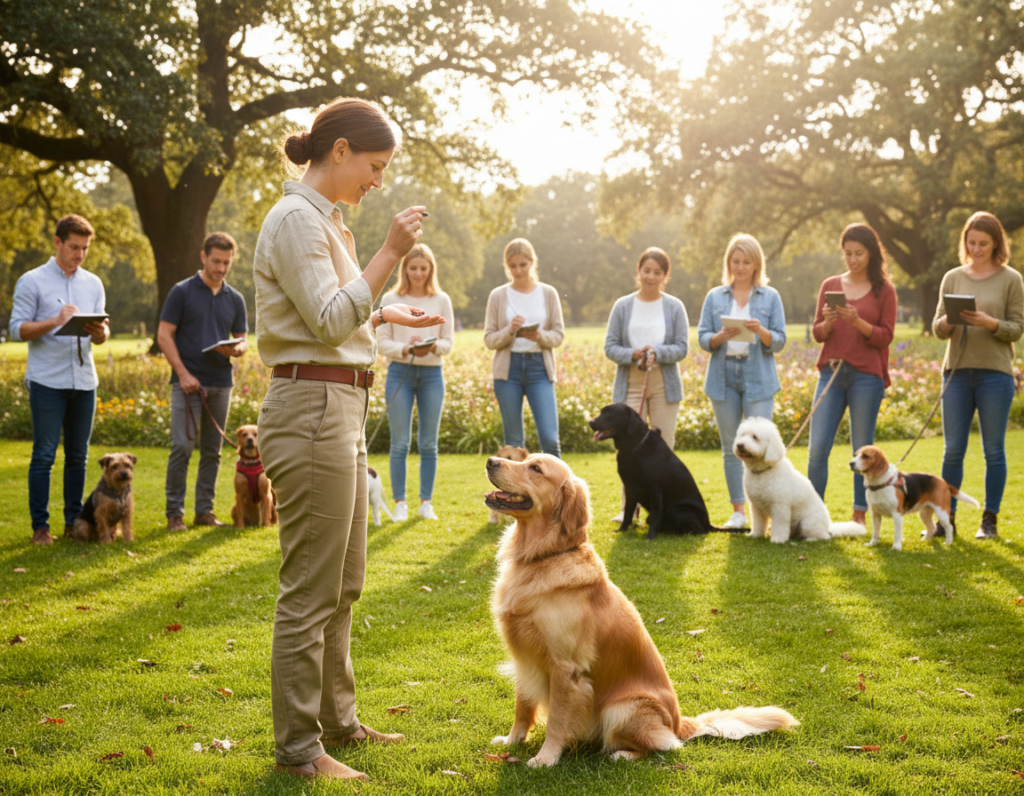
Reinforce calm check-ins and reward choices to disengage. End a session if you see stress cues.
- At home: watch for looseness before petting and let the animal set distance.
- In public: allow curved approaches and avoid crowding.
- Training: reward calm, stop reps when stress appears, and design spaces with clear exits and routine.
dog body language resources can help people build safer habits and reduce fear-based reactions over time.
Conclusion
Treat posture, face, tail, movement, and distance like pieces of one puzzle — reading them together gives the clearest, fastest idea of intent.
The language of canines is contextual. Learn your pet’s baseline and note small shifts over days and weeks to spot trouble early.
Stress and discomfort signals usually appear before growling or biting. Respecting those early markers prevents escalation and keeps people and dogs safer.
Practice the quick scan in low-stress moments. Reward calm choices, create exits, and give space when cues show uncertainty or threat.
Keep observing, keep rewarding calm, and prioritize prevention — those simple steps strengthen training, reduce conflict, and build a calmer home.