Short coats and thin fur need extra attention. The AVMA notes that breeds with less insulation feel the chill faster, and owners should learn simple steps to help maintain safe body temperature and protect paws, skin, and coat.
This guide outlines a clear how-to roadmap: assess cold tolerance, plan safer winter walks, protect paw pads, support coat and skin health, keep the home warm, adjust food and water, prevent hazards, and prepare for emergencies.
Shorter daylight, ice on sidewalks, and dry indoor air change routines now. Knowing canine thermoregulation helps owners realize that fur alone doesn’t always prevent heat loss.
Watch for signals like shivering, seeking warmth, or reluctance to move. This advice aligns with AVMA and ASPCA guidance for everyday U.S. winter conditions and focuses on practical tips to protect comfort and health.
Know When Cold Weather Is Too Cold for Your Dog
When temperatures fall, owners need a simple way to judge if outdoor time is safe for their pet. Use a quick decision framework that looks at breed type, size, age, health, and how the conditions feel—wind, wetness, shade, and nighttime lows.
Risk factors that lower tolerance
Watch for higher risk in:
- Seniors and puppies — they struggle to regulate body heat.
- Thin-fur or low body-fat animals — less insulation and reserves.
- Ill or recovering pets and nursing mothers — metabolic demands change temperature control.
- Working or outdoor dogs — more exposure increases danger.
Why small, short-coated breeds lose heat faster
Smaller animals have more surface area compared to mass. That means they lose heat quicker.
Short or sparse fur adds to the problem because it provides less insulation than thick coats.
Outdoor time limits when temperatures drop
A commonly cited rule from a local veterinarian is to avoid keeping a pet outside longer than about a half hour in frigid temperatures.
Keep potty breaks short, shorten walks in freezing conditions, and swap long outings for indoor enrichment when temperatures drop.
Watch your dog checklist: shivering, lifting paws, slowing down, anxiety, or burrowing are cues to head inside and warm up.
If medical issues or frequent extreme cold are part of your area, ask a veterinarian for individualized thresholds and a safety plan. For a practical reference, see how cold is too cold.
Plan Safer Winter Walks in Snow, Ice, and Low Light
Low light and frozen surfaces call for smarter routes and better visibility on walks. Plan around reduced daylight, plow changes, and freshly salted sidewalks so both of you stay steady and visible.
Choose routes and visibility gear
Pick well-lit streets and cleared sidewalks. Add reflective collars, a light-up leash, or a clip-on LED so drivers spot you in dim areas.
Walk like it’s slippery
Shorten the leash near roads, slow down on inclines, and favor paths with grit or cleared pavement. Wear shoes with good tread and encourage steady pacing to reduce slips.
Watch for hidden hazards and stay off ice
Snow can hide glass, holes, and uneven curbs. Scan ahead and steer away from suspicious banks. Make sure to avoid frozen ponds and lakes; ice thickness is unpredictable and a fall-through can be fatal.
Tie planning back to paw protection: limit exposure on salty or chemical-treated surfaces to protect dog paws and lower the risk of irritation.
| Risk | Prevention | Visibility | Traction |
|---|---|---|---|
| Low light | Choose lit routes | Reflective vest or LED | Firm footing |
| Snow-hiding hazards | Scan ahead, avoid banks | Bright gear | Slow pace |
| Ice or frozen water | Stay off ponds/lakes | High-visibility path | Booties or treaded shoes |
Dog Cold Weather Care for Paws and Pads
Winter sidewalks bring hidden grit and chemicals that can harm paws in minutes. Salt, sand, ice-melt, and de-icers can cause burns, abrasions, and sore pads. Dry indoor air also leads to cracking.
Main winter paw threats
Know the culprits: sidewalk salt, gritty sand, and chemical de-icers irritate skin and can upset a pet if licked. Snow and ice form balls in long toe fur that change gait and reduce traction.
Daily post-walk routine
Keep wipes, a spray bottle, and a towel by the door. Check between toes, wipe with a damp towel or pet-safe wipe, rinse if salt is visible, and towel-dry thoroughly between toes.
Balms, booties, and trimming
Paw balm or wax creates a barrier before walks and restores moisture after outings. Use consistently in dry winter air for best protection.
Booties help on heavily salted routes or for sensitive pads, but some pets resist. Acclimate slowly with short indoor sessions and treats. Do not force them if stress rises.
Trim toe-fur tufts to prevent painful ice balls and improve traction; ask a groomer if unsure.
Home de-icing and when to call a vet
Use pet-friendly de-icers for driveways and paths near your home to reduce exposure. Avoid harsh chemicals where pets play.
| Threat | Prevention | When to vet |
|---|---|---|
| Sidewalk salt/chemicals | Wipe paws after walks; pet-safe de-icer | Bleeding, persistent limping |
| Ice balls from toe fur | Trim fur; booties or short routes | Swelling or deep cracks |
| Dry, cracked pads | Paw balm daily; avoid long exposure | Open sores or chemical burns |
Protect the Coat and Skin During Freezing Days
Simple grooming keeps a coat functioning as insulation. Brushing removes dead fur, dust, and dandruff that block the hairs from trapping warm air. Regular brushing also spreads natural oils for healthier skin.
Grooming by coat type
Short-coated pets benefit from frequent light brushing to lift loose hair. Double-coated dogs need gentle de-shedding to keep the undercoat effective without removing insulating layers.
Wet-weather protocol
Towel-dry immediately after snow or sleet and dry between the toes. Avoid long walks while damp. If tolerated, use a blow-dryer on low to finish drying and prevent loss of body heat.
Bathing and moisturizing
Reduce bath frequency in freezing months to avoid stripping oils. When bathing is necessary, choose a moisturizing shampoo to guard against flaky skin and maintain coat health.
When outerwear helps
Thin-fur, small, or senior animals often benefit from a well-fitting sweater or jacket on freezing days. Ensure the garment allows full movement, has no chewable buttons, and avoids zippers that can snag fur.
| Need | Action | Why it helps |
|---|---|---|
| Insulation | Brush regularly | Removes dead fur and dandruff so coat traps warm air |
| Wet fur | Towel-dry and low blow-dry | Prevents chilling and preserves body heat |
| Dry, flaky skin | Bathe less; use moisturizing shampoo | Protects natural oils and reduces flaking |
| Thin-fur protection | Use fitted sweaters or jackets | Adds a layer to conserve warmth in freezing conditions |
Keep Your Dog Warm at Home With Bedding and Draft Control
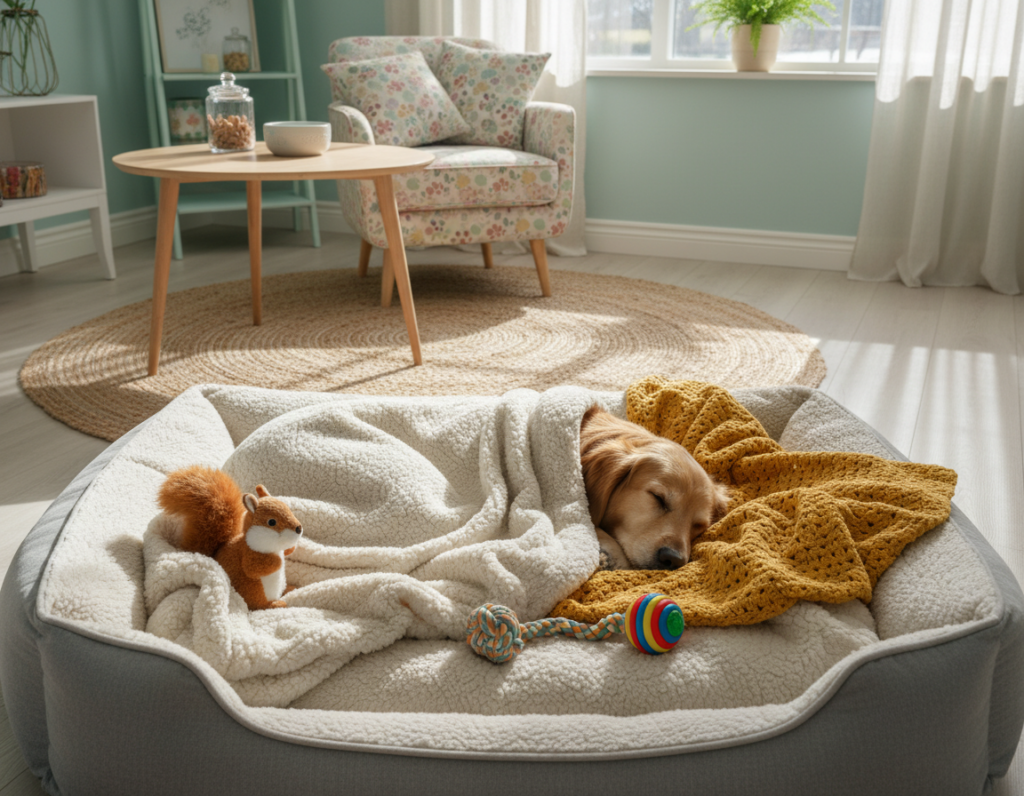
Create a cozy indoor hub so your pet has a predictable place to rest and retain body heat. A stable resting spot helps keep body temperature steady without needing to crank up home heat all day.
Warm beds that insulate from cold floors
Choose thick, insulating materials that lift pets off hard floors and trap warmth. Look for raised bolsters or foam layers and washable covers to handle wet paws after walks.
Orthopedic beds add joint support for seniors and large breeds. These cushion pressure points and help maintain comfortable body temperature during long rest periods.
Reduce drafts and create a cozy, consistent rest area
Place bedding away from drafty doors and single-pane windows. Avoid setting pads directly over heating vents where overheating or dry skin can occur.
Draft-control tips:
- Seal gaps at baseboards and around windows.
- Use door draft stoppers and thick curtains to block chill.
- Keep a consistent “cozy zone” so pets learn where to settle.
Safety note: Pets should live indoors during extreme conditions. If an outdoor shelter is unavoidable, follow Humane Society guidance: a dry, draft-free, raised shelter sized to hold warmth, with straw or cedar shavings and a covered doorway.
Make sure bedding stays dry after snowy outings by using entryway towels and rotating covers when damp. This keeps the rest area hygienic and preserves warmth for your pet.
| Need | Recommended feature | Why it helps |
|---|---|---|
| Insulation from floor | Raised or layered bed | Lifts pet off cold surface and traps warmth |
| Joint support | Memory foam / orthopedic pad | Cushions pressure points; helps seniors keep body heat while resting |
| Wet paws after walks | Washable cover; entry towels | Makes sure bedding stays dry and odor-free |
| Drafty rooms | Seal gaps, draft stoppers, curtains | Reduces cold air flow and stabilizes room temperature |
Adjust Food and Water for Winter Temperatures
Winter shifts in activity and temperature may require small diet and water adjustments. Some pets burn extra calories simply to stay warm. Others move less and may need smaller portions.
Who may need more calories
Working or outdoor animals, nursing moms, puppies, seniors, and thin-fur breeds often use extra energy in colder conditions. Talk with your veterinarian before changing a meal plan.
Practical feeding tips
Watch body condition: you should see a waist and feel ribs with light cover. Adjust portions slowly over several days to avoid stomach upset.
- Increase modestly if weight drops or energy seems low.
- Reduce portions if activity falls to prevent unwanted gain.
- Check weight and body shape at regular intervals.
Hydration in cooler months
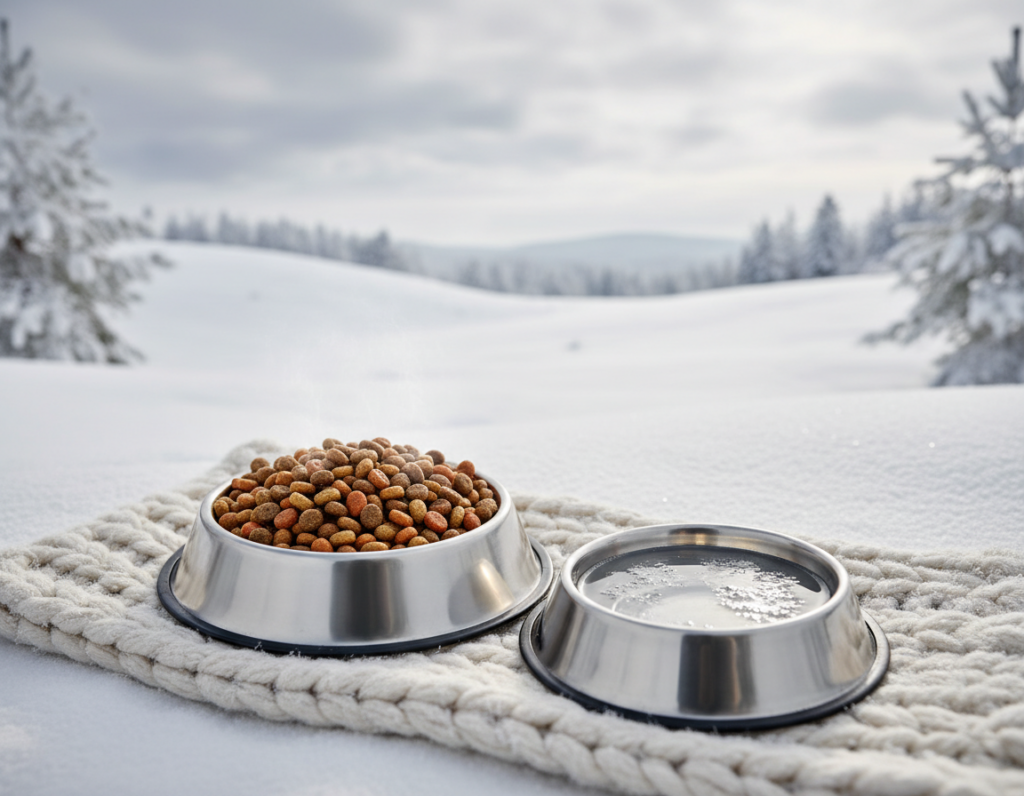
Water remains a top priority for winter health. Pets often drink less when it’s chilly. Keep fresh, unfrozen water available and check bowls frequently.
Consider a pet-safe heated bowl when temperatures fall below freezing. To boost intake, add wet food or warm water to dry kibble and offer water breaks during long outdoor outings.
Prevent Winter Hazards Indoors and Around Your Property
Trying to keep a home cozy can unintentionally expose pets to burns, toxins, and dry air. A few simple steps reduce risk and protect pet health without sacrificing warmth.
Safe use of heaters, fireplaces, and vents
Space heaters and open flames are common hazards. Place heaters on stable surfaces, use protective screens for fireplaces, and route cords out of reach.
- Keep bedding and toys well away from vents and heaters.
- Secure cords with covers so pets cannot chew or pull them over.
- Choose units with tip-over shutoffs and never leave them running unattended in a home with pets.
Indoor air, humidity, and skin health
Indoor heat often lowers humidity, which can dry skin and cause cracked pads. Run a humidifier in main rooms to protect skin and paw pads.
Pair humidification with paw balm and fewer baths to keep natural oils intact and support overall health.
Antifreeze awareness and quick signs to watch for
Antifreeze is highly toxic. Wipe spills immediately and store containers in closed cabinets out of reach of pets.
Watch for signs like drooling, vomiting, sudden weakness, singed fur, or pain near the paw or mouth. Contact your veterinarian right away if you suspect poisoning or a burn.
Prepare for Winter Emergencies and Watch for Hypothermia
Storms and outages can make help hard to reach. Build a kit and know the early signs of hypothermia so you can act fast and keep dog and household safe.
What to include in a five-day winter kit
- Food & water: at least five days of stored food and bottled water.
- Medications and preventives, in labeled containers, plus copies of prescriptions.
- Warm blanket or coat, extra towels, paw balm or booties, and reflective accessories.
- Sturdy leash/harness, pet-safe de-icer, and a basic first-aid kit.
- ID items: current collar tags, a waterproof ID, vaccination records, and emergency veterinarian phone numbers.
Recognize hypothermia and immediate steps
Common signs include intense shivering, lethargy, slowed movement, anxiety, weakness, or seeking places to burrow.
If you spot these signs, move the animal indoors immediately. Wrap them in blankets and use warm (not hot) water bottles wrapped in towels. Avoid direct high heat or heating pads that can burn or cause shock.
Contact your veterinarian if symptoms persist or worsen. Rapid transport may be needed if the animal becomes confused, collapses, or shows pale gums.
Why bringing pets indoors matters during extreme conditions
Blizzards, blocked roads, and power outages can delay supply deliveries and veterinary access for days. Keeping pets inside during these conditions is the most reliable protection.
Plan ahead: store your kit where it’s easy to reach, keep car carriers ready, and review local emergency clinic hours before storms arrive.
| Emergency Need | Recommended Item | Why it matters |
|---|---|---|
| Five-day survival | Stored food & bottled water | Keeps animals fed and hydrated when stores are closed |
| Medication continuity | Prescriptions + med list | Avoids missed doses during prolonged outages |
| Warmth & protection | Blankets, coat, paw balm, booties | Helps maintain body temperature and prevents hypothermia |
| Emergency contacts | ID tags, records, vet number | Speeds care if separated or if immediate vet attention is required |
Conclusion
Turn winter safety into a habit with a few quick steps each week. Check forecasts, shorten outings when temperatures dip, protect dog paws, and finish walks with a fast dry-off and inspection.
Adjust for each pet: size, coat, age, and health determine tolerance more than a single temperature rule. Use judgment and shorten time outdoors when needed.
Key tips: avoid frozen water, boost visibility in low light, and pick safer, cleared routes to prevent slips. At home, keep beds raised, seal drafts, and use safe heating practices to reduce burn and fire risk.
Monitor nutrition and hydration—some dogs need extra calories and all need unfrozen water. Pack an emergency kit, learn hypothermia signs, and contact a vet if symptoms persist. For practical thresholds, see how cold is too cold for.