Goal: This short guide will help you teach a clear puppy stay command that your dog understands without stress or guessing. You will learn a step-by-step approach that builds reliable obedience with short, positive training sessions.
Why it matters: A true dog stay holds a position until you give a release. That clarity keeps a pet calm during grooming, when guests arrive, or while you carry groceries.
The plan starts with simple foundations: safe space, tasty rewards, and basic sit or down. Then we add duration, distraction, and distance in small steps. This method helps you teach dog skills without long drills or harsh corrections.
What you can expect: short sessions, consistent cues and a clear hand signal so the behavior becomes reliable across rooms and routines. Reward the right moment and avoid punishment when your puppy makes a normal mistake.
What “Stay” Really Means in Dog Training
A precise hold gives dogs a predictable rule to follow during busy moments.
Stay means your dog remains in one position—sit or down—until you give a clear release. This is different from a brief pause. A release word ends the behavior and tells the dog it may move.
Contrast: wait is short and situational. A wait can be used at thresholds or during brief interruptions. Teaching both separately prevents fuzzy rules and accidental creeping or standing.
Why the difference matters
If you sometimes allow creeping or scooting, you teach that the hold is optional. That weakens obedience and makes behavior inconsistent.
At home, a solid hold helps when guests arrive, during grooming, or while you carry groceries. It supports safety and calm without harsh corrections.
Consistent word use
Use the same words and tone. Casual talk can sound like cues to a learning dog. A clear vocabulary prevents accidental releases and speeds up teaching.
| Situation | Use | Why it helps |
|---|---|---|
| Doorbell | Hold in place | Keeps visitors safe and reduces jumping |
| Grooming | Remain in position | Makes handling easier and less stressful |
| Carrying groceries | Stay until released | Prevents pulling and keeps you steady |
Next: Clear definitions matter, but you also need the right setup, rewards, and prerequisites to teach a reliable hold successfully.
Before You Teach Dog Stay, Set Up for Success
Preparation matters more than long drills. Take time to shape the environment before you teach dog stay. A calm start helps the dog understand expectations quickly.
Start in a quiet, safe space with minimal distractions
Choose an indoor place with low noise, few smells, and no other pets or kids running around. A non-slip floor helps your dog feel steady when you take a step back.
Prerequisites: a reliable sit or down position
If the sit isn’t solid, teach sit first. It is very hard to teach a hold when the position itself is shaky. Make sure the dog can hold the base position before adding the hold cue.
Choose rewards your pup will work for
Use tiny treats, regular kibble from meals, praise paired with food, or a quick toy play. Match rewards to the dog’s drive so training stays motivating without overfeeding.
Keep sessions short and positive
Limit reps to about 5-10 minutes several times a day. Stop while the dog is still eager and end on a good note. Avoid yelling or leash corrections; positive reinforcement builds reliable behavior.
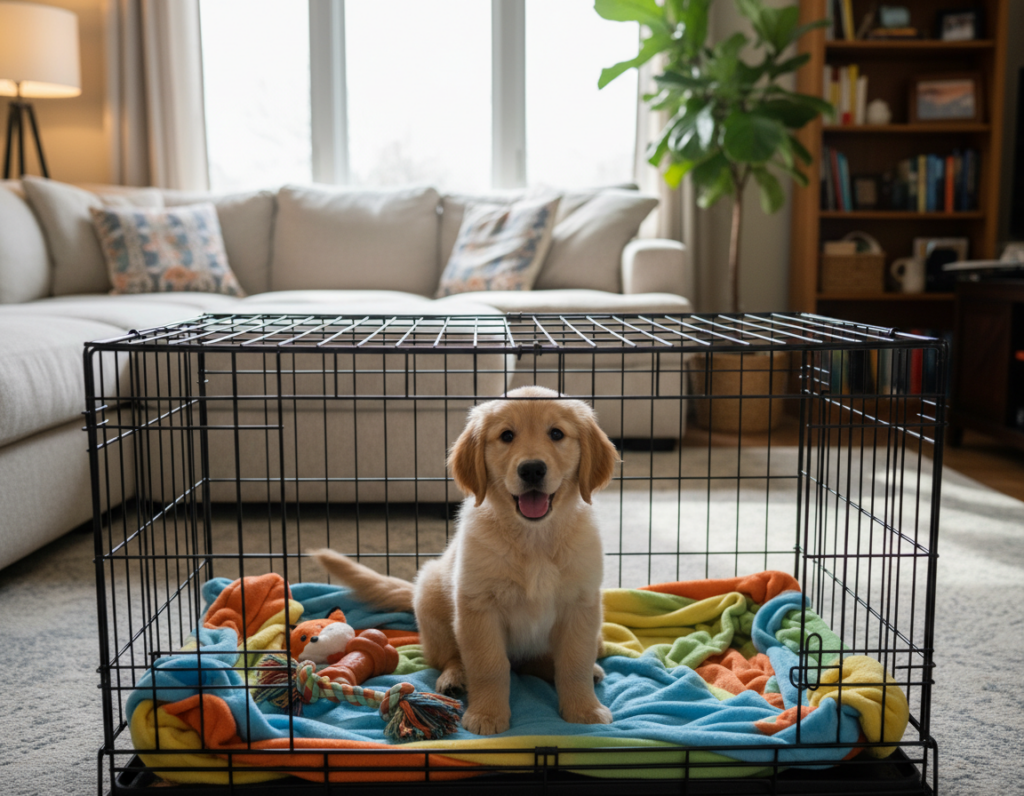
- Set up a mat or bed for very young dogs to protect health and comfort.
- Avoid long repetitions that cause frustration or physical discomfort.
- Repeat short sessions across the day rather than one long session.
| Focus | Why it helps | Practical tip |
|---|---|---|
| Quiet place | Reduces accidental broken reps | Train in one room with doors closed |
| Reliable sit/down | Gives a stable starting point | Master position first, then add the hold |
| Right rewards | Keeps motivation high | Use tiny treats or kibble from meals |
| Short sessions | Protects interest and health | 5–10 minutes, multiple times per day |
Expert tip: Positive reinforcement builds clarity and confidence. Punishment often creates confusion about what you want the dog to do.
Next: The biggest source of confusion is not the hold itself — it’s when the dog is allowed to move. The next section shows how to teach a clear release so that the dog knows exactly when the session is over.
Teach the Release Word First to Prevent Confusion
A defined release word prevents guessing and keeps each rep clean.
Why start here: Teaching a release word first makes stillness the default. The dog learns that movement only follows a clear release. This prevents accidental breaks and speeds reliable learning.
Pick one clear cue and stick with it
Choose a short release cue such as “free,” “release,” or “okay.” Avoid “OK” if you use it often in daily speech. Casual word use can cause accidental releases.
Exact starter steps
- Ask the dog to sit or stand for a brief pause.
- Say your release word as you toss a treat so the dog must move to get it.
- Praise the movement after the toss so the dog links release with reward.
As the dog improves, reverse the order: say the release, wait a beat, then toss the treat. That makes the word predictive instead of reactive.
| Goal | Action | Why it helps |
|---|---|---|
| Teach clear finish | Use one release word consistently | Prevents guessing and accidental breaks |
| Build meaning | Toss a dog treat when you say the cue | Links word to movement and reward |
| Household use | Ask family to avoid the word during training | Keeps reps reliable and reduces confusion |
Note: This release applies to sit, down, or any hold. Once the release is solid, you can add the hold cue without the dog guessing whether it may move. The next section covers your first calm, clear reps.
Puppy Stay Command Basics: Your First Calm, Clear Reps
Make the initial practice simple: one clear hand stop, one steady hold, one quick reward. Start with a reliable sit or down, then show a flat palm like a stop sign and give the verbal cue once. Keep your voice low and your movements small.
Add the hand signal
The visible hand signal tells a dog exactly what to do. Hold the palm at chest height and pair it with the chosen stay cue. Consistency helps the animal link the gesture to the required hold.
Reward the hold, not the get-up
Mark or click while the dog remains in the correct stay position, then deliver a calm treat. If you only treat after the release, the dog learns that popping up is the valuable part.
Timing and body mechanics
Begin with 1–2 seconds, then treat during the hold and use your release to finish the rep. Stand squarely, avoid stepping back too fast, and keep your torso quiet. If the dog follows when you move, slow your steps and reinforce more often for staying put.
Keep reps calm and clear
Minimal chatter, the same cue + hand, and a single release word make teaching dog stay efficient. Once short reps are reliable, you can build duration in tiny, winnable steps.
Build Duration Without Breaking the Stay Position
Duration is the first “D” to train because your dog must learn that stillness continues even when nothing happens. Start with tiny wins so the behavior feels worth repeating.
Begin with seconds: Ask for 1–2 seconds, then reward. Add only a few seconds each successful rep so the dog never discovers that moving pays off.
Clear progression you can use
- 2 seconds → 4 seconds → 6 seconds.
- Return to the prior step if the dog breaks the hold; that backslide is normal.
- Keep steps tiny so progress stays steady.
When to feed multiple treats
Once your dog reliably holds about 10 seconds, start giving treats intermittently during the hold. Deliver food low and close to the mouth so the dog does not rise from the stay position.
Practice length and when to stop
Do several short sessions of 5–10 minutes and aim for 15–30 minutes total per day. End while the dog is still successful and interested, then release and follow with something fun.
Make sure longer is not always better: many easy wins build reliable duration faster than a single marathon rep.
Add Distractions and Distance the Right Way
Start increasing real-world challenge only after short holds are steady. That prevents frustration and keeps training clear.
Why duration comes first
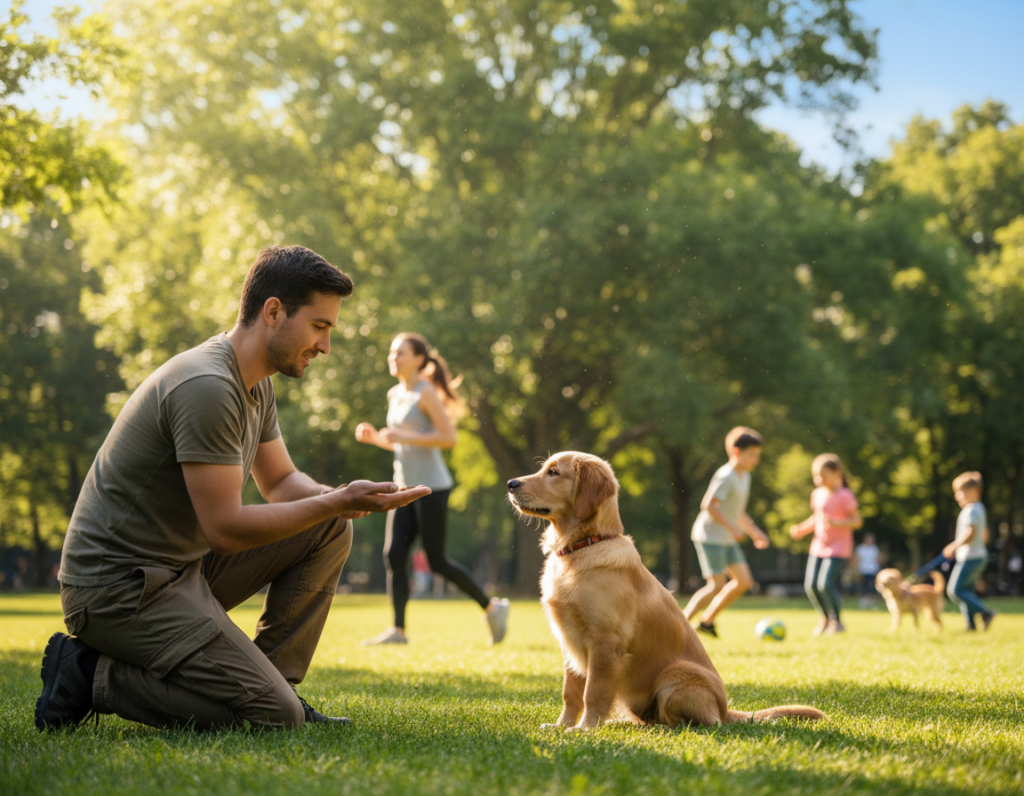
Duration builds a reliable foundation. When a dog can hold for about 30 seconds in a quiet spot, you know the base behavior is solid enough to layer on distractions or distance.
Introduce mild distractions, then scale up
Begin with small, safe interruptions: a soft hand clap, shifting your weight, or a gentle toy bounce. If the dog struggles, lower your criteria—cut the hold time in half so the animal can still win and learn.
Start distance one step at a time
Teach distance as its own skill. Take a single step away, then immediately return to reward while the dog remains in position. Use the release only after you come back and deliver the treat.
Why you should return before the release cue
“Always come back to pay in position — otherwise the dog learns that distance equals permission to move.”
Returning lets you reward the hold, not the approach. This avoids accidentally teaching movement toward you as the release.
Combine the elements for real-world reliability
Gradually increase steps across sessions: one step, two steps, then across the room. Keep distractions low while you add distance, then layer mild interruptions back in.
Practice scenarios: open the front door while your dog holds, step around the kitchen island, or pick up a dropped item and return to reward. These short, structured reps build trustworthy behavior in daily life.
For a systematic plan that ties distance, duration, and distractions together, see this helpful guide on the 3Ds of training: distance, duration, and distractions.
Common Mistakes That Confuse Puppies (and How to Fix Them)
Small handler habits can turn clear training into confusing lessons for a young dog. Most errors are fixable with calm resets, simpler criteria, and clearer motion from the human side.
What to do when your puppy breaks a stay early (no punishment)
Don’t scold. If the puppy gets up, stay calm, guide them back, and lower the next goal to ensure an easy win.
Breaks usually mean the task was too hard or you moved in a way that invited them. Make the next rep shorter in seconds and reward quickly.
Reading your own movement and mixed signals
Watch your body. Stepping, turning shoulders, leaning, or waving hands will pull a dog out of position.
Keep the hand cue steady, avoid hovering over the animal, and practice stepping directly to the side with quiet hips so you do not lure motion.
Avoid asking for too much too soon (and why training can feel boring)
Too much too fast looks like jumping from 5 seconds to 30, or adding distance and distractions together. That sets up failure.
Make stillness worth it: pay well for short holds, keep reps brief, and mix in fun releases so the puppy stays engaged and motivated.
Safety notes: where not to practice and what not to expect
Skip busy streets, dog parks, or any place where you can’t control hazards. Do not use holds as a way to leave a puppy unattended for long periods.
Health check: If a dog shows discomfort when holding down, try a softer surface and consult a veterinarian or qualified trainer for guidance.
| Common Mistake | Why It Happens | Quick Fix |
|---|---|---|
| Breaking early | Criteria too hard or handler movement | Calm reset, shorten time, reward fast |
| Mixed body cues | Stepping, turning, or hand wobble | Keep a steady hand signal and move deliberately |
| Too much too soon | Jumping levels or adding distractions | Increase seconds slowly; separate distance from distractions |
| Unsafe practice area | Traffic, crowds, uncontrolled dogs | Train in quiet, safe rooms or fenced yards only |
Conclusion
Close practice with calm praise and a predictable finish to cement good behavior.
In short: a true stay means a dog holds sit or down until your release word gives permission to move. Teach the release first, then add a hand cue and the verbal cue so the behavior is clear.
Follow this progression at home: set a quiet place, pick high-value rewards, teach the release, add the hand signal, then build duration. Only after duration is reliable should you layer distractions and distance, and always return to reward the dog in position before saying the release.
Keep sessions short, calm, and full of timely praise. Get started with easy wins each day and use practice during everyday moments—doorways, mealtime setup, or grooming—to turn training into lasting obedience.