Stephanie Rombough, a force-free trainer in Edmonton, Alberta, explains why the stay cue matters for every owner. Building impulse control early gives pets a clear way to handle real-world moments.
Start small and safe. Focus on seconds first, then add distance and mild distractions. Each step should leave the animal confident and calm.
The guide that follows lays out a simple progression. You will learn how to set a solid position, use a clear cue, and increase time in tiny increments.
By concentrating on duration, distance, and distractions you make the cue reliable across settings. This approach supports better behavior and a more peaceful life together.
Understanding the Importance of the Stay Cue
A reliable stay cue keeps busy households safer and calmer in everyday moments. It gives owners a predictable way to stop door dashing and to manage short interruptions.
The dog stay is a practical life skill. Holding a solid position for a few minutes lets you tie shoes, prep meals, or answer the door without chaos.
Impulse control matters more than tricks. A consistent cue helps a pet learn calm behavior and builds the mental skills that underpin broader obedience.
Start with a proper dog sit position and small steps. Gradual increases in time and brief distance create reliable responses that transfer to busy rooms and outdoor spots.
- Prevents rushing exits: keeps entrances safe.
- Creates calm: allows you to complete tasks without interruption.
- Builds focus: supports future work in more complex training.
When you teach dog owners how to use a clear cue, you give them a tool for calmer, safer days with their pets.
Preparing Your Environment for Training Success
A calm room with minimal sights and sounds sets the stage for steady progress.
Setting the Scene
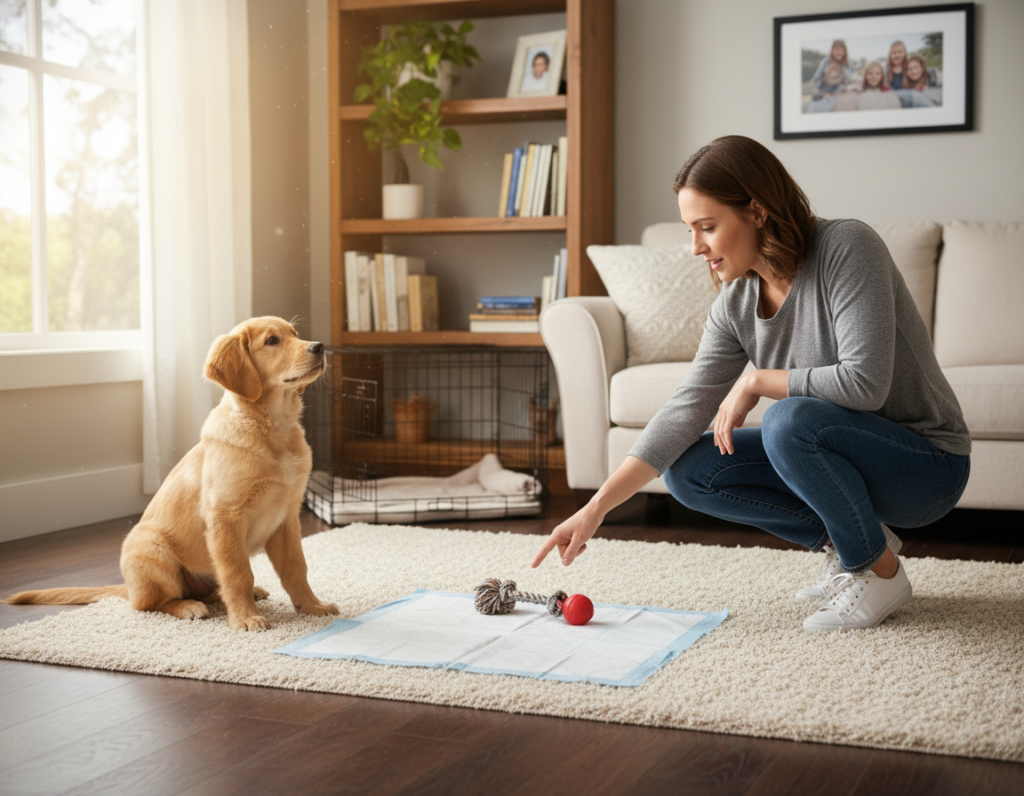
Choose a quiet room where you can remove background noise like TVs or phones. Make sure there are no toys or people moving around.
Short, positive sessions work best. Aim for 15 to 30 minutes a day so each part of practice is focused and upbeat.
Selecting High-Value Rewards
Pick soft, smelly treats that your pet really wants. Using one special treat keeps interest high when you ask for a dog sit before you add the stay cue.
Use a clear marker word to signal success. A consistent word helps your companion link action and reward with less confusion.
- Remove every distraction in early sessions to help concentration.
- Keep sessions short and end on a positive note so your animal looks forward to the next session.
- Practice daily to build reliable obedience and smooth transitions to longer holds.
For step-by-step guidance on setting early cues, see how to teach stay without confusing your.
How to Teach Dog Stay Duration Training
Focus on small wins—few-second holds that stack into lasting control.
Start small by asking your dog to hold a sit or position for just a few seconds. Use a clear hand signal and a short verbal cue together so the animal links the action to the signal.
Offer high-value treats or a quick reward for calm behavior. This reinforces patience and makes the stay position feel worthwhile.
If the dog breaks the position, reset gently and try again. Calm resets keep lessons positive and prevent frustration for both of you.
- Step up slowly: add only a few seconds each attempt until you reach 10–15 seconds.
- Pair cues: always give the hand signal with the verbal cue to generalize obedience.
- Reward patience: reward dog behavior that shows self-control to build confidence.
Start small and build time, distance, and mild distractions only when those short holds are solid. This stepwise method helps dogs succeed and keeps learning calm and clear.
Mastering the Art of the Release Cue
A clear release marks the moment your companion is officially free to move. This single signal ends the hold and prevents guessing. Use the same release word each time, such as “ok” or “free.”
Conditioning the On and Off Switch
Start by pairing a verbal release word with a simple hand signal. Say the word, give the hand signal, then reward immediate movement. Repeat often so the cue becomes consistent.
Practice short holds. Even after just a few seconds in position, give the release clearly. This builds confidence and reinforces the boundary between waiting and moving.
- Consistency matters: only move when you hear the release word and see the signal.
- Double cues help: use a hand signal plus verbal release to reduce confusion.
- Professional advice: many experts say the release is as important as the stay itself.
When you master the release cue, the overall hold length improves. Your pet learns to wait for permission, making longer seconds and longer sessions more reliable.
Increasing Distance and Proofing for Distractions
Increasing distance and testing distractions turns short holds into reliable behavior across real-life settings. This step helps the cue work beyond a quiet room.
Adding Incremental Distance
Take only one or two steps away at first. Move back quickly and reward the position for holding calm seconds.
Return to the pet to deliver the reward. This teaches that staying in place earns the reward, not running toward you.
Introducing Real-World Distractions
Be unpredictable when you add distractions. Clap, walk around, or drop a light noise so the animal learns to generalize the cue.
If the dog breaks stay, simplify the task. Too much distance or many distractions will cause failures; scale back and rebuild confidence.
Managing Food Temptations
Make sure you block attempts to steal treats. Allowing a grab would teach the wrong thing.
- Practice in a quiet room before moving out into busier places.
- Use high-value treats but control access so the reward remains meaningful.
- When you return to the pet, reinforce calm behavior—this prevents the dog breaks stay pattern.
Troubleshooting Common Stay Training Mistakes
Common mistakes let lessons unravel quickly, but most are easy to correct.
If your dog breaks stay frequently, go back one step and simplify the task. Make the hold short and obvious. Check the dog sit and the position first.
Keep sessions calm and short. Paula Nowak recommends 15 to 30 minutes per day so dogs stay focused and happy.
“Never get frustrated; frustration damages trust,” says Kim Kurland.
- Return to basics: ask for a few seconds in a solid sit before adding distance.
- Watch rewards: make sure you do not accidentally reward a dog that breaks stay by handing a treat too soon.
- Use a clear release word: consistency in the release word and cue helps obedience and control.
Remain positive and slow. If distractions or distance cause failures, scale back and rebuild confidence. For broader behavior help, see raising a confident and well-behaved puppy.
Generalizing Skills in New Environments
Shifting lessons to new places requires shrinking the task and rebuilding confidence step by step.
Dogs rarely generalize well, so expect to take a big step back when you move from indoors to outside.
Start small by practicing a short stay right beside your companion in a quiet outdoor spot.
Transitioning from Indoors to Outdoors
Begin with one brief hold and use the same hand signal and release word you use inside.
If the animal struggles, reduce distance and simplify the task. This is normal and helpful.
- Start small: short seconds next to the pet in a calm area.
- Increase distance slowly: only add a step or two when success is consistent.
- Add distractions gradually: small noises first, then more activity.
Return to your companion to reward calm behavior. Coming back and reinforcing the position teaches that waiting earns the reward.
“Patience and consistency are the keys to making a cue reliable in any place.”
Conclusion
To conclude, small daily wins add up, making calm behavior part of everyday life. Start with brief, clear steps and build slowly so progress feels manageable.
Be patient as your dogs learn. Reward steady effort and keep sessions short to respect attention spans and time.
Mastering this work strengthens the bond between you and your dog and makes routines easier. Use consistency and positive cues to keep momentum.
With steady practice and attention, you will see reliable results. Celebrate each success and carry these skills into daily life for a calmer, safer home.