Goal: This guide helps owners build a calm, confident dog that is safe at home and in public. Start with clear routines, short training sessions, and steady boundaries.
Puppies learn fastest between eight and sixteen weeks. Brief sessions of five to ten minutes fit young attention spans. Early prevention matters because behavior problems are a top reason dogs are re-homed. The ASPCA notes many pets are surrendered for these issues.
What you can expect: Progress takes time. The first year shapes long-term habits. Daily, present-tense practice and small wins add up across your dog’s life.
Preview: We follow a clear framework: start early, communicate with fair reinforcement and corrections, teach core commands, socialize thoughtfully, and build reliable house manners. Train the adult you want by rewarding good behavior and preventing rehearsals of unwanted habits.
– Start during the developmental window and keep sessions short.
– Consistent routines, fair reinforcement, and daily practice protect both pet and household.
Start Early and Set Expectations for Puppy Behavior
Between two and four months, young dogs absorb social cues and commands rapidly. This age offers outsized returns for the same effort, so owners get more learning in less time.
Why this window matters
Puppies form lasting responses during this period. Gentle exposure to people, places, sounds, surfaces, and handling builds confidence rather than fear.
Short sessions, big gains
Keep practice brief: aim for 5–10 minute blocks several times a day. Short bursts match a young dog’s attention span and keep training fun.
Set house rules now
Decide on furniture access, jumping, mouthiness, door-dashing, and begging right away. If everyone follows the same rules, the pup won’t learn loopholes.
- Consistency beats intensity: repeat small sessions, not long marathons.
- Apply rules regardless of size — small dogs still need the same limits.
How to Raise a Well Behaved Puppy With Clear Communication and Consistency
Control and clear cues give a young dog a predictable world. Use supervision, a short leash indoors, or a puppy-safe area so unwanted behaviors never get rehearsal. Management is training: preventing chewing, counter-surfing, and chasing pets saves time later.
Control and supervision
When you cannot watch the puppy, choose a safe setup: crate, pen, or dog-proof room. A leash or line inside helps you guide choices during busy moments.
Consistency in routines and commands
Use the same words, timing, and rules every day. Consistency reduces confusion and makes training faster. Crate work is part of the ABC approach: control, be consistent, crate train.
Reinforcement basics
Reward within seconds with treats, toys, or praise so the dog links action and outcome. Reinforce calm greetings, chewing on a toy, settling on a mat, and responding to a command once.
Corrections versus redirection
Redirect when possible; if a correction is needed keep it calm, immediate, and fair. Corrections are information, not anger — never hit and never punish after the fact. Read your dog’s signals and adjust rather than escalate.
For more step-by-step tactics on cues and timing, see effective puppy obedience training.
Teach Essential Commands That Support Good Behavior for Life
Core obedience gives owners clear options for keeping dogs safe and polite in daily life. Start in a quiet room, reward small wins, and build up difficulty only when the pup succeeds.
Sit and down: simple shaping for steady responses
Use treats and a light lure to guide the nose and body. Mark the movement, reward, then repeat. Fade the lure so the command, not the food, triggers the action.
Stay and recall as safety skills
Begin with one-second stays and short recalls in low-distraction spaces. Gradually add time, distance, then distractions so the dog wins more than fails.
Leash manners and polite greetings
Treat leash work as behavior, not gear. Reward check-ins, change direction to stop pulling, and praise close walking. For greetings, use the “four paws on the ground” rule: remove attention when jumping, then give praise and treats the moment paws touch the ground.
Proofing for real-life reliability
Layer distractions slowly: new rooms, yard, sidewalk, then park. Reduce treats as the command stays solid. Aim by the first birthday for calm leash walking, a reliable stay of at least three minutes, and dependable responses that protect your dog in daily life.
For practical step-by-step drills, see five essential commands.
Socialization That Builds a Confident Adult Dog
Introducing new sights and sounds in small steps builds a calm, curious adult dog. Think of socialization as safe, positive exposure—not forced interactions with every person or dog.
People, dogs, and places: creating positive exposure without overwhelm
Start with short, pleasant visits. Meet adults, children, and seniors in quiet settings first. Add friends’ homes, calm parks, then busier sidewalks.
Noise and handling practice for grooming and vet visits
Pair common sounds like vacuums, doorbells, and car traffic with treats and praise. Gently touch paws, ears, and mouth daily so handling feels normal.
Prevent fear by pacing new experiences and rewarding calm behavior
Keep sessions brief and watch body language. Step back when the puppy shows stress and reward calm looks or disengagement.
| Setting | Examples | How to introduce |
|---|---|---|
| People | Adults, children, seniors | Quiet meetups, brief greetings, offer treats |
| Places | Home visits, sidewalks, parks | Short trips, increase activity slowly |
| Other dogs | Playdates with friendly dogs/puppies | Controlled meetings, supervised play |
| Noises & handling | Vacuum, doorbell, nail trim | Pair sounds with treats; simulate grooming |
Slow, positive exposure creates lasting confidence. Socialization is part of everyday life and rewards long-term good behavior in public.
Housebreaking and Indoor Manners for a Cleaner, Calmer House
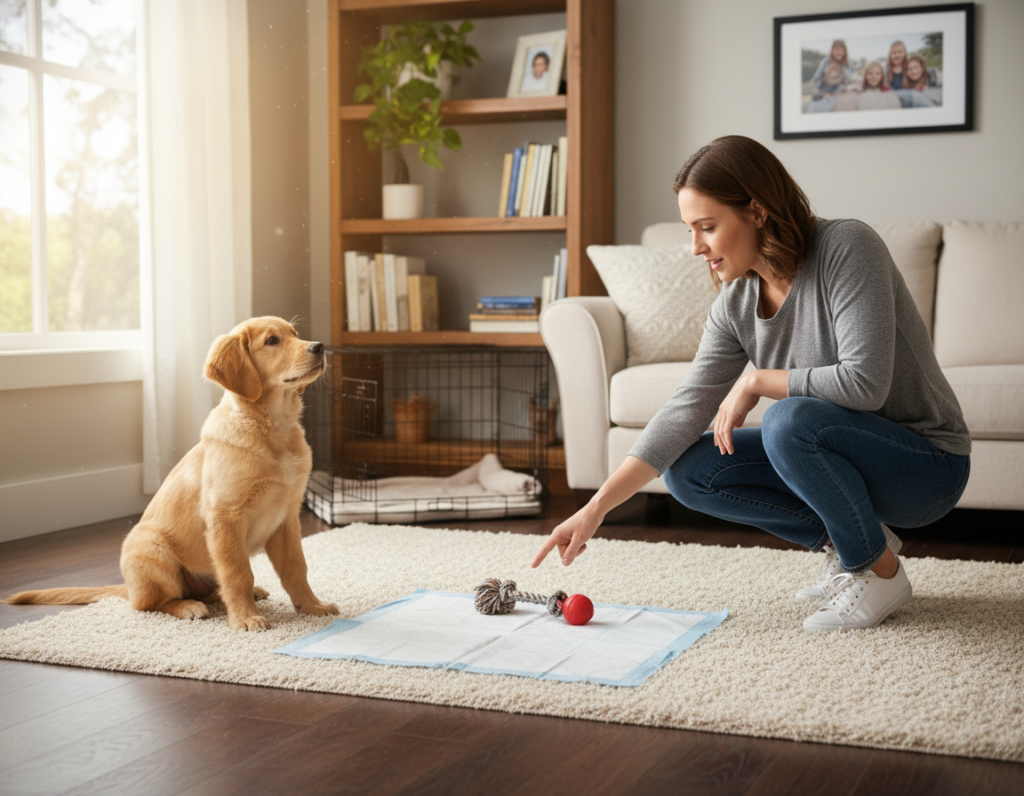
Set a clear potty rhythm that matches your pup’s meals, naps, and play bursts. Take the dog outside right after waking, after meals, after play, and before naps or bedtime. Use one outdoor spot so scent cues speed learning.
Create a potty schedule tied to meals, naps, and playtime
Short, predictable trips reduce accidents. Aim for brief outings every time a routine event happens.
Use praise and treats immediately after outdoor success
Reward the moment the dog finishes outside. Immediate praise links the action with the reward and builds good behavior quickly.
Supervise indoors and use a crate to prevent accidents
If you cannot watch closely, confine the pup in a safe space or crate sized so the animal avoids soiling its sleeping area. Introduce the crate slowly with toys and treats and never use it as punishment.
Handle accidents the right way without punishment
Clean accidents thoroughly to remove scent. If you catch the puppy mid-accident, calmly carry them outdoors to finish and then reward. No scolding—punishment confuses and delays progress.
| Tip | Action | Why it works |
|---|---|---|
| Potty schedule | Outside after waking, meals, play, before sleep | Predictable timing reduces indoor accidents |
| Designated spot | Use same yard area each trip | Scent cues speed learning and consistency |
| Crate use | Introduce slowly; one hour per month of age | Prevents wandering and supports house training |
| Accident protocol | Clean scent, calm redirect outdoors, reward | Prevents repeat behavior and reinforces success |
Stop Common Puppy Problem Behaviors Before They Stick
During early development, many pups try behaviors that can become habits if accidentally rewarded.
Chewing and safe swaps
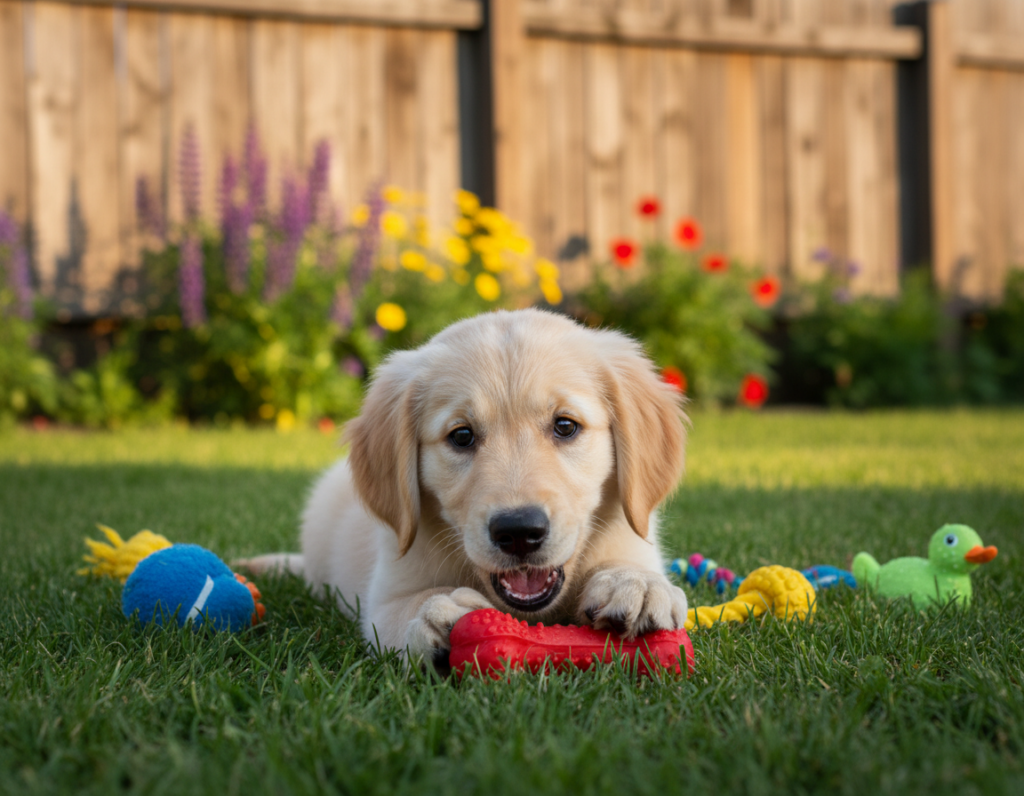
Dog-proof the home by removing shoes and toys that tempt chewing. Swap forbidden items immediately for approved chew toys.
Make sure you praise or offer a treat the moment the pup picks the right item. Positive reinforcement helps the pup choose the toy next time.
Biting and nipping during play
End play the instant teeth meet skin. Offer a toy instead and restart play when the pup is calm. Reward calmer mouth play so biting fades.
Jumping and attention-seeking barking
For jumping, remove attention—turn away or step back—then reward the instant all four paws touch the floor.
When barking for attention, ignore noise and reward quiet. Teach a short “quiet” cue and meet exercise needs so the dog has less reason to call for attention.
Consistency and fair corrections
Rules must be the same for everyone. If a behavior is sometimes allowed, it will grow. Corrections should be immediate, calm, and proportional. If you miss the moment, focus on better prevention next time.
- Prevention beats punishment: manage space and offer toys, treats, and attention for good behavior.
Conclusion
,Investing steady, short practice in the first year pays dividends across your dog’s life. Use a , simple plan built on the ABCs: control unwanted rehearsals, keep consistent routines, and use the crate as a safe space, not punishment.
Keep training sessions brief—five to ten minutes—so the pet wins often. Layer socialization and handling practice so vet visits and grooming feel normal for an adult dog.
Measure progress in weeks and months, not days. Small gains add up and shape long-term behavior at the end of puppyhood and beyond.
Next steps: pick 3–5 house rules, choose two core commands for daily work, and schedule calm, controlled exposures this week.