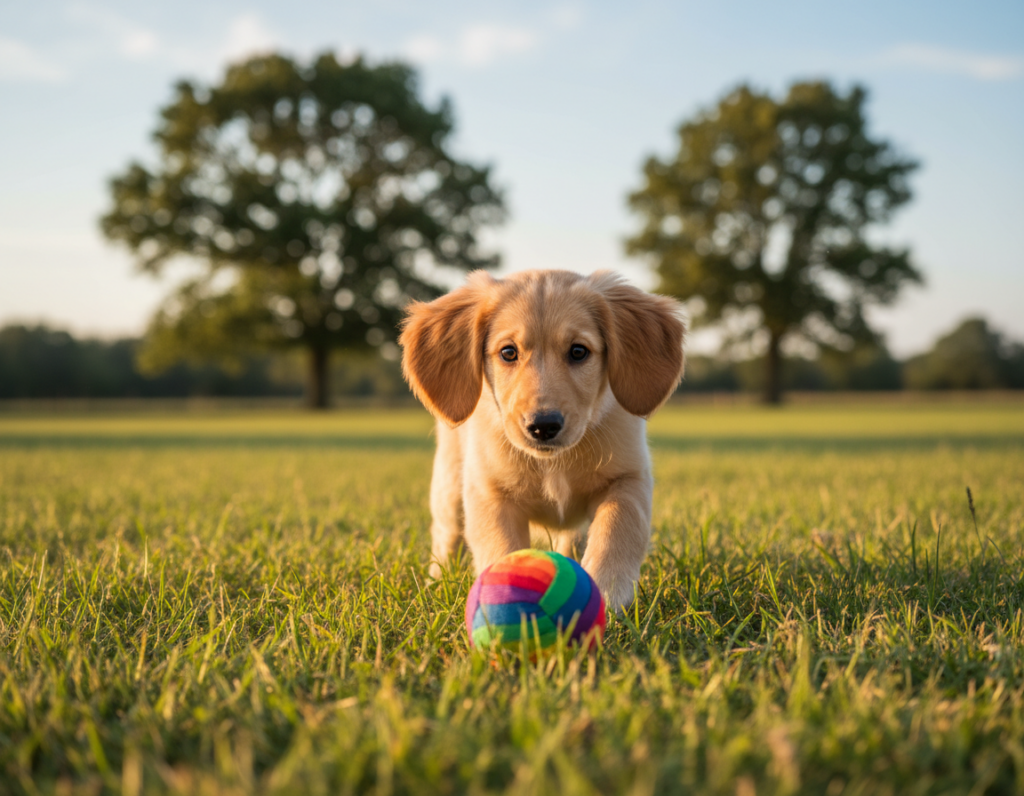
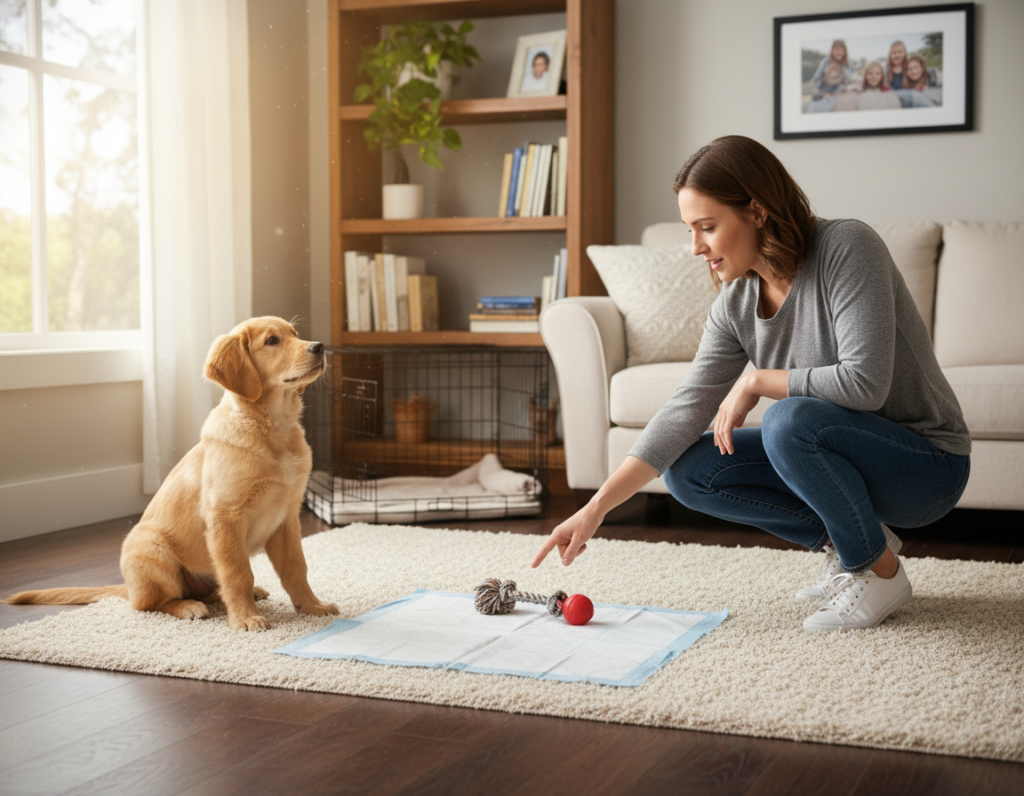
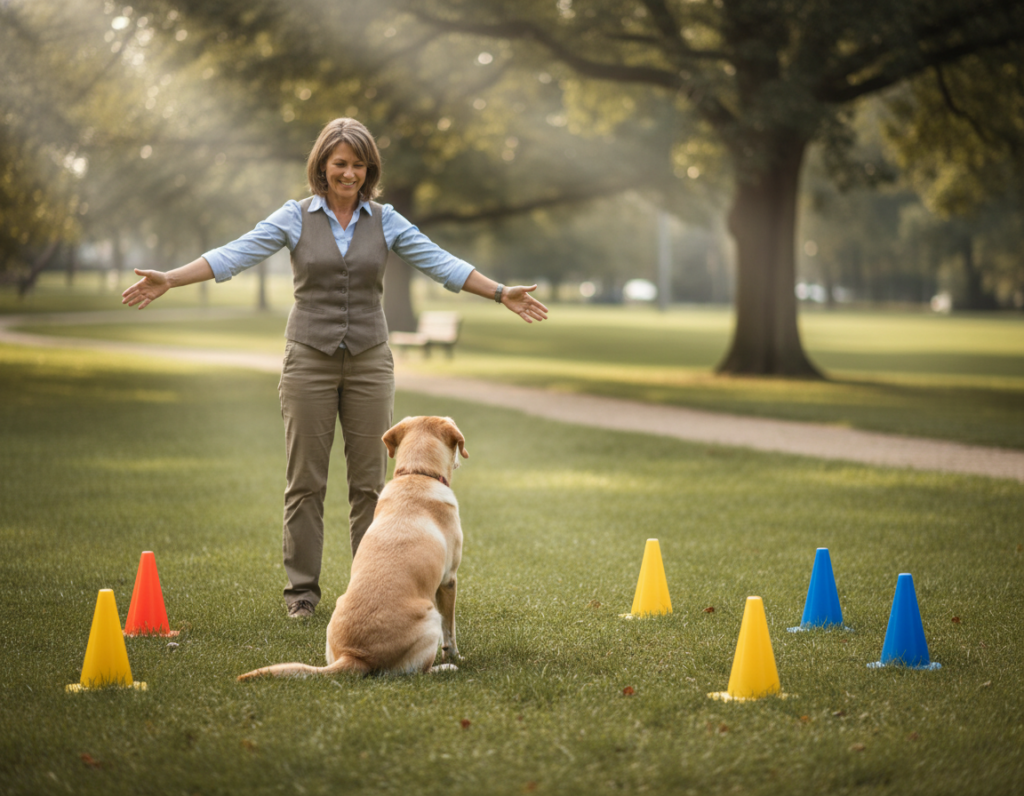
Start the moment you bring a new dog home. At about eight weeks, learning begins. Short micro-sessions woven into meals, potty breaks, and play make practice feel natural, not like a chore.
Focus looks like quick name response, choosing you over distractions, and staying engaged for a short burst. That matters for safety and daily manners. Keep work to about five minutes per mini-session and no more than fifteen minutes total each day.
This guide uses positive reinforcement only. Reward the behaviors you want and avoid harsh corrections that cause fear or break trust. The article shows a simple loop: set the space, pick a reward, teach one small step, repeat briefly, then stop while your pup still wants more.
Follow age-appropriate goals through the first year. You will get step-by-step structure: build emotional foundations at home, plan wins, teach focus games, add impulse control, then layer core obedience. These practical training tips help build confidence and good behavior fast.
Start With the Foundation: Safety, Trust, and Structure at Home
Begin by making your home a calm, predictable place where learning feels safe. A secure base lowers stress so a young dog can watch you instead of scanning for threats. That focus makes every short practice more effective.
Create a safe environment
Practical steps: puppy-proof common hazards, use gates or a crate for supervised rest, and pick a quiet corner for early work. These changes reduce distractions and help your pet settle into routines.
Build the relationship daily
Simple routines—hand-feeding part of meals, gentle handling, short play, and consistent potty times—help the bond grow. When owners repeat predictable actions, a young dog learns people are safe and rewarding.
Avoid punishment to support long-term focus
Do not use yelling, leash pops, or dominance rituals. Those approaches break trust and make future learning harder. Instead, make it easy to do the right thing, then reward immediately and consistently.
- Secure, predictable home lowers stress and improves focus.
- Start in a calm area before adding distractions.
- Daily routines and gentle handling build a lasting bond.
- Avoid punishment—trust equals faster recovery from mistakes.
For an age-based roadmap to good behavior, see this concise timeline on how to start training a young dog.
Plan Puppy Training Sessions for Short, Successful Wins
Aim for repeatable five-minute efforts that stack into reliable daily progress. Pick one skill per short block, work for about five minutes, then stop while the pup still wants more. Repeat multiple times so total time stays under 15 minutes per day.
Ideal session length and daily cap
Keep each block to roughly five minutes. A few short blocks add up without tiring the learner. The daily cap—about 15 minutes—prevents frustration for both of you.
End on a positive note
Always finish with an easy step your dog can nail. Reward generously and stop while motivation is high. That positive close makes the next attempt easier.
Choose high-value rewards
Use kibble for routine practice and upgrade to higher-value treats, toy play, or extra praise when difficulty rises. Pair verbal praise with food so the word becomes meaningful.
Consistency rules and setup
Use the same short word and the same hand signal each time. Keep family members aligned on expectations so progress is steady.
Before you begin, clear tempting items, pick a quiet room, and train before guests arrive. If the pup checks out, simplify the step, increase reward value, or reduce distractions—not repeat the cue louder.
Teach Focus First: Name Response, Eye Contact, and Attention Games
Turn the sound of your pet’s name into a cue they enjoy. Make the first contact short, predictable, and full of positive feedback. Quick wins build a habit of looking to you before you ask for a command.
Condition your dog to love the name
Say the name once, mark the glance, then give a treat or praise. Repeat many times in low-distraction moments so the name equals good things.
Build “watch me” focus before harder work
Progress: name → quick glance → eye contact → longer eye contact. Keep reps fast and rewards frequent so attention strengthens naturally.
Use movement and play to reward engagement
After a correct look, move a few steps away and invite your pup to follow. Turning recall/name games into a chase or play sequence makes focus fun.
Prevent tuning out the cue
If the dog ignores you, don’t repeat the name. Instead, lower difficulty: step closer, shorten the distance, or raise reward value. That way success stays simple and motivating.
| Skill | Start | Next Step | Why it helps |
|---|---|---|---|
| Name response | Say name once | Mark + reward | Creates a positive cue for attention |
| Watch me | Glance | Hold eye contact | Supports all future commands |
| Movement game | Step away | Chase/play reward | Makes engagement playful and reliable |
End goal: a young dog that chooses attention because engagement consistently pays off with treats, play, and praise.
Build Impulse Control to Keep Training on Track
Teaching impulse control helps a young dog learn to pause, think, and choose calm behavior to earn what they want. This skill keeps all other lessons on track and makes everyday life safer.
Use “sit” as a polite ask before meals, play, and petting. Make sit the routine way to say please so practice is natural and frequent. Pair the cue with a quick treat or praise to mark success.
Replace unwanted behaviors—jumping, barking, nipping—by rewarding four paws on the floor and quiet moments. Redirect mouthing to approved toys so your dog learns acceptable alternatives.
Trade-ups and leave-it foundations
For “drop it,” offer a higher-value treat in exchange, then sometimes return the item to avoid guarding. Build “leave it” slowly: begin with low-value objects and high rewards, then raise difficulty as success grows.
“Impulse control is the turning point where excitement becomes choice, not chaos.”
| Problem | Quick Strategy | Why it helps |
|---|---|---|
| Jumping | Reward four paws + ignore jump | Teaches calm access to attention |
| Nipping | Redirect to toy + praise calm | Replaces mouthing with appropriate play |
| Holding items | Trade-up with a higher-value treat | Builds reliable drop and reduces guarding |
Force-free methods prevent escalation: calm reinforcement lowers anxiety and gives a clear path to good behavior. For detailed methods on impulse control, see this impulse control guide.
Core Obedience Skills That Improve Focus Fast
Simple, repeatable commands give your dog predictable rules and steady rewards. The Basic 5—come, loose-leash walking, sit, down, and stay—create a clear foundation for obedience and better focus in everyday life.
Recall: make “come” the best invitation your puppy hears
Start indoors in a quiet space. Say the command once, pair it with the name and a high-value reward, then add movement and play so returning is fun. Safety note: always reward at arrival, avoid grabbing, and use a long line outdoors until reliable.
Stay and a reliable release word
Teach a release word like “OK” first. Build duration in tiny steps—seconds before you step away—rewarding each success. Short increases keep frustration low and learning steady.
Down and calm settle
Capture a relaxed down and mark calm behavior quickly. Reward relaxed positions and add brief “settle” moments to build impulse control. These mini-practices reduce overexcitement fast.
Loose-leash walking basics
Begin indoors, reward the position by your knee or hip, and pivot away when the leash tightens. Use a consistent cue (“heel” or “let’s go”) and slowly fade treats while still praising good choices.
Consistency in cues, handling, and rewards means your puppy doesn’t have to guess the rule. Clear jobs plus steady reinforcement turn short practice into reliable obedience.
Train Beyond the Living Room: Socialization and Real-World Distractions
Real-world exposure turns simple skills learned at home into reliable behavior in public. Puppies don’t generalize well, so a cue that works in one room may fail amid new smells and sounds.
Use the 8–16 weeks window to build calm confidence. That period helps a young animal accept people, surfaces, and noises as normal rather than scary.
Safe exposure checklist:
- Traffic and public transport sounds
- Different surfaces (grass, pavement, metal grates)
- Friendly people of varied ages and appearances
- Gentle handling, vet visits, and brief car rides
Combine socialization with short practice: ask for an easy cue your pet knows, reward quickly, and end before they tire. Keep outings short—often 10–15 minutes—to avoid overwhelm.
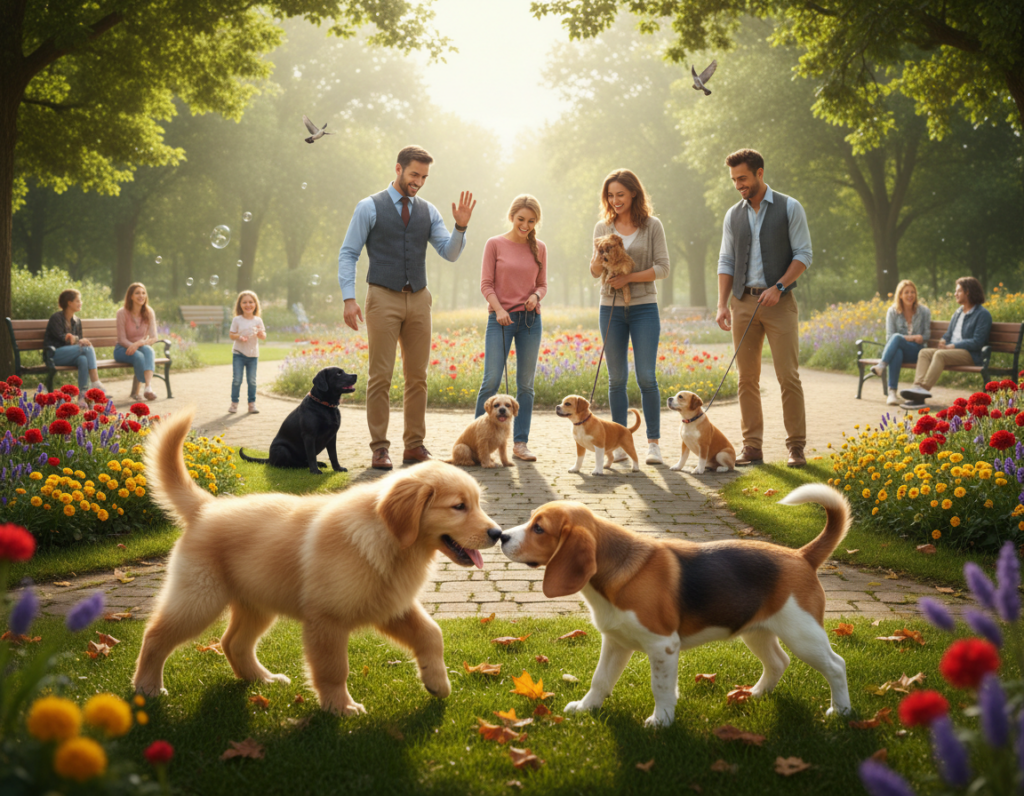
Consult your veterinarian about vaccine timing before visiting higher-dog-traffic areas. If vaccines aren’t complete, seek lower-risk options like quiet front-yard meet-and-greets or class-based introductions arranged by pros.
Small, repeated field trips build reliability, reduce reactivity, and help good behavior stick in the real world.
Age-Appropriate Training Goals From 8 Weeks to One Year
Map clear progress markers from eight weeks to one year so you know which goals to prioritize now and which to build later. This reduces frustration and keeps learning steady as your dog grows.
Early puppyhood: exposure first, then gentle impulse control
From about 8–16 months, focus on safe exposure to sounds, surfaces, and handling. Pair these experiences with short, positive practice of simple impulse control such as sitting before meals or play.
By six months: polite play, housetraining progress, and being alone
By roughly six months, work on polite play (reducing nipping and jumping), steady housetraining routines, and short alone times. Use a crate or safe area, start with brief separations, and increase them gradually while watching stress cues.
By one year: mastery of everyday manners for lifelong behavior
At one year, aim for reliable everyday obedience in real contexts—doorways, visitors, walks, and vet handling. Expect progress, not perfection; life requires consistent practice to keep skills sharp.
Keep recall and focus games ongoing through every stage so “come” stays rewarding as distractions rise. Consistency, patience, and a clear timeline make the first year manageable and effective.
Conclusion
A consistent approach of brief practice and positive rewards turns small wins into reliable skills. Start with safety and trust, plan short five-minute blocks, teach focus first, add impulse control, then layer core obedience and real-world work.
Keep each block easy and fun. Choose the right reward—kibble, high-value treats, or play—reduce distractions, and stop while the learner still wants more. Praise and rewards are tools, not spoiling; they show a dog exactly what behavior earns access to good things.
If focus falls, simplify the step, upgrade the reward, or move to a quieter place. Ask everyone in the home to use the same words and expectations. These small steps make training a clear, steady way to a calmer, safer life together.