Reading a companion’s body is key to safe, confident interactions. This article shows how subtle changes in the head, eyes, tail, and overall body reveal feelings. You will learn practical cues to reduce fear and stress and to strengthen your bond through simple training.
Most animals use similar body language patterns, but each pet is unique. By watching the way a canine moves and holds its body, owners can spot signals early and respond calmly.
We cover how the head position, eye contact, and tail motion give clues, and why understanding these signals matters for humans meeting other dogs. This short guide gives clear, actionable tips so you can read the language of the body and keep interactions positive and safe for all breeds.
The Fundamentals of Dog Posture Communication
Group life shaped a concise visual vocabulary that helps members avoid conflict. In social animals, the body is the main tool for signals. This article outlines how simple changes in the tail, head, and overall position convey intent.
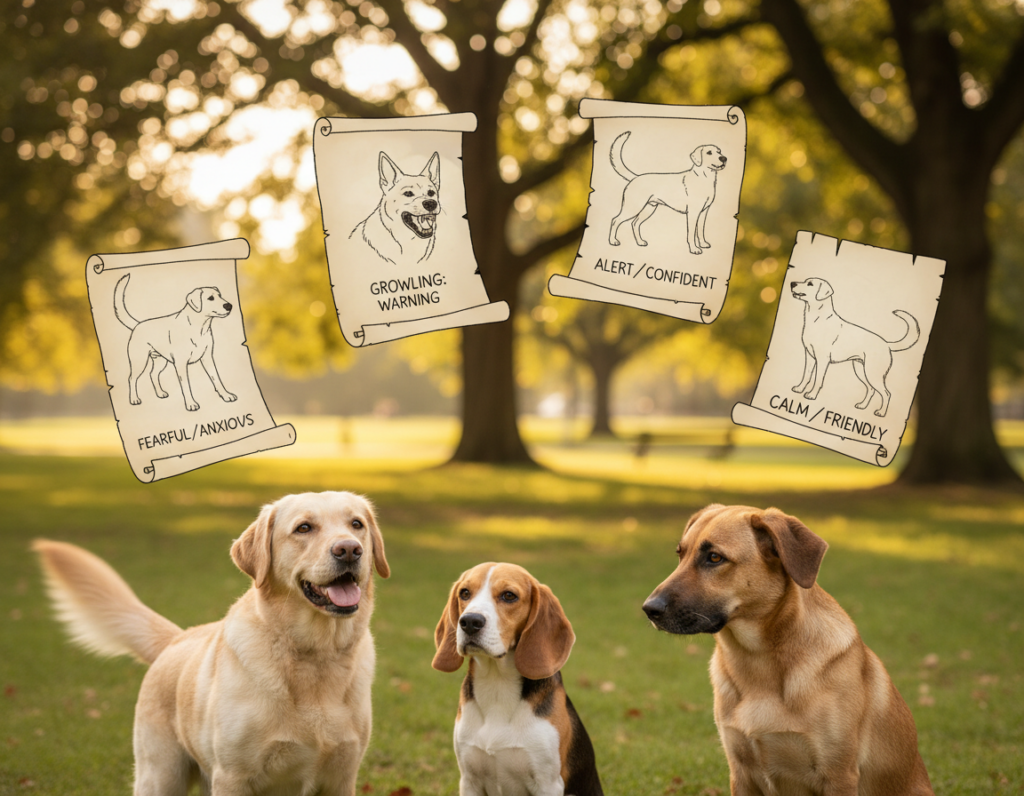
We studied 25 distinct poses, inspired by Australian Cobberdog therapy dogs. These illustrations show common ways a pet uses the side view, the ground stance, and subtle eye shifts to speak without sound.
Learning these basics supports better training and health. Recognizing when a dog senses a threat or feels calm helps owners act early and reduce stress.
- 25 key stances capture moods and intent.
- Tail and head angles give fast clues.
- Side profiles and ground position reveal confidence.
- Breeds show variation, but the core language is consistent.
Understanding this silent language improves safety and strengthens bonds. Simple observation is the first step to better interactions and long-term well-being.
Reading the Whole Body Instead of Single Signals
Don’t judge intent from one movement alone. To read subtle intent you must look at the entire frame — head, eyes, tail and stance together. A single flick can mislead, while combined cues form a clear message.
The danger of misinterpreting cues: Relying only on tail wagging or a lowered head can cause training errors or false alarms. A wagging tail moving side-to-side may mean excitement, anxiety, or a readiness to act. Context and the full dog body reveal which.
The Danger of Misinterpreting Cues
- Focus on the dog whole body rather than one signal like tail wagging.
- Misreading a single gesture can create fear or faulty training choices.
- Watch head and eyes together with the tail for consistent intent.
Why Context Matters
Where and how a dog holds itself changes meaning. A dog on the ground might be resting or it might be signaling a threat. The same side-to-side tail can tell very different stories depending on the rest of the body.
Takeaway: Learn to read dog body language as a cohesive whole so you can respond calmly and prevent conflicts before they escalate.
Identifying Relaxed and Alert States
A calm animal moves with relaxed energy, while an alert one tightens and scans the scene.
Recognizing these two states keeps interactions safe and pleasant. A relaxed companion has a loose, wiggly body with weight even on all four feet. Lips show no tension and the eyes look soft. The tail often rests in a neutral position.
An alert animal looks different: muscles tighten, weight shifts forward, and the head raises to gather more information. Ears and tail position change to match interest or concern. Different breeds show this with small variations, but the core signals are consistent.
“Watch weight distribution and facial tension to tell if your companion is simply curious or genuinely on guard.”
- Loose body and soft eyes = relaxed.
- Forward weight and tense muscles = alert.
- Use training to build comfort in varied settings.
Recognizing Signs of Stress and Nervousness
Subtle movements and quick glances often reveal when a companion feels nervous. Watch for repeated, small actions rather than a single gesture. These cues form a clear pattern you can use to protect comfort and safety.
Common Calming Signals
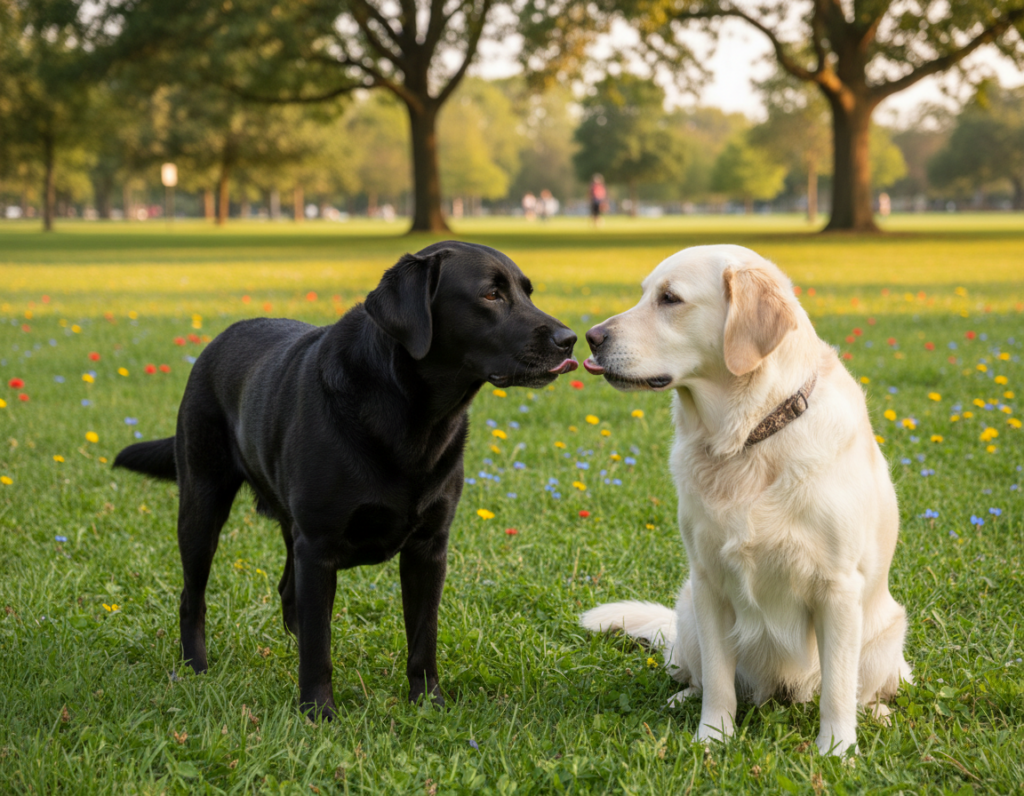
Calming signals are the way an animal asks for space or calm. A turn of the head, a glance to the ground, or a slow body shift can all be cues.
- Turning the head away or looking to the ground to appease a perceived threat.
- Quick lip licks, sneezes, or small yawns used to ease tension.
- Raising a paw or angling the body to the side to avoid conflict.
The Meaning of Yawning
Yawning is often a stress release. Turid Rugaas, author of On Talking Terms With Dogs: Calming Signals, notes that yawning can help calm an anxious companion.
“Yawning is a common way for a dog to release stress.”
Physical Signs of Discomfort
Physical signs are clearer: lip licking, tense lips, showing the whites of the eyes, or avoiding eye contact are warnings.
A fearful animal may tuck its tail, hunch the back, or shift weight backward. These signals matter for long-term health.
Understanding Fearful and Appeasement Postures
Fear shows itself in small, stiff movements that make an animal seem smaller and less threatening.
A fearful companion will often hunch its back and keep the head close to the ground to reduce perceived threat. Weight shifts backward and the tail tucks as a clear sign that confrontation is unwanted.
Appeasement gestures are ways the animal signals submission. Exposing the belly, raising a paw, or lowering the body to the ground all help avoid conflict. Some may show teeth in a soft, appeasement grin rather than aggression.
- Hunched back and low head to appear smaller.
- Weight shifted back with a tucked tail to avoid a fight.
- Belly up, raised paw, or body lowered as calming signals.
- Stiff body and an appeasement grin can mean fear, not threat.
“Reading these cues lets you step in before stress escalates.”
Watch the whole dog body so you can spot insecurity early and offer calm support. For more on how animals express intent around people, see understanding the way dogs communicate with.
Interpreting Aggressive Body Language
Tense signals rarely appear out of nowhere. Tension builds in small steps: the frame tightens, motion becomes limited, and eyes lock on a target. Spotting these changes early gives you time to act and avoid escalation.
Warning Signs Before Escalation
Know these cues so you can respond calmly.
- There are 11 different forms of aggression in animals, and recognizing the warning signs is crucial to prevent danger.
- An aggressive animal often shifts weight forward, holds the tail high, and pulls lips back to show teeth.
- Hard, fixed eyes and a stiff dog body mean the animal is alert and ready to react.
- Some may turn to the side or even raise the belly to intimidate, using size and angle as a threat.
- Fear aggression can appear with a tucked tail yet bared teeth—this mix signals high stress and risk.
Takeaway: Aggression often comes from fear. Maintain safe distance, avoid direct eye contact, and seek training or professional help to manage these signals before they escalate.
The Role of Tail Wagging and Positioning
Small changes in tail speed and height often signal big changes in mood. Tail wagging is more than a single motion; it forms part of a clear body language system.
A companion may wag in six distinct ways. A wag to the right often shows positive feeling, while a sweep to the left can indicate unease. Watch the height relative to the ground: high means confidence, tucked means fear.
The fur along the back, or hackles, may rise with stress or excitement. Breeds differ in neutral tail position, so learn what is normal for your pet.
- Six common wag styles give different emotional signals.
- Helicopter wags usually mean joy, especially at greeting time.
- Tail docking can reduce a dog’s ability to signal and should be limited to health needs.
Tip: Always read the dog whole body — tail, paw stance, and facial cues together — for a reliable signal of comfort or stress.
Decoding Ear Movements and Facial Expressions
Facial cues and ear tilt can turn a vague feeling into a clear signal. Watch the head and ear lines together to read intent fast. Small changes often precede larger shifts in behavior.
Ear Positions and Their Meanings
There are three common ear positions to note. Ears held forward usually mean alert interest or focus. Relaxed ears show the animal is calm and open. Ears drawn back often signal appeasement or fear and deserve space.
- Forward = alert; leaning in to gather information.
- Relaxed = content and comfortable.
- Back = submissive, anxious, or trying to avoid a threat.
Eye Contact and Whale Eye
Eyes tell a direct story. A hard stare can indicate aggression or a mounting threat. Showing the whites of the eyes, called whale eye, is a clear sign of discomfort or anxiety.
Yawning, turning the head to the side, or a soft, toothy appeasement grin can all be calming signals used to defuse tension. Watch the whole head and tail position together—these small cues add up to a reliable signal of how they feel.
“Watch ear angle, eye tension, and head tilt — they reveal mood before actions do.”
Conclusion
Mastering dog body language helps you notice small signs before they become problems. Reading a companion’s weight, head angle, and gaze makes daily moments safer. Practice often and stay calm.
Pay attention to clear cues like tail wagging, eye contact, and yawning. These simple signals let you respond with gentle training and timely care. Watch the whole body to avoid mistakes.
Use this article as a starter kit to read dog body language and grow trust. With steady observation you will better predict behavior and know what a dog is trying tell you. Keep learning and enjoy time with your dogs.