Every dog “talks” all the time. Their signals come through body posture, sounds, and scent. In daily life a dog sends clues about mood, needs, identity, and health. These cues shift meaning with context, so you learn best by reading the whole animal, not one gesture alone.
This introduction sets expectations: you will learn to scan the whole body, note the scene, and respond safely. The same signal can mean comfort, stress, or invitation depending on the dog’s past, breed shape, and the environment.
Communication is functional: one action changes another’s behavior. This practical guide focuses mainly on body language because it helps with everyday handling, safer interactions, and stronger bonds. With clearer signals, training works better and care improves for pets and people alike.
Key takeaways: Dogs signal through body, voice, and scent; context matters; focus on whole-body cues for safety and stronger relationships.
Why dog communication matters for safety, training, and your bond
Spotting early warning signs in a dog prevents small tensions from becoming serious incidents. This skill matters at home, around kids, during grooming, and at the vet.
Misreading a single cue can be costly. A wagging tail may hide anxiety or discomfort. Missing subtle distance-seeking signals lets tension climb toward growling, snapping, or biting.
How misreading signals can lead to stress, fear, and bites
Stress signs often come long before aggression. If pressure continues, dogs follow a clear escalation: subtle stress → distance-increasing signals → growl or snap.
Why you must read the whole dog, not one body part
Look at posture, face, tail, and movement together. That full picture improves timing in training, reduces conflict, and supports choice-based methods.
- Safety: Better reading protects children, guests, and handlers.
- Training: Clearer cues improve reward timing and behavior outcomes.
- Bond: Respecting a pet’s request for space builds trust and lowers reactivity.
Practical promise: With these skills you will spot early warning signals and intervene sooner. Remember: aggression is often a message to create distance, not a sign of a bad animal.
The three ways dogs “talk” to people
Dogs use three main channels to send messages: visible body cues, vocal sounds, and chemical signals. Each channel adds context, and they often appear together — for example, a stiff posture plus a low growl signals rising threat.
Body language signals
Body language is the most visible system for humans. Watch posture, tail, ears, eyes, mouth, and overall tension to read intent.
Vocal communication
Vocalizations—barks, whines, growls, and howls—are context dependent. A bark in play sounds different from a bark that warns. Growling is informative: it tells you the dog feels pushed or unsafe, not that it is simply “bad.”
Chemical communication
Chemical cues include scent marking, pheromones, and bodily secretions. These signals tell other animals identity, reproductive status, health, and emotional state at a distance.
- Why channels match: Vocal, visual, and scent cues combine to clarify meaning.
- Watch tension: Piloerection, dilated pupils, and weight shift mark rising arousal.
- Quick how-to: Observe, interpret in context, then reduce pressure or reward calm choices.
How to read a dog’s body language as a complete picture
Begin by noting what changed in the environment. A new person, sudden noise, or a removed toy reshapes meaning for every posture and facial cue.
Start with context: what changed in the environment?
First ask what just happened. Context frames the dog body signals and guides a safe response.
Scan for muscle tension and weight shift
Look at the whole body for stiffness, raised hackles, or a shift in weight. Weight moved backward often signals avoidance; forward weight can mean readiness or interest.
Check the face: eyes, lips, teeth, and forehead tension
Note eye contact: a soft gaze differs from a hard stare. Tight lips, wrinkled forehead, or visible teeth add meaning. These facial cues reveal intent faster than a single tail flick.
Confirm with tail and ear position before deciding what it means
Tail and ear placement can confirm or contradict the face. A loose tail with relaxed ears supports a calm read. A tucked tail or pinned ear increases concern.
- Notice the recent change (new person, noise, object).
- Scan overall posture for tension and weight shift.
- Read the face: eyes, lips, teeth, forehead lines.
- Check tail and ear position to confirm the facial picture.
- If cues conflict, create space and reassess.
Quick caution: a wagging tail does not always mean comfort. If that wag pairs with a stiff body and a hard stare, treat the scene as tense and give distance.
Simple decision rule: when signals conflict or tension is high, reduce social pressure, increase space, and pause before approaching. For deeper study, see the essential canine body language guide for practical examples.
Tail signals and wagging tail meanings beyond “happy”
The tail gives loud clues about a pet’s emotional arousal and intent.
Tail movement is an arousal indicator, not a simple friendliness badge. A wide, fast wagging tail often means positive excitement. By contrast, a slow, stiff tail wagging with little side-to-side motion can signal uncertainty or discomfort.
Speed and style
Wide, sweeping wags usually pair with loose muscles and play. Slow, rigid wags often come with a tense body and focused stare.
Height and position clues
Horizontal or neutral position tends to mean calm interest. A high or erect tail can show alert confidence. A tucked tail signals fear or submission.
| Wag Type | Typical Meaning | Body Context |
|---|---|---|
| Wide, fast | Positive excitement | Relaxed posture, loose mouth |
| Slow, stiff | Uncertainty or discomfort | Tense muscles, focused eyes |
| High/erect | Alert or confident | Forward weight, stiff legs |
| Tucked | Fear/submission | Lowered body, avoidance |
Breed differences affect reading. Curled tails (Akita, Shiba) and short tails (French Bulldog) change visible cues. Docked or amputated tails reduce clarity and a dog may use other body signs instead.
Safety takeaway: If the tail signals arousal but the rest of the body looks tense, create space and slow interactions. For more guidance, see decoding body language.
Eye contact and eye signals that reveal comfort or stress
A dog’s eyes reveal immediate clues about comfort, worry, and intent. Learning to read these cues helps humans respond before tension rises.
Soft eyes vs hard stare
Soft eyes show relaxed eyelids, a neutral forehead, and calm gaze. These signs pair with loose body posture and friendly behavior.
Hard stare is a fixed gaze with visible facial tension. When a hard stare appears, the chance of escalation is higher, especially if the body is stiff.
Whale eye and what it can indicate
Whale eye occurs when a dog turns its head but keeps the whites of the eyes visible toward a trigger. This is a common early warning sign of discomfort or anxiety.
If a dog shows whale eye during touch or approach, pause and give space.
Pupil dilation and emotional arousal
Large pupils often reflect high arousal—fear, excitement, or aggression. Note that lighting affects pupil size, so check surroundings before assuming emotion.
“Hard stare plus stiff posture increases bite risk more than either cue alone.”
- Differentiate soft eyes from a hard stare by eyelid and forehead tension.
- Treat whale eye as a pause signal and reduce pressure.
- Consider lighting when judging pupil dilation; reassess if other tension signs appear.
Ears as communication: reading position by breed and situation
Ears act like antennae, tuning a dog to sights and sounds around it. Watch ear movement to learn what the animal is monitoring and to spot early changes in mood.
Relaxed ears versus attentive ears
Relaxed ears sit naturally. In floppy breeds they hang with a soft base. In prick-eared types the base rests loose even if tips point up.
Attentive ears tilt forward and pair with a ready stance. This position often appears when a dog evaluates a person or object.
Ears pinned back: nervousness, fear, or defensive intent
Ears pulled close to the head commonly signal anxiety or defensive intent. Look for a lowered head, tucked tail, or tightened muzzle with this posture.
Why ear shape and morphology change what you see
Cropped ears, heavy drop ears, or long pendulous ears mask subtle movement. Pricked breeds show base tension more than tip motion.
Tip for readers: always pair ear position with facial tension and overall posture before deciding what the signals mean.
| Ear Presentation | Common Meaning | Body Context to Check |
|---|---|---|
| Relaxed (floppy or soft base) | Calm or neutral | Loose body, soft eyes |
| Forward/pricked | Alert or curious | Forward weight, focused gaze |
| Pinned back | Fear, anxiety, or defensive | Lowered head, tucked tail, lip tension |
| Limited movement (cropped/heavy) | Subtle cues hidden | Rely on face and posture instead |
Mouth, lips, and teeth: what facial tension is telling you
Facial tension around the jaw, lips, and teeth gives clear clues about a dog’s comfort level. A quick check of the muzzle helps you spot early stress and decide whether to pause, step back, or continue.
Relaxed mouth versus closed-mouth tension
Neutral looks: a relaxed jaw, soft lips, and easy panting after activity signal calm. This is the baseline for safe interaction.
Closed, tight lips or a clenched jaw often mean the animal is uneasy or assessing a threat. Treat that tension as an early warning and create space.
Lip licking, yawning, and panting without heat
Lip licking, brief lip smacking, yawning, or panting when it is cool are common calming signals. Context matters: check body posture and eyes before assuming calm.
Baring teeth and snarling: serious warnings
Baring teeth and snarling are distance-increasing signals. These signs show clear discomfort or threat and deserve immediate de-escalation rather than punishment.
Stop looming, stop reaching, turn sideways, and give the dog an exit route.
Gentle mouth during play and treat-taking
By contrast, a gentle mouth—soft take without teeth contact—shows restraint and comfort during play or when accepting food. Use this as a positive benchmark for good behavior.
Body posture and movement: the “big picture” cues humans miss
Watch the whole silhouette: posture and movement set the stage for every other cue. A clear read of the body helps you place tail, ear, and face signals in context.
Loose, curvy body vs stiff, upright stance
Loose, curvy motion and low muscle tone often mean comfort. By contrast, a stiff upright stance signals high alert and rising tension. Stiffness often precedes bites, so treat it seriously.
Leaning away vs leaning forward
Leaning away is a space request. Leaning forward shows rising arousal and readiness to act, especially near triggers or food.
Freezing, slow movements, and the ready position
Freezing or very slow steps are a major warning. The ready position—weight even, minimal movement—shows the dog is deciding its next move. Pause and give space.
Raised hackles and what it means
Raised hackles signal sympathetic activation. This can be fear, excitement, or aggression. It is not proof of dominance. Look at the whole dog body to decide response.
“Posture organizes meaning; read the body first, then add face, tail, and ears.”
| Signal | Typical Meaning | Action for humans |
|---|---|---|
| Loose, wiggly body | Comfortable, playful | Approach calmly |
| Stiff, upright stance | High alert, tense | Increase distance |
| Leaning away | Requests space | Stop approach |
| Freezing / slow move | Decision point | Pause and observe |
| Raised hackles | Heightened arousal | Reduce pressure |
Recognizing relaxed and friendly dog signals
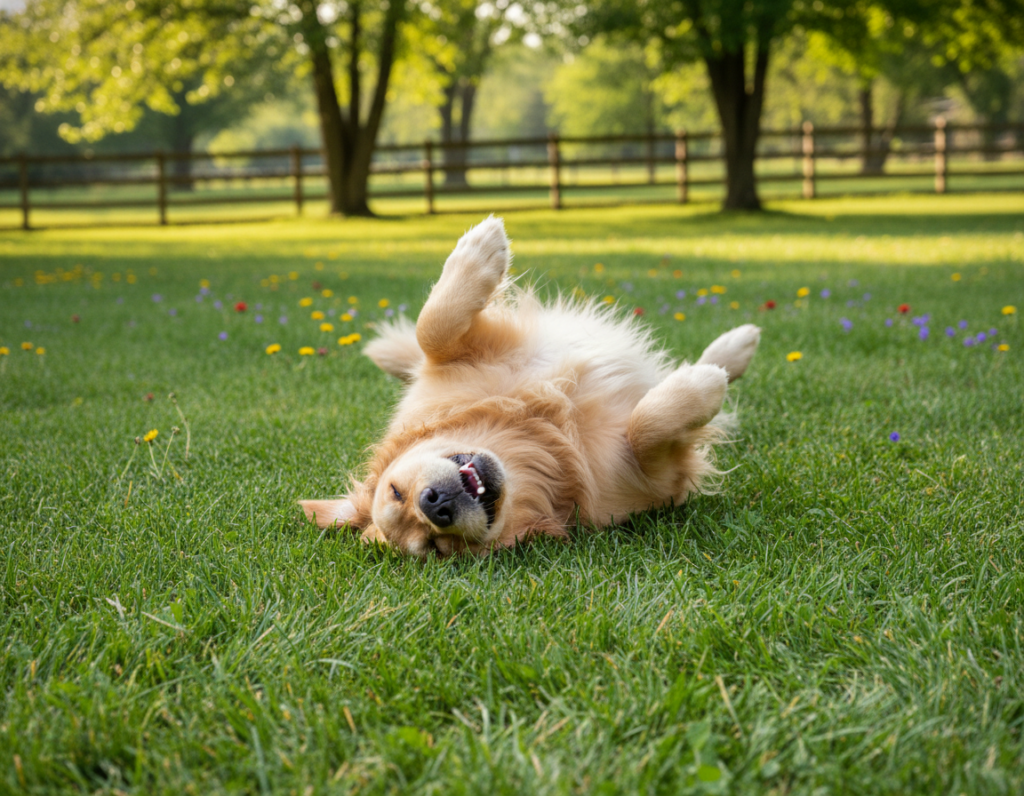
You can spot a friendly animal by its loose muscles and easy, unhurried motion.
Relaxed body posture shows low muscle tension, a soft back, and smooth movement. The face looks neutral: soft eyes, relaxed mouth, and no hard stare.
Calm greetings and staying on all fours
Calm approaches reduce risk and stress. A polite greeting keeps the dog on all fours, feet planted, and tail moving in wide, loose arcs rather than fast lunges or jumps.
Training four-on-the-floor greetings helps guests and children stay safe and keeps excitement from turning into rough behavior.
Affectionate signals
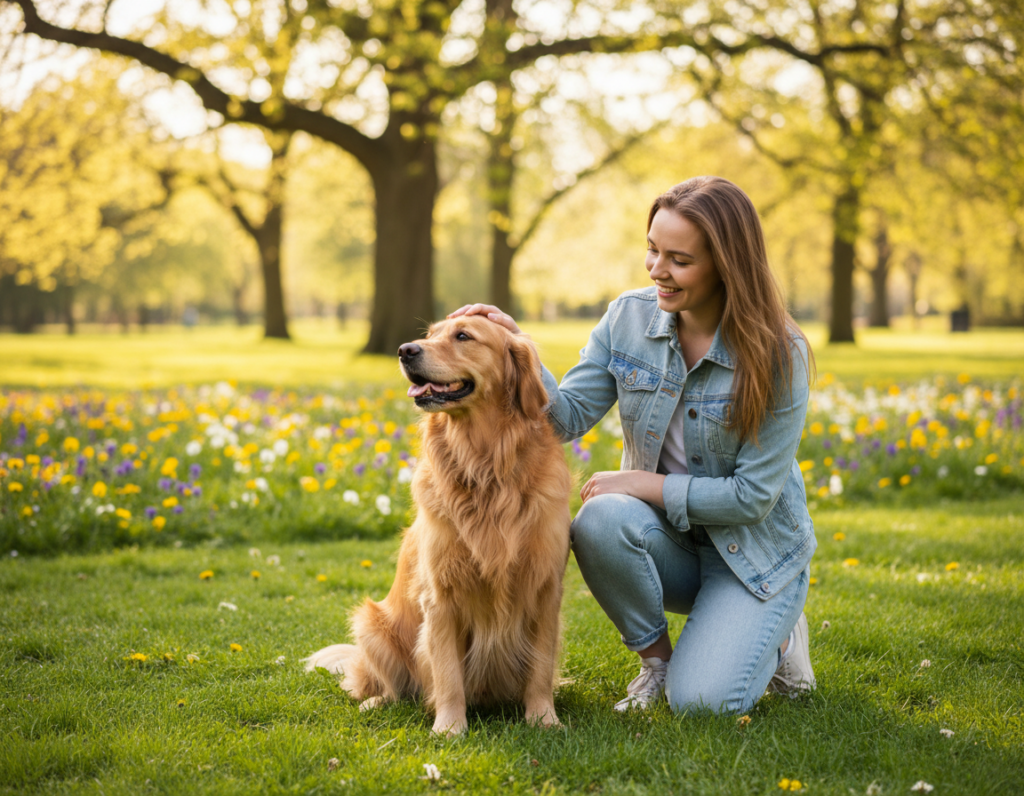
Lean-ins, gentle licking of hands or face, and settling close for cuddles are common when a pet feels secure. These behaviors reflect attachment and trust.
Healthy dog-dog social patterns
Good social play includes mutual sniffing, consent-based approach, and curvy, bouncy movement with low muscle tone. Play may look exuberant but stays loose rather than stiff.
- Look for: soft body, easy movement, neutral face.
- Teach: reward calm four-on-the-floor greetings and calm disengagement when asked.
- Remember: relaxed signals need context—vigorous play can appear wiggly yet still escalate.
| Signal | Meaning | Action |
|---|---|---|
| Loose body, soft eyes | Comfortable, friendly | Approach calmly, offer gentle petting |
| Four-on-the-floor greeting | Polite, low arousal | Reinforce with praise or a treat |
| Leaning in or licking | Affection, secure bond | Respond with gentle touch or quiet praise |
| Mutual sniffing, curvy play | Healthy social interaction | Supervise, reward consent-based play |
Play signals vs overstimulation: reading the play bow correctly
A single body pose can tell you whether play is mutual or strained. The classic play bow—front lowered, rear high—is a clear invitation that signals “game on” and reduces misunderstandings during rough-and-tumble play.
Classic play bow and play invitation
The bow opens a friendly exchange. When a dog offers this posture and the partner returns it, both animals show consent to continue. That reciprocal pattern is a strong example of safe, mutual play.
Joyful vocal and exaggerated movement
Play often includes bouncy steps, loose turns, and playful barking. These exaggerated motions keep arousal visible and signal positive intent when the body stays loose.
When a bow signals insecurity or overload
Not every bow is playful. Paired with a tense face, pinned ears, or repeated avoidance, it may mark stress or overload.
- Red flags: sudden stiffness, one-sided chasing, inability to disengage.
- Quick intervention: call a calm break, reward a check-in, then reassess.
- If arousal rises after a break, end play to prevent escalation.
“A bow must be read with the whole body—context decides if it’s play or stress.”
| Signal | Typical Meaning | Human Action |
|---|---|---|
| Play bow (reciprocal) | Mutual play invitation | Allow play, supervise |
| Bouncy, loose movement + vocalizing | Joyful arousal, safe play | Monitor energy, praise calm checks |
| Bow + tense face or pinned ears | Uncertainty or overload | Stop play, create space |
| One-sided chasing or stiff play | Escalating arousal | Call break, reward disengagement |
Takeaway:Read the bow with posture and face. Use short breaks and check-ins to keep play safe for your pet and others.
How dogs communicate stress and anxiety before it escalates
Small shifts in posture and face often signal rising worry before it becomes loud.
Common calming signals
Calming signals are tiny acts that reduce pressure. Look for looking or turning away, gentle curving of the body, slow movement, yawning, freezing, lip licking, sniffing the ground, and a paw lift.
These moves calm the sender or ask others to ease off. They are normal stress responses and not simple misbehavior.
Displacement behaviors
Scratching, self-grooming, and repetitive motion act as stress leaks. When a dog uses these behaviors, anxiety is present even if the scene seems ordinary.
Avoidance and hiding
Avoidance or hiding are clear requests to stop interaction. Forcing contact increases risk; a frightened dog may escalate if ignored.
“Early, small signs often come before growling; respond early to prevent escalation.”
- Pause and stop the approach.
- Add distance and lower noise or handling.
- Offer choice—move away or retreat to a safe spot.
| Signal | Meaning | Quick action |
|---|---|---|
| Turned gaze / yawning | Self-calming | Slow movements; give space |
| Sniffing / paw lift | Displacement stress | Reduce handling; reassess |
| Avoidance / hiding | Clear discomfort | End interaction; offer exit |
Care tip: Notice these signals early and a dog may avoid escalation with simple, calm responses.
Distance-increasing signals: when your dog is asking for space
A dog will often try subtle tactics to avoid conflict before using louder signals. These distance-increasing signals mean, in simple terms, “I need space.” They are normal, purposeful moves that reduce tension and avoid fights.
Subtle requests you can spot
Look for an averted gaze, ears drawn back, a lowered head or body, and quick lip lick. A slight lean away or brief freeze also signals retreat.
Why ignoring soft signals leads to escalation
If subtle cues don’t work, the animal learns louder signals are more effective. Averted gaze can become a fixed stare, leaning away can flip to forward lean, and tension increases until the dog growls or snaps.
Intensity rises with arousal
As emotional arousal grows, the body shows more tension, movement becomes restricted, and vocalization appears. Tension makes signals more direct and less flexible.
What to do now
- Stop approaching and reduce motion.
- Turn sideways and lower your profile.
- Invite the dog to move away and remove the trigger if possible.
- Give time; respect prevents escalation and protects the bond.
Quick reminder:Respecting space requests lowers aggression risk and strengthens trust in the dog body language you rely on.
| Signal | What it means | Immediate action |
|---|---|---|
| Averted gaze / lip lick | Requests cooling down | Pause, step back |
| Ears back / lowered head | Discomfort or avoidance | Give distance; remove trigger |
| Lean away / freeze | Clear space request | Stop touch; allow escape |
| Escalated tension / stare | Higher aggression risk | Increase space; seek professional help if persistent |
Understanding fear, appeasement, and “submissive” body language
Fear shows up in the whole pose, not one isolated move. A clear read of these signs helps you act safely and calmly.
Fear posture
A fearful dog often adopts a low stance: the spine curves, the head drops, and the weight shifts backward. The tail tucks and ears pull back. These full-body signs mark readiness to flee and increased anxiety.
Appeasement gestures
Appeasement replaces the older label “submissive.” It describes moves meant to de-escalate: slow movement, squinting, a raised paw, or an appeasement grin that shows front teeth without aggression.
Whale eye and head-turning
Whale eye and head-turning let the animal watch a trigger while avoiding direct conflict. These are classic avoidance signs and often precede louder warnings.
- Terminology: prefer “appeasement” for accuracy.
- Handling tip: reduce eye contact, avoid leaning over, and let the dog choose distance.
- Welfare note: chronic stress harms overall health and calls for early, calm intervention.
Aggression signals and escalation: defensive vs offensive patterns
Tension in the whole body is the earliest sign that an encounter may turn aggressive. Aggression often grows from attempts to increase distance. What begins as subtle avoidance can escalate if ignored.
Defensive patterns
Defensive aggression is rooted in fear or threat. The animal lowers or leans back, pins the ears, and tucks the tail.
Facial stress appears: tight muzzle, whale eye, and a backward weight shift. These signals aim to stop a perceived threat by creating space.
Offensive patterns
Offensive aggression looks very different. The body moves forward, legs stiffen, and the tail often sits high and rigid.
Eyes fix, wrinkles appear over the nose, and teeth show. Raised hackles and forward weight predict a direct action toward the trigger.
Growling as useful information
Growling is a warning, not a fault. Punishing that vocalization can backfire by removing a signal the handler needs.
“Suppressing warnings can increase the chance of an abrupt bite.”
Early intervention and immediate safety steps
Watch for stiffness, a hard stare, muzzle tension, and piloerection. These appear before louder aggression.
- Stop interaction and freeze movement.
- Create distance and block access to the trigger.
- Avoid cornering; give the animal an exit route.
- Document triggers and body posture to share with a qualified professional.
How dogs communicate needs around resources, handling, and boundaries
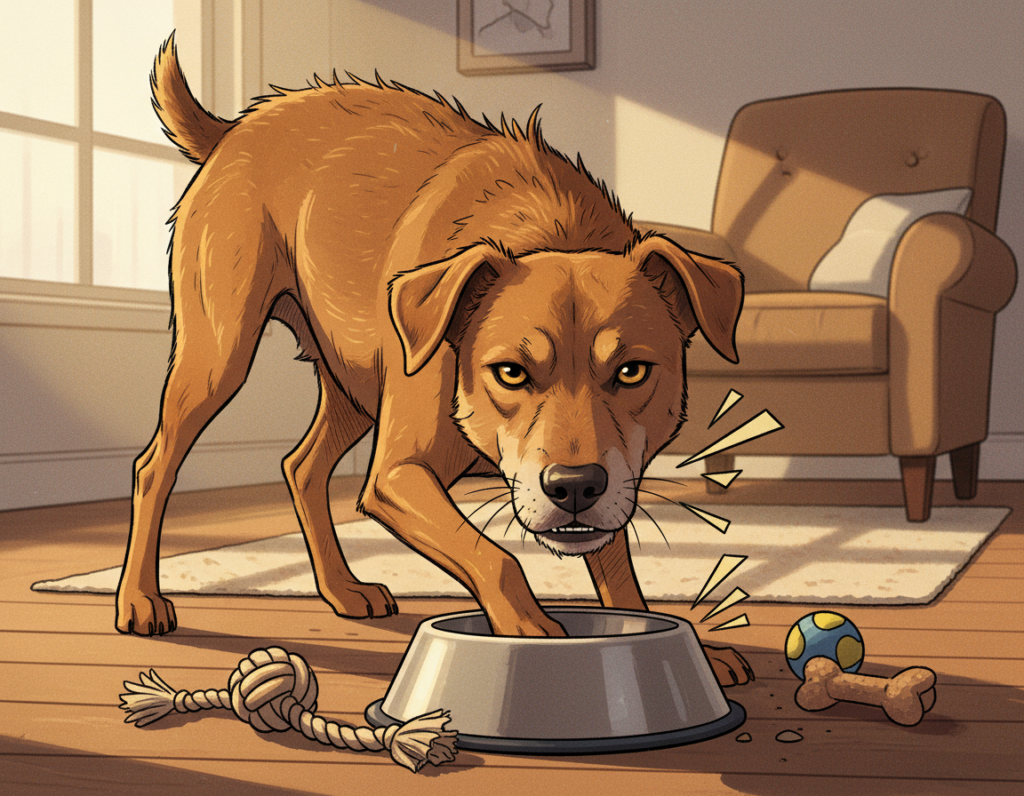
A pet’s stance at a bowl or near a bed can reveal value and intent faster than a growl.
Resource guarding around food, toys, and valued spaces
Resource guarding is a clear message that an item has high value. Common targets include food bowls, chew items, toys, and favorite resting spots.
Typical progression starts with freezing over the item, then a hard stare, lip lift, growl, and finally a snap. Early cues matter.
Management tips: never take valued items by force. Use trade-ups, remove triggers from child access, and manage the environment to reduce conflict.
Petting consent: spotting “more” vs “stop” signals during touch
Check for willingness: leaning in, soft eyes, and relaxed mouth mean “more.”
Stop signals include turning away, lip licking, whale eye, or tightened body. Use start/stop tests and reward calm re-engagement.
Nipping and biting: fear, provocation, and puppy bite inhibition
Nipping can stem from fear, provocation, overstimulation, or pain. Punishment often worsens the problem.
Puppies learn bite inhibition through structured play and gentle feedback; training and consistent care teach safer mouths as they grow.
How dogs communicate
When cues conflict, prioritize movement and muscle tension over a single gesture. Read tail, ears, eyes, mouth, and posture together. That integration gives a clear daily rule for safe handling and better care.
Reading mixed signals and avoiding single-cue assumptions
Example: a pet may approach for a treat but show lip licks and a tight mouth during petting. That mix says interest plus worry. Treat the tension as the stronger message and step back.
Responding in the moment: reduce pressure, create distance, reassess
- Stop the action.
- Increase space and turn sideways.
- Let the animal choose approach or retreat, then reassess.
Training for clearer communication: reward- and choice-based methods
Use rewards and choices to teach clear signals. Predictable routines, consent checks, and reinforcing calm disengagement improve behavior and trust.
When to seek help for excessive barking, anxiety, or aggression
Get a credentialed trainer or behaviorist when anxiety persists, aggression escalates, or barking reflects chronic stress. Also consult a vet—pain or health issues often underlie behavior changes.
Conclusion
Read the whole animal—context, posture, and tension—before relying on any single gesture.
That rule keeps you safer and supports better care. Scan the dog from muzzle to tail and note muscle tone, eye and mouth tension, and overall posture.
Early stress signals are chances to de-escalate. Averted glance, tight lips, or a stiff move ask for space, not force.
Wagging tails, direct looks, and vocal sounds gain meaning only with the full body picture. Reward calm choices, respect requests for distance, and manage triggers in your home.
When in doubt, create distance and seek professional help for ongoing anxiety or aggression. Clear reading leads to better pet care, stronger bonds, and improved animal health.